
Care Home vs Home Care: Which Is Right for Mum or Dad?
This Comparing Care Guide helps families compare home care, residential care and nursing care using practical value questions, practical safety questions and clear evidence—then explains why Esmere Gardens offers a distinctive all-round care choice near Moreton-in-Marsh.
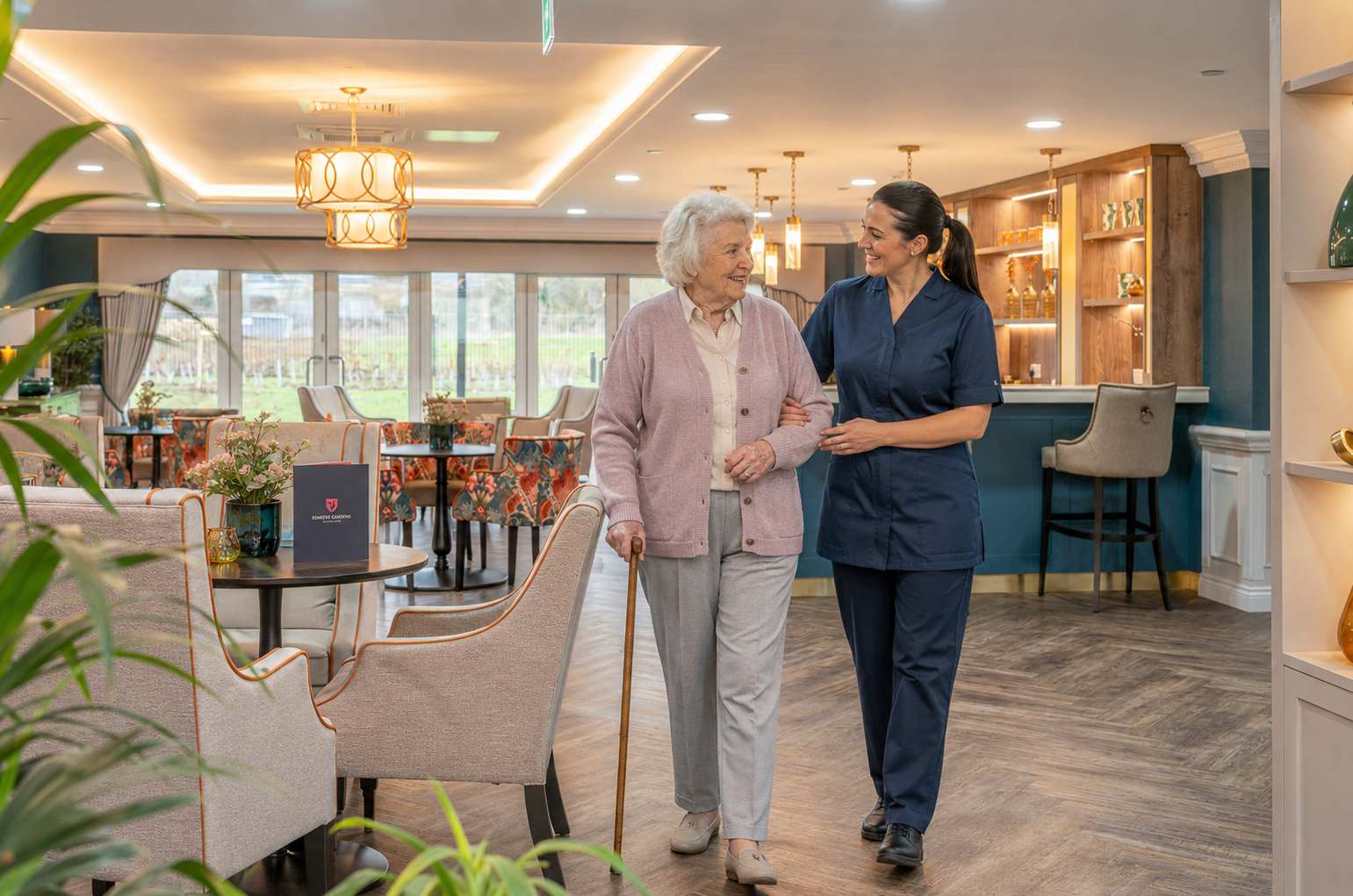
24-hour nursing, dedicated private GP support, adaptable care, all-inclusive value and enhanced safety technology in one welcoming home.
Comparing Care Guide: the quick answer
Home care may be right while a person remains safe between visits, can manage the gaps in support and continues to enjoy a good quality of life at home.
Residential care may be right when regular meals, medication support, companionship, supervision and help throughout the day and night would make life safer and less lonely.
Nursing care may be right when registered nurses are needed to oversee complex medication, wounds, frailty, changing health needs or recovery after hospital.
Esmere Gardens is especially worth considering when a family wants one home capable of providing residential, nursing, dementia and respite care—supported by a dedicated private GP and technology designed to strengthen safety.
Choose the question you need answered
Comparing Care Guide: care home vs home care
The basic difference is between receiving planned visits at home and moving into a setting with staff present around the clock. The more useful question is whether the chosen option covers the person’s entire day—not only the moments when a carer is present.
| Question | Visiting home care | Residential care | Nursing home |
|---|---|---|---|
| Where does the person live? | In their existing home. | In a private room within a care home. | In a care home registered to provide nursing. |
| When is support available? | During booked visits; extra cover must be arranged separately. | Care staff are available within the home day and night. | Care staff and registered nurses are available day and night. |
| Meals and hydration | Usually supported during visits, with the person or family managing gaps. | Meals, drinks and nutritional monitoring are coordinated. | Everyday nutritional support can be combined with clinical oversight. |
| Medication | Supported at agreed visit times. | Administered and recorded in line with the care plan. | Administered with registered nursing oversight where needed. |
| Night-time help | Requires additional calls, waking-night care or live-in care. | Staff are present within the home overnight. | Care staff and registered nurses are present overnight. |
| Social connection | Depends on visits, family and community access. | Shared meals, activities, staff and other residents provide regular contact. | Community and meaningful activity sit alongside nursing reassurance. |
| Usually best suited to | People who remain safe, independent and settled between visits. | People needing regular support, reassurance and companionship. | People with complex, clinical or changing needs. |
For impartial definitions, see the NHS guides to home care and care homes.
Start with the question that exposes hidden risk
What happens when nobody is there?
Home care can work extremely well while the person remains safe and comfortable between visits. When the gaps become the greatest source of danger, distress or loneliness, a care home may provide the more complete and sustainable answer.
- Can the person safely reach the bathroom between visits?
- Can they get food and drinks whenever they need them?
- What happens if they fall after the evening carer leaves?
- Can they remember whether medication has been taken?
- Are they frightened, restless or confused during the night?
- Is a relative effectively on call whenever paid care is absent?
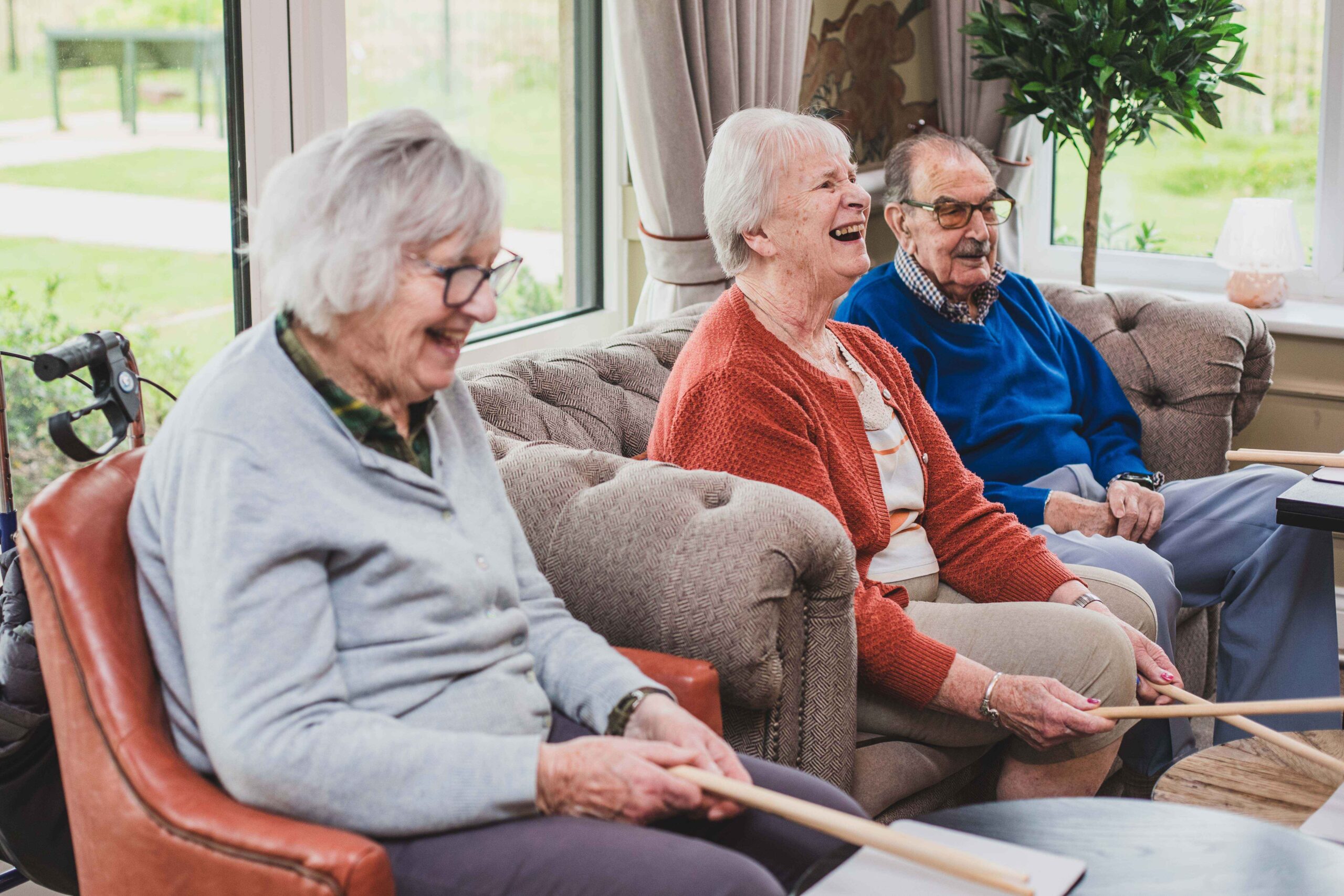
A care decision is about the whole life—not only the care task
Families understandably begin with washing, dressing, medication and mobility. The better comparison also includes loneliness, food, sleep, confidence, emergency response, family strain and what happens when needs change.
At Esmere Gardens, those needs are supported within one connected environment rather than divided across multiple visits, services and household bills.
Discover the Esmere approachWhen is home care the right option?
Home care may work well when:
- the person strongly wishes to remain at home
- the property is safe or can be adapted
- care needs happen at predictable times
- the person remains safe between visits
- medication can be managed reliably
- night-time support is rarely needed
- family involvement remains realistic and sustainable
Home care may become difficult when:
- needs are unpredictable or changing quickly
- falls occur between visits
- the person wanders or leaves home unsafely
- medication is missed or duplicated
- night-time care is frequently required
- family members are exhausted or anxious
- isolation is affecting mood and wellbeing
When is a residential care home the stronger choice?
A residential care home can remove the risky gaps between visits by bringing personal care, meals, medication support, companionship and immediate reassurance into one environment.
Safety
Help is available when needs arise, including evenings and overnight—not only at scheduled appointment times.
Daily life
Meals, medication, personal care, housekeeping, laundry and activities are coordinated around one care plan.
Connection
Residents can share meals, enjoy activities and build relationships without depending entirely on family availability.
Residential care vs nursing care
Both provide accommodation, meals, personal care and support throughout the day and night. A nursing home also has registered nurses available to provide and oversee clinical care.
| Residential care may support | Nursing care may support |
|---|---|
| Washing, dressing and daily routines | Complex medication and clinical monitoring |
| Mobility support and falls prevention | Wound and pressure-area care |
| Meals, hydration and companionship | Complex long-term health conditions |
| Stable dementia needs the home can safely meet | Combined dementia and physical health needs |
| Help available day and night | Registered nursing support available day and night |
Esmere Gardens provides both residential care and 24-hour nursing care, giving suitable residents a stronger chance of remaining in one familiar home if their needs increase.
Clinical continuity matters when care needs change
A care package can look adequate until a fall, infection, hospital admission or medication change makes the gaps more obvious.
Esmere Gardens combines registered nursing with dedicated private GP support, giving the team an additional route to medical review and continuity within the home.
See how private GP support works
When is it time for a care home?
There is rarely one perfect moment. More often, separate concerns begin forming a pattern that shows the existing arrangement is no longer safe or sustainable.
- falls are becoming more frequent
- medication is missed or taken twice
- food is left uneaten or weight is falling
- the person is unsafe between care visits
- night-time confusion or wandering is increasing
- family carers are physically or emotionally exhausted
- hospital admissions are becoming more frequent
- loneliness is affecting quality of life
- the home cannot be adapted safely
- health and nursing needs are changing quickly
A useful question for families
“Are we preserving Mum’s independence—or preserving an address while her safety, confidence and quality of life decline?”
Remaining at home is valuable when the home continues to support the person. It should not become the only goal when doing so leaves them frightened, isolated or unsafe.
Comparing Care Guide: compare total value, not a headline weekly rate
Publicly advertised care-home prices are rarely like-for-like. A lower starting rate may describe a standard room and lower residential needs, while nursing, dementia support, higher staffing, larger rooms, medical continuity or regular extras may be priced differently.
What must be included in a genuine cost comparison?
Care and clinical support
- the level of personal care and staffing
- registered nursing availability
- dementia support and changing needs
- GP access, medication and clinical coordination
- one-to-one or enhanced support where required
Accommodation and daily living
- the room, utilities and maintenance
- meals, drinks and dietary support
- housekeeping and laundry
- activities, companionship and shared spaces
- gardens, facilities and everyday hospitality
Possible additional charges
- personal purchases and privately arranged services
- specialist appointments or private transport
- hairdressing, shopping or personal treatments
- changes caused by significantly increased needs
- annual reviews, notice periods and payment terms
Why a cheaper starting fee may not be better value
A lower number can become less reassuring if regular extras, private GP support, nursing capability or an increase in care needs are charged separately. The stronger question is: what does the fee protect, what does daily life include and can the same home continue supporting the resident if circumstances change?
Read Esmere Gardens’ live guide to all-inclusive private care and fee clarity.
Independent guidance for comparing care costs
For broader guidance, see Age UK’s guide to paying for a care home, the NHS care-home guide and the Homecare Association’s research. General averages and hourly calculations are useful background, but they are not substitutes for a written local quotation based on the person’s actual needs.
Why choose Esmere Gardens? Compare what is included
The strongest value comparison is not “weekly fee versus hourly rate.” It is whether the package covers the person’s accommodation, daily life, clinical reassurance, safety, social connection and likely future needs.
| What families should compare | Esmere Gardens | Typical care home | Visiting home-care agency |
|---|---|---|---|
| Care staff available within the setting 24/7 | Yes | Yes | Only during visits unless live-in or night care is purchased |
| Registered nurses available 24 hours | Yes | Only in homes registered for nursing | Normally arranged separately |
| Dedicated private GP support included | Yes | Varies and is not commonly included | NHS GP or separately arranged private care |
| Residential, nursing, dementia and respite care in one home | Yes | Depends on registration and service model | Package can increase, but the home environment remains unchanged |
| Cogvis fall and movement-sensing technology | Available for suitable residents | Varies | Separate telecare installation may be required |
| Circadian lighting built into the care environment | Yes | Varies | Not normally part of the care package |
| Connected wireless nurse-call system | Prestige Nursecall | System and capability vary | Alarm or pendant usually arranged separately |
| Meals, refreshments, housekeeping, laundry, utilities and activities | Brought together within the agreed all-inclusive care package | Core services are often included, but the scope and extras vary | Household and living costs remain separate from the care visits |
| Personal purchases and third-party services | Explained clearly; some privately arranged services may sit outside the agreed package | Often charged separately and varies by home | Arranged and paid separately |
| Independent quality evidence | CQC Good in all five areas; review score 9.9 | Check each provider | Check each agency’s CQC profile and reviews |
| Best overall value when needs are regular, complex or changing | One coordinated package focused on continuity, safety and quality of life | Can be strong, but the exact combination varies | May remain suitable while support is limited and gaps are manageable |
“Typical” describes common service patterns, not every provider. Always request a written list of inclusions, exclusions, future fee rules and clinical capabilities.

Who pays for home care or a care home?
Local-authority support
A care-needs assessment and financial assessment may determine whether the council contributes.
NHS Continuing Healthcare
The NHS may fund the full package where the person is assessed as having a primary health need.
NHS-funded Nursing Care
Eligible nursing-home residents may receive an NHS contribution paid directly to the home.
Will the family have to sell the person’s home?
Not necessarily. Whether property is included depends on the person’s circumstances, who continues living there and the applicable financial-assessment rules.
Are care-home fees tax deductible?
Personal care-home fees are not normally an ordinary personal Income Tax deduction. Funding, benefits, property and financial-planning decisions can be complex, so regulated advice may be helpful.
Useful independent guidance is available from Gloucestershire County Council Adult Social Care, the NHS social-care guide, Age UK and our own guide to paying for care at Esmere Gardens.
Why Esmere Gardens is a leading safety-led care choice
Nearby competitors promote valuable individual strengths, including all-inclusive residential care, dementia expertise, nursing or luxury surroundings. Esmere Gardens’ advantage is the breadth of its model: the clinical, safety, lifestyle and fee elements are brought together in one home.
Families can independently verify Esmere Gardens through its CQC profile and Carehome.co.uk reviews and service information.
Good
Good
Good
Good
Good
A rare combination in one care home
- long-term residential care
- 24-hour nursing care
- personalised dementia care
- respite and short-term care
- urgent admissions, subject to assessment
- dedicated private GP support
- all-inclusive dining, hospitality and key wellbeing services
- care designed to adapt if needs change
Enhanced safety that supports—not replaces—people
Cogvis sensing
Discreet 3D infrared sensing can support suitable residents through movement and critical-event alerts without conventional identifiable video footage.
Explore CogvisCircadian lighting
Lighting changes through the day to support a clearer distinction between daytime activity and evening rest.
Read the sciencePrestige nurse call
A connected wireless nurse-call system helps residents request assistance and directs alerts to the care team.
Visit Prestige NursecallWhat makes Esmere the stronger all-round choice?
The reassurance of human care, clinical access and safety technology working together.
No care home can promise that every fall, illness or hospital admission will be prevented. Esmere Gardens can show families the layers it has deliberately put in place to notice changes, respond quickly, communicate clearly and support residents as needs evolve.
Could respite care help before a permanent decision?
A short stay can help after hospital, during a family-carer break or when everyone needs time to understand whether long-term care is the right next step.
A real experience can replace assumptions. The person can meet staff, experience the meals and activities, and understand how it feels to have support nearby day and night.
Explore respite careCare choices near Moreton-in-Marsh and across the North Cotswolds
Esmere Gardens is based on Stow Road in Moreton-in-Marsh and supports families comparing home care, residential care and nursing homes across an approximately 25-mile area.
- Moreton-in-Marsh
- Stow-on-the-Wold
- Chipping Campden
- Broadway
- Blockley
- Bourton-on-the-Water
- Evesham
- Shipston-on-Stour
- Chipping Norton
- Northleach
- Winchcombe
- Stratford-upon-Avon
- Gloucestershire
- North Cotswolds
Frequently asked questions
Open the questions most relevant to your family. The full answers remain in the page for search engines and AI assistants while the accordion format keeps the experience manageable for readers.
What is the main difference between home care and a care home?
Home care provides support during arranged visits while the person remains in their property. A care home combines accommodation, meals, personal care, supervision and access to staff throughout the day and night.
When is home care better than a care home?
Home care may be better when the person is safe between visits, has predictable needs, remains comfortable at home and can obtain help during an emergency.
When is a care home better than home care?
A care home may be better when someone needs frequent or unpredictable help, night-time support, continuous reassurance, regular meals, medication management or greater companionship.
What is the difference between residential and nursing care?
Residential care supports personal care, daily living, safety and wellbeing. Nursing care also includes oversight and care from registered nurses for more complex clinical needs.
What is the UK equivalent of assisted living?
The closest UK term is usually extra-care housing or housing with care, where residents have a self-contained property and support is available or arranged.
How much does a care home cost in the Cotswolds?
Private care-home fees vary according to the room, assessed needs, nursing or dementia support and what the package includes. Public starting prices are not always comparable. Ask for an assessment-based written fee, a complete inclusion list and clear information about future reviews or changes.
Can home care become more expensive than a care home?
Yes. As daily hours, double-handed calls, waking-night support or live-in care are added, homecare can equal or exceed a care-home fee while household costs continue separately.
Who pays for a care home?
Payment may come from the individual, the local authority, the NHS or a combination. A care-needs assessment and, where relevant, a financial assessment should be requested.
What is NHS Continuing Healthcare?
It is a package fully funded by the NHS for adults assessed as having a primary health need. Eligibility is based on the nature, intensity, complexity and unpredictability of needs.
What is NHS-funded Nursing Care?
It is an NHS contribution paid directly to a nursing home for eligible residents who need registered nursing care but do not qualify for full NHS Continuing Healthcare.
Will Mum or Dad have to sell their home?
Not always. Property treatment depends on the person’s circumstances, who lives there and the applicable financial-assessment rules.
Can a married couple move into a care home together?
It may be possible where suitable accommodation is available and the home can meet both people’s assessed needs, even when their care plans differ.
Can I visit my relative every day?
Family relationships should continue after a move. Esmere Gardens welcomes families and has no fixed visiting hours, although calling ahead can be useful around outings and activities.
What happens during a respite stay?
The resident receives a room and personal care plan, together with meals, medication support, care and access to activities for an agreed temporary period.
What if my parent refuses to consider a care home?
Listen to what they fear, discuss specific concerns, involve them in visits and avoid demanding an immediate decision. Professional advice may be needed if mental capacity is uncertain.
Can a care home support dementia and physical health needs together?
Many nursing and dementia homes can support both, subject to assessment. Esmere Gardens combines dementia support with 24-hour nursing and private GP access.
Can someone move into a care home directly from hospital?
Yes. A residential, nursing or respite placement may be arranged when returning home is unsafe, subject to assessment and suitable clinical information. Read our urgent-admission information.
Can care needs increase without another move?
Potentially. Esmere Gardens provides residential, nursing and dementia care in one home, which may allow support to adapt where the person’s assessed needs remain within the services provided.
Does technology replace care staff?
No. Fall sensing, circadian lighting and nurse-call systems support staff but do not replace personal contact, observation, clinical judgement or companionship.
Why is Esmere Gardens a stronger all-round choice?
Esmere Gardens combines residential, nursing, dementia and respite care with 24-hour nursing, dedicated private GP support, all-inclusive care, a CQC Good rating in all five areas, a 9.9 review score and enhanced safety technology in one home.

Nursing Care
Our goal, through thorough assessments, regular reviews and effective communication, is to ensure our residents’ optimal physiological health, so that we can help people to enjoy the life they want to with as few worries as possible.

Dementia Care
We are part of a group with a reputation for innovative, outstanding dementia care and what we learn in one home, we use in all of them. For our residents living with memory loss, there is no better place than Esmere Gardens to ensure that your needs are met.

Respite Care
By joining us for a short break, you’ll discover that not only do you have access to the very best in care, but you also have access to all the outstanding facilities that our full-time residents do.

Residential Care
Dignity, compassion and respect are as intrinsic to high quality care as the roof on the home itself. Our residents relish the company that being in a larger home brings and the 24/7 help when they need it.