

Moving into a Care Home: Advice for Families
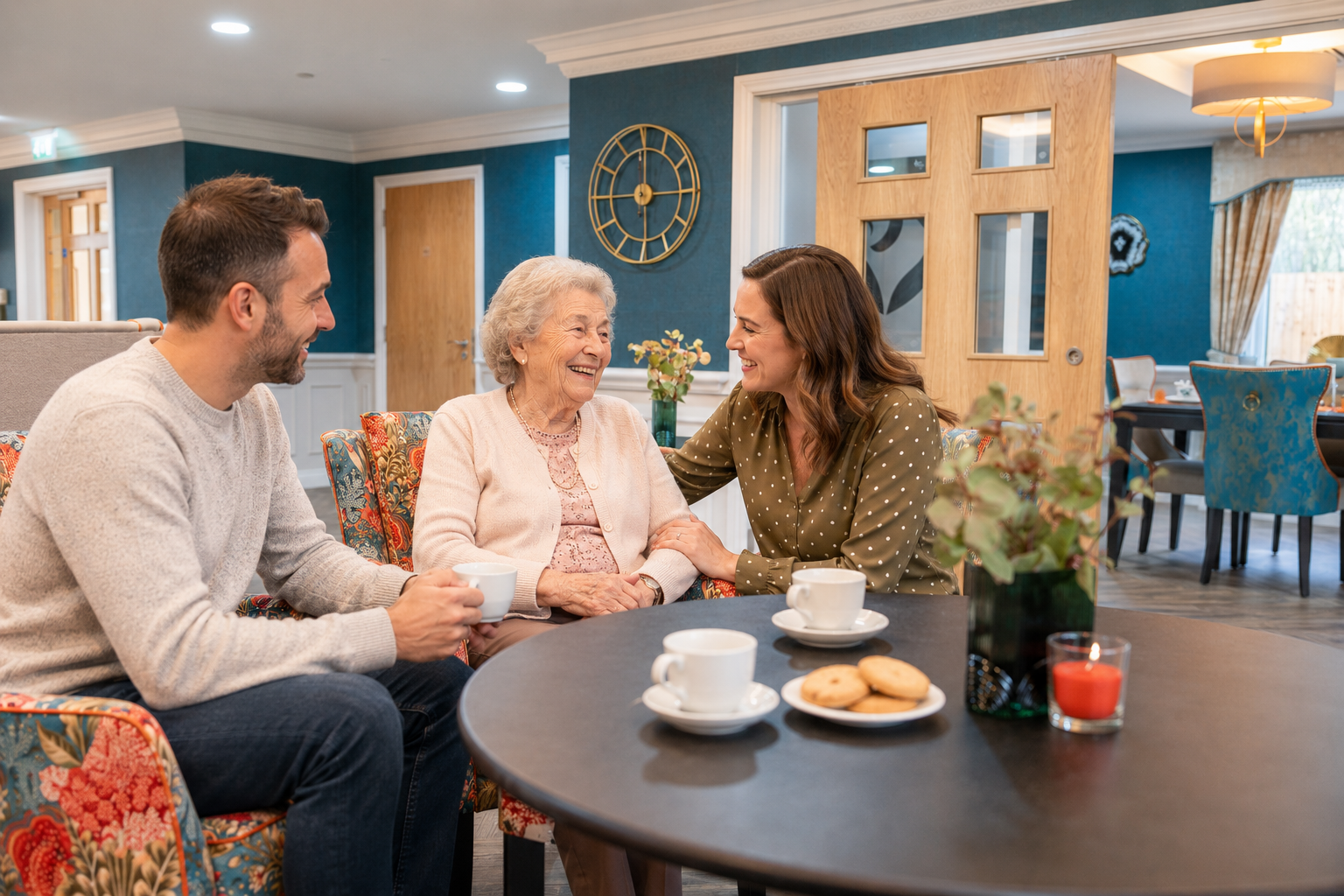
Moving into a care home: the essential handover guide
A calm, clear guide to the information, documents and personal details that help create a safer and more personalised welcome.
Moving into a care home can feel overwhelming.
Whether the move is carefully planned or follows a hospital stay, many families worry about forgetting something important. Questions quickly arise:
- What paperwork will be needed?
- What information should I give the care team?
- What should I pack?
- What if I cannot find everything?
- How can I help Mum or Dad feel more settled?
This practical guide explains the information, documents and personal details that can help create a safer, calmer and more personalised welcome when moving into a care home.
Know exactly what information is helpful.
Help care teams understand needs from day one.
Share the details that make somebody unique.
Useful whether the move is urgent or carefully planned.
Quick Answer: What Should Families Bring?
Families should ideally provide:
- Medication information
- Current health details
- Emergency contacts
- Daily routines and preferences
- Important documents
- Personal belongings
- Life history and interests
The exact information required will vary depending on the person’s individual circumstances, medical needs and admission pathway.
Why a Good Handover Matters
Most families focus on packing bags and collecting paperwork when preparing for a move into care.
In reality, one of the most valuable things you can share is information about the person themselves.
Their routines.
Their habits.
Their favourite drink.
Their favourite music.
The things that comfort them.
The things that worry them.
The more a care team understands from the beginning, the easier it becomes to create a personalised welcome and support familiar routines.
Family involvement
Daily routines
Personal preferences
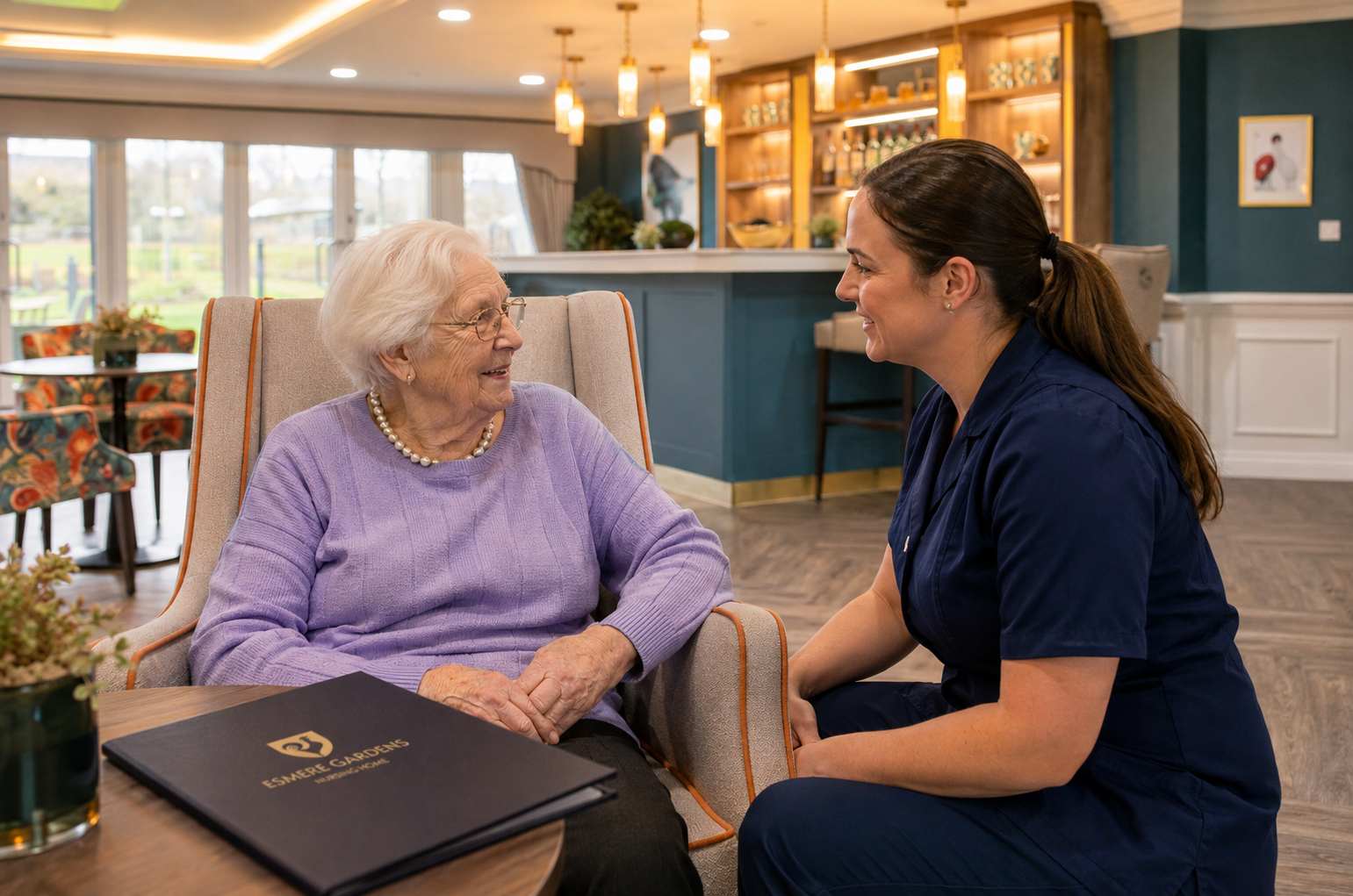
Essential Health Information
Good information helps the care team understand a person’s needs from the start and supports safer care planning.
Medication Information
Current medications, dosages, administration instructions and any recent medication changes.
Medical History
Health conditions, diagnoses, allergies, long-term illnesses and recent hospital admissions.
Mobility & Safety
Mobility aids, walking ability, falls history and support requirements.
Additional Information That Can Help
- Dietary requirements
- Food preferences
- Swallowing concerns
- Hydration support needs
- Hearing or sight support requirements
- Communication preferences
The Details That Help Someone Feel Known
The information that often makes the biggest difference is rarely found in medical paperwork.
Understanding a person’s history, preferences and routines can help them feel more comfortable and better understood.
Favourite Routines
Morning habits, preferred wake-up times, favourite drinks and evening routines.
What Brings Comfort
Music, books, television programmes, photographs and familiar possessions.
Important Relationships
Family members, friends, pets, community groups and significant people.
Life Story Information
- Previous occupations and careers
- Hobbies and interests
- Military service
- Community involvement
- Favourite memories and achievements
- Cultural and religious preferences
Documents & Important Contacts
Important information may include:
- GP contact details
- Pharmacy information
- Emergency contacts
- Next of kin details
- Hospital discharge information (if applicable)
- Relevant legal paperwork
- Healthcare specialist contacts
If you’re exploring care options, you may also find it helpful to understand the different types of support available, including
Residential Care,
Nursing Care,
Dementia Care and
Respite Care.
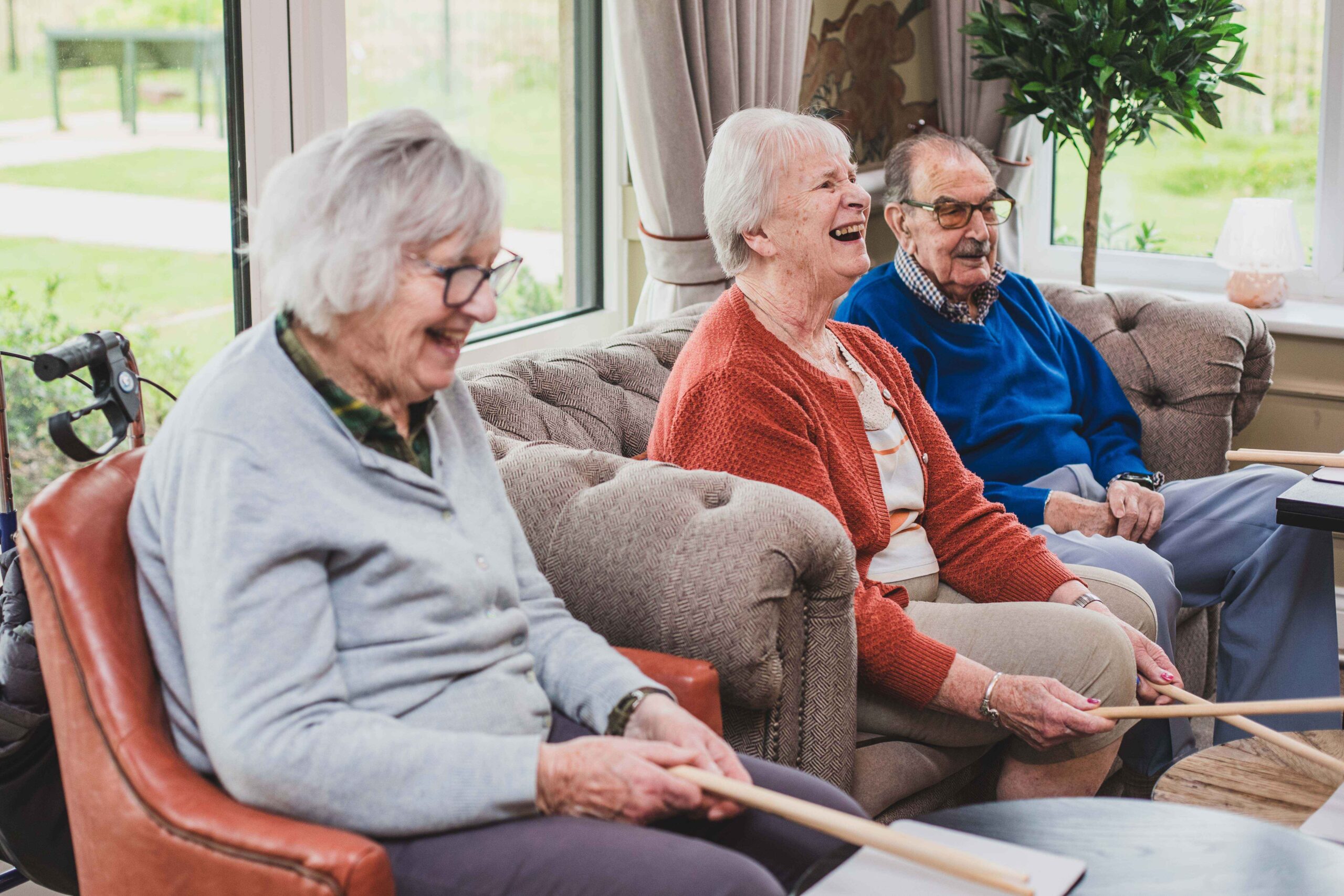
What To Pack On Moving Day
Familiar items can make a new room feel far more comfortable and personal.
- Clearly labelled clothing
- Comfortable footwear
- Toiletries
- Family photographs
- Favourite blanket or cushion
- Books and magazines
- Music and personal hobbies
- Glasses and hearing aids
- Mobile phone or tablet
- Chargers and accessories
Moving Into Care After Hospital Discharge
Hospital discharges can happen quickly, leaving families feeling under pressure to organise information and make important decisions.
If records are still being gathered, simply explain:
- What information you already have
- What information is outstanding
- Who may hold the missing information
The goal is understanding individual needs safely, not achieving perfect paperwork on day one.
Additional guidance can be found from
Age UK
and the
NHS Social Care Guide.
What If Information Is Missing?
Do not delay asking for help because you feel unprepared.
Many families begin the admission process while gathering information from hospitals, pharmacies, healthcare professionals and relatives.
Bring what you have.
Explain what is missing.
The care team can advise what is essential and what can usually be obtained later.
The aim is understanding the person, not perfection.
Printable Care Home Handover Checklist
About Me
Preferred name
Date of birth
Important contacts
My Health
Medication
Allergies
Health conditions
My Daily Routine
Wake-up times
Meals
Evening routine
My Story
Career
Achievements
Interests
What Comforts Me
Music
Photos
Favourite activities
Things I Find Difficult
Communication needs
Sensory difficulties
Things that cause anxiety
Reviewed by Kimberly Mae M. Pascual
Home Manager, Esmere Gardens Nursing Home
This guide reflects the questions families most commonly ask when preparing for a move into residential care, nursing care, dementia care or respite care at Esmere Gardens.
Visit Esmere Gardens Nursing Home in Moreton-in-Marsh
Esmere Gardens Nursing Home is located on Stow Road, Moreton-in-Marsh, Gloucestershire GL56 0DS.
We welcome conversations with families who would like to understand their options, ask questions and explore whether Esmere Gardens may be suitable for somebody they love.
Frequently Asked Questions
What documents are needed when moving into a care home?
What should I pack when moving into a care home?
Can I bring furniture and personal belongings?
What information helps somebody settle more quickly?
What if I cannot find all the paperwork?
Is this checklist useful after a hospital discharge?
Does Esmere Gardens provide nursing care?
How can I arrange a visit?

Emergency Care Home Placements: What Families Need to Know in 2026
Emergency care home placements: what families need to know in 2026
When a loved one needs care urgently after a fall, hospital discharge or sudden change at home, speed matters — but so does safety, oversight and clear assessment.
Emergency placements in care homes can be a lifeline, but they also bring understandable worries about safety, oversight and whether the setting can truly meet complex needs.
Across the UK we have our own regulatory landscape. Recent policy direction from the Prime Minister’s renewed focus on adult social care, ongoing Care Quality Commission (CQC) developments, and the continuing pressure of hospital discharges are all reshaping what a safe emergency admission looks like in practice.
This guide explains the current direction of travel and, most importantly, what families in Gloucestershire and the Cotswolds should look for when arranging urgent care.
Regulators are focusing more attention where risk is highest.
Emergency admissions still require clear assessment and documentation.
Preparedness, escalation pathways and night-time checks matter.
Clear processes help families feel more confident in urgent situations.
What families should expect from a safe emergency placement
A well-managed urgent admission should include:
- A prompt but thorough assessment of needs and risks
- Clear documentation that supports continuity of care
- Visible emergency and escalation procedures
- Evidence that the home can safely support the person’s needs
- Open communication with the family throughout the process
Speed is important. Thoroughness is essential. The best providers manage both.
The current UK policy direction
Adult social care has returned to the centre of national attention. The Prime Minister’s recent emphasis on reforming and strengthening adult social care reflects growing recognition that hospital pressures, delayed discharges and rising complexity of need cannot be solved by the NHS alone.
At the same time, the Care Quality Commission continues to refine its approach under the Single Assessment Framework. The direction of travel is clear: more attention on risk, outcomes and the lived experience of people using services, alongside greater expectations around preparedness and continuous improvement.
For families arranging an emergency placement, this means providers are under clearer expectations to demonstrate that they can respond safely at short notice.
CQC Single Assessment Framework
Hospital discharge pressures
Risk-based regulation
From routine inspection to risk-based oversight
Regulators across health and social care systems are moving toward more risk-based models of oversight. In the UK, this is visible in the CQC’s focus on targeting inspection and monitoring where the risk of harm, poor outcomes or persistent concerns is higher.
Rather than treating every service as requiring the same intensity of routine scrutiny, the emphasis is increasingly on identifying higher-risk providers earlier and maintaining sustained attention where problems persist.
Concentrated attention
Greater focus on homes with higher risk of harm, repeated concerns or complex needs.
Faster response to concerns
Serious complaints and safety signals can trigger more rapid regulatory attention.
Higher expectations of providers
Homes are expected to demonstrate clear processes even during busy or urgent periods.
What this means for families
A risk-based approach can improve safety if it leads to earlier identification of problems. It also raises the bar on what good providers must show at short notice: clear assessments, auditable decisions, and robust emergency procedures that stand up to scrutiny.
Risk assessment as a baseline expectation
Risk assessment is no longer treated as a “nice to have.” It is a core expectation of safe care, particularly when someone is admitted urgently.
This goes far beyond fire or flood planning. It includes the practical realities of keeping residents safe if circumstances change suddenly — staffing disruption, clinical deterioration, access to medicines, or the need to coordinate rapidly with external health services.
- Clear lines of clinical responsibility
- Contingency plans for deterioration
- Ability to coordinate with GPs, community nursing and hospitals
- Preparedness for overnight needs and unexpected events
In an urgent admission, these “behind the scenes” systems are often what prevent a crisis from turning into avoidable harm.
Faster assessments and tighter documentation
Emergency admissions compress the usual timescales for assessment and care planning. That does not remove the need for a structured process.
A safe urgent placement still requires rapid confirmation of needs and risks — particularly around mobility, cognition, swallowing, skin integrity, medication management and any behaviour changes linked to dementia or delirium.
Good documentation supports continuity. It helps staff across shifts understand the person’s baseline, identifies what must be monitored, and provides evidence that the placement decision was appropriate, not simply convenient.
Speed should not replace thoroughness
Even when a move needs to happen quickly, families should expect (and welcome) a clear paper trail. Structured assessment and transparent records are a sign of a provider that takes responsibility seriously.
Post-incident reforms and everyday safety
Regulation often tightens after serious incidents. Across the care sector there is growing emphasis on overnight safety checks, clearer emergency-response standards, improved incident tracking and visible evacuation procedures.
These expectations are especially important during emergency admissions. A person who is new to the home, disoriented, or unable to follow instructions needs systems that protect them from the first night.
Overnight safety
Who checks residents, how often, and what is recorded?
Incident tracking
How are concerns reported, reviewed and acted upon?
Evacuation readiness
Are procedures clear, practised and suitable for people with complex needs?
Funding, capacity and clearer boundaries
National conversations about adult social care funding and capacity continue to influence what can be delivered safely in different settings. As expectations around on-site health support become clearer, the boundaries between residential, nursing and more specialist care also become more important.
For families arranging urgent care, this can mean sharper questions about suitability: which needs can be met safely in a particular home, what would trigger a move to a higher-acuity setting, and what evidence supports that decision.
Clarity reduces the risk of repeated moves — something that is particularly distressing for older people.
Data-driven improvement and family conversations
Care systems are becoming more data-informed. Patterns around falls, medication incidents, delayed responses or repeated hospital transfers can help identify risk earlier.
For emergency placements, better use of information can support more structured conversations at admission: why the crisis occurred, what resources the person had at home, and what needs to change to reduce the chance of another emergency.
Practical questions families should ask
When arranging an urgent placement, these questions can help you assess whether a home is ready to support your relative safely:
- How quickly can a full assessment of needs and risks be completed?
- What information do you need from us, the hospital or the GP?
- How are overnight checks carried out and recorded?
- What happens if someone’s condition deteriorates suddenly?
- How do you coordinate with external health professionals?
- Can we see examples of how emergency procedures work in practice?
The fundamentals still matter most
For families in Gloucestershire and the Cotswolds seeking a calm, well-supported move, the strongest reassurance comes from the basics: prompt assessment, transparent documentation, clear escalation pathways and practised emergency procedures.
When those pieces are in place, an urgent admission can feel less like a crisis and more like the first step toward stability and dignity.
Visit Esmere Gardens Nursing Home in Moreton-in-Marsh
Esmere Gardens Nursing Home is located on Stow Road, Moreton-in-Marsh, Gloucestershire GL56 0DS. We support families facing both planned and urgent care decisions and welcome conversations at short notice.
Frequently asked questions
Can a care home accept an emergency admission at short notice?
Yes, many homes can consider urgent placements, subject to assessment, suitability and available capacity. A structured assessment is still required even when the move needs to happen quickly.
What information is needed for an urgent placement?
Key information usually includes current health needs, medication, mobility, cognition, any recent hospital information, and details of risks such as falls or swallowing difficulties.
How does the CQC approach risk in care homes?
The CQC uses a risk-based approach under its Single Assessment Framework, focusing greater attention on services where the risk of harm or poor outcomes is higher.
What should families ask about night-time safety?
Ask how often residents are checked overnight, who carries out the checks, what is recorded, and how concerns are escalated if someone deteriorates.
Is emergency placement only for hospital discharges?
No. Urgent placements can also be needed after a fall at home, a sudden decline in health, carer breakdown, or other crises that make remaining at home unsafe.
Does Esmere Gardens consider urgent admissions?
Yes. Esmere Gardens can discuss both planned and urgent placements, subject to individual assessment, clinical suitability and room availability.
How can I start a conversation about an urgent placement?
Call 01608 692222 or contact the team through the Esmere Gardens website. We will listen carefully and advise on the next practical steps.


Taylor and Taylor Care Named a Finalist at the Leaders in Care Awards 2026
Taylor and Taylor Care named a Leaders in Care Awards 2026 finalist
A proud recognition of the compassion, reliability and commitment to continuous improvement shared across the Taylor and Taylor Care family, including Esmere Gardens Nursing Home.
Everyone at Esmere Gardens Nursing Home is delighted to share some wonderful news.
Taylor and Taylor Care has been selected as a finalist at the Leaders in Care Awards 2026 in the category of Care Home Provider of the Year (Independent).
Announced by Care Home Professional and Home Care Insight, the national shortlist celebrates organisations and people making an important contribution to care. For our residents, relatives and colleagues, this recognition is a proud moment and a welcome reflection of the values and everyday dedication found across our care community.
This achievement provides another important sign of Taylor and Taylor Care’s commitment to dependable, person-centred care. It also strengthens our determination to keep listening, learning and helping improve the wider care sector.
A proud national recognition
Taylor and Taylor Care has been shortlisted for Care Home Provider of the Year (Independent) at the Leaders in Care Awards 2026.
The winners are due to be announced at the awards ceremony on 6 October 2026. Whatever the final result, being included on the national shortlist is already a significant achievement for everyone across the Taylor and Taylor Care family.
Awards are not why we care, but they provide an important opportunity to recognise the people whose commitment makes excellent care possible.
What this finalist recognition means
The Care Home Provider of the Year category recognises independent providers whose work is helping to shape high-quality care. Reaching the national shortlist places Taylor and Taylor Care alongside respected organisations from across the country.
For Esmere Gardens, it is an opportunity to celebrate the daily work behind the announcement: attentive support, thoughtful care planning, clinical professionalism, welcoming surroundings and strong relationships with residents and families.
It also brings responsibility. Meaningful recognition should encourage continued progress rather than complacency. We see this finalist position as further motivation to keep learning and finding better ways to support the people who place their trust in us.
Independent care
Person-centred support
Continuous improvement
How recognition strengthens trust and reliability
Choosing a nursing home is one of the most significant decisions a person or family can make. Families need more than reassuring words. They need evidence of dependable care, open communication and a culture that takes responsibility seriously.
External recognition can never replace visiting a home, meeting its team and asking careful questions. It can, however, provide an additional sign that a provider’s work is being noticed within the wider care community.
Confidence for families
Sector recognition gives families another useful point of reference when researching care and considering which provider may be right for someone they love.
Pride for colleagues
Being shortlisted acknowledges the contribution of care, nursing, catering, housekeeping, maintenance and administrative colleagues.
Motivation to improve
Recognition creates momentum to examine what works, learn from others and continue improving residents’ and families’ experiences.
Recognition supported by regulated quality
This award shortlisting sits alongside Esmere Gardens’ current Care Quality Commission rating of Good.
In its report published on 21 January 2026, the CQC rated Esmere Gardens Good overall and Good in each of the five assessed areas: Safe, Effective, Caring, Responsive and Well-led.
Together, regulated assessment and wider sector recognition offer helpful reassurance while keeping the focus where it belongs: on residents’ lived experiences and our continuing responsibility to improve.
The people behind the achievement
A care provider is only as strong as the people who bring its values to life. This finalist position reflects the combined effort of colleagues working across Taylor and Taylor Care.
At Esmere Gardens, that includes care teams who take time to understand every resident as an individual, nursing professionals who provide attentive clinical support and the many colleagues who make our home safe, welcoming and comfortable.
- Care shaped around the individual rather than simply a routine.
- Professional support delivered with kindness and respect.
- Open and honest relationships with residents and relatives.
- Teamwork across every part of the home.
- A willingness to listen, reflect and improve.
The recognition also belongs to our residents and their families. Their experiences, questions, feedback and ideas help us understand what good care feels like in practice and where we can do more.
A care sector that is changing and improving
Social care continues to evolve. People entering care have increasingly diverse needs, expectations and life experiences. Families rightly expect clearer communication, meaningful involvement and greater transparency.
Technology is creating new opportunities to support care planning and coordination, while professional development is strengthening the knowledge and confidence of care teams.
These changes bring opportunities as well as challenges. They ask providers to consider how care can become more personalised, inclusive and responsive without losing the human connection at its heart.
More connected
More transparent
More responsive
Progress with people at its centre
For Taylor and Taylor Care and Esmere Gardens, progress means considering new ideas thoughtfully while protecting the qualities that matter most: compassion, dignity, safety, kindness and respect.
Innovation is most valuable when it gives colleagues more time, insight or confidence to support residents well. The purpose is not change for its own sake; it is better care and a better quality of life.
Our commitment to continuous improvement
Being shortlisted is not a finishing point. It strengthens our determination to maintain high standards while continuing to ask what could be better.
Excellent care is built through consistent everyday actions: careful clinical decisions, thoughtful planning, meaningful activities, clear communication and small moments of kindness that offer comfort and reassurance.
Listen
We listen openly to residents, relatives and colleagues so that decisions are informed by real experiences.
Learn
We support training, professional development and shared learning across our care teams.
Improve
We use feedback and reflection to make meaningful improvements to safety, wellbeing and quality of life.
- Delivering care shaped around each resident’s needs and preferences.
- Supporting colleagues through training and development.
- Listening openly to residents, relatives and team members.
- Turning feedback into meaningful and lasting improvements.
- Exploring responsible innovations that can improve care.
- Sharing knowledge and good practice with the wider care community.
What this recognition means at Esmere Gardens
At Esmere Gardens Nursing Home in Moreton-in-Marsh, national recognition is meaningful because it reflects values we work to make visible locally every day.
Esmere Gardens provides residential care, nursing care, dementia care and respite care, subject to assessment, suitability and room availability.
Known as an individual
We take time to understand each resident’s needs, preferences, routines, relationships and personal history.
Clinical reassurance
Nurses onsite 24 hours a day can support residents whose health needs are complex or changing.
Partnership with families
Open communication helps residents and relatives feel heard, informed and involved in important decisions.
Thank you to our community
We would like to congratulate and thank everyone across Taylor and Taylor Care whose hard work has made this recognition possible.
We are especially grateful to our residents and their families for placing their trust in us and helping shape the Esmere Gardens community.
Whatever the final result, being named among the Leaders in Care Awards 2026 finalists is already a proud achievement—and further motivation to provide reliable, compassionate and continually improving care.
Visit Esmere Gardens Nursing Home in Moreton-in-Marsh
Esmere Gardens Nursing Home is located at Stow Road, Moreton-in-Marsh, Gloucestershire GL56 0DS. We welcome conversations with families who would like to learn more about our home, our approach and the care we provide.
Frequently asked questions
Which Leaders in Care Awards category is Taylor and Taylor Care shortlisted for?
Who announced the Leaders in Care Awards 2026 finalists?
When will the Leaders in Care Awards winners be announced?
What does this recognition mean for Esmere Gardens?
How does sector recognition help families considering care?
Is Esmere Gardens rated Good by the Care Quality Commission?
What types of care does Esmere Gardens provide?
How can I arrange a visit to Esmere Gardens?

What to do when a sudden hospital transfer is needed: a family checklist for safe placements
A sudden hospital transfer can feel like a whirlwind: one minute you’re trying to understand what’s happening medically, and the next you’re being asked to make decisions about where your relative will be safest next. In those urgent hours, families often carry the emotional weight while also trying to prevent practical mistakes.
This family checklist is designed to help you stay steady, ask the right questions, and protect your loved one through a safe placement,whether that means returning home with support, moving to rehabilitation, or transferring to a nursing or dementia care setting. It’s written in plain UK English, with steps you can use immediately.
1) Start a written transfer plan now (and get it in plain language)
As soon as a transfer is mentioned, ask the ward team for a written discharge/transfer plan. Request it in plain language and make sure it clearly states where your relative is going next (home, rehabilitation, skilled nursing, or another setting), why, and when.
AHRQ’s IDEAL discharge planning approach stresses that patients and families should be treated as full partners. That means you are entitled to be involved early, not only at the last moment when transport is already booked.
Ask the team to list: what care is needed day-to-day, what equipment is required, and who is responsible for each action (hospital, community services, GP, receiving facility, family). If anything is missing or vague, ask for it to be clarified and written down.
2) Confirm the next placement can safely meet needs (before the move happens)
In a sudden transfer, it’s easy for momentum to take over,especially if a bed becomes available somewhere quickly. Before accepting a move, confirm the receiving setting can meet both medical needs (for example oxygen, wound care, catheter care, injections, complex medication regimens) and functional needs (mobility support, hoisting, continence care, help with eating and drinking).
MedlinePlus notes that discharge planning is specifically intended to help decide whether a patient should go home or to another facility such as a nursing home or rehab centre. If your instinct is that “home tomorrow” isn’t realistic without significant support, say so clearly and ask the team to reassess.
If your relative lives with dementia or is prone to delirium after illness, ask how the next setting manages distress, sleep disruption, falls risk, and communication. A safe placement is not only about tasks,it’s about the right environment, staffing, and clinical oversight.
3) Make sure essential medical information travels with your relative
Transfers are at their riskiest when information doesn’t follow the patient. CMS requirements emphasise that hospitals must discharge or transfer people with the necessary medical information for the next provider, including the current course of illness and treatment, post-discharge goals of care, and treatment preferences.
Ask the ward to confirm,explicitly,what will be sent to the receiving service (electronically and/or as printed paperwork). If possible, request a copy for yourself as well, so you can spot gaps quickly on arrival.
Your minimum checklist should include: diagnosis and working diagnoses, allergies, recent observations, test results (particularly imaging and bloods), escalation plans, resuscitation status where applicable, therapy notes, and any infection-control requirements. If the receiving team starts by asking you, “So what happened in hospital?” that can be a sign that the paperwork is incomplete,push for a proper clinical handover.
4) Insist on medication reconciliation,and keep one trusted list
Medicines often change during a hospital stay. AHRQ highlights medication review as a core discharge safety step, because missed or duplicated medicines can quickly cause harm after transfer.
Request a full medication reconciliation before your relative leaves: a single up-to-date list showing what was started, stopped, and changed (including doses and timings). Ask what each medicine is for and whether any are temporary (for example antibiotics, blood thinners, pain relief, sleeping tablets).
Bring that list to the next setting and compare it with what the receiving team intends to administer. If anything doesn’t match, stop and clarify before the first dose is given. This is particularly important for insulin, anticoagulants, strong pain medicines, Parkinson’s medicines, and dementia-related medicines.
5) Get written ‘red flags’ and clear advice on when to seek urgent help
Families are often sent away with verbal instructions when they’re tired and worried. AHRQ recommends reviewing warning signs and problems before discharge so patients and families know what symptoms should trigger urgent contact or a return visit.
Ask for written instructions that cover: what is expected in the first 24,72 hours, what is not expected, and exactly who to contact (ward number, out-of-hours service, community nurse, GP, NHS 111, or 999) for specific symptoms.
Examples of red flags may include worsening breathlessness, chest pain, fever, confusion, reduced urine output, sudden weakness, uncontrolled pain, falls, wound changes, or signs of dehydration. Ask the team to tailor the list to your relative’s condition rather than giving generic advice.
6) Lock in follow-up appointments and name one point of contact
Chasing appointments after the transfer can leave your relative in limbo,especially if they need blood tests, wound reviews, or consultant follow-up. AHRQ lists follow-up appointments as a key discharge element, and it’s safest to have them arranged (or at least clearly identified) before the move is completed.
Ask: which clinician is taking over overall responsibility (GP, consultant, community matron, rehabilitation doctor, or the receiving home’s clinical lead)? If there are multiple teams involved, request one named person who is coordinating the plan.
Also ask who will communicate with the next facility, and how quickly the handover will happen. Clear lines of responsibility reduce the risk of “everyone thought someone else had done it,” which is a common cause of missed reviews and delayed treatments.
7) Use teach-back: repeat the plan in your own words to prevent mistakes
In urgent situations, misunderstandings are common,and they’re no’s fault. AHRQ advises using teach-back, where staff ask the patient or family to repeat instructions in their own words to confirm understanding and reduce errors during transitions.
Before transfer, say: “Can I repeat back what I understand, and you tell me if I’ve got anything wrong?” Then summarise: destination, timeline, mobility status, equipment, medicines, follow-ups, diet/fluids, red flags, and who to contact.
Ask the hospital team to correct any details and to write down key information. This simple step can prevent mix-ups such as wrong transport arrangements, missing equipment, confusion about weight-bearing status, or medication timing errors.
8) Build a ‘transfer packet’ and protect safety on the journey and arrival
Sudden transfers go more smoothly when one person holds a practical bundle of essentials. CDC “Prepare Your Health” materials emphasise keeping key paperwork organised; in an urgent move, a family-held packet reduces reliance on memory and prevents lost details.
Include: ID, NHS number if available, insurance/financial documents if relevant, medication list, allergies, diagnosis summary, recent test results, advance directives (or equivalent), emergency contacts, and the names and phone numbers of the hospital contact and receiving facility. Keep a charger, glasses, hearing aids, dentures, and mobility aids with the patient if possible.
Before arrival, confirm the receiving site has essential supplies and services ready: oxygen, dressings, pressure-relieving equipment, mobility equipment, access to medicines, special diets, continence products, and any isolation precautions. Infection prevention matters during transfers too,CDC patient-safety guidance highlights that patients, caregivers and healthcare professionals all play a role, so ask about hand hygiene, any current infections, and what precautions should be followed.
9) Keep goals, preferences, and dignity at the centre,and escalate if something feels unsafe
Safe placements aren’t only clinical; they’re personal. CMS transfer rules emphasise that treatment preferences and goals of care should accompany the patient, and AHRQ also stresses listening to and honouring the patient and family’s goals and concerns.
Write down what matters most: comfort, rehabilitation goals, cultural or faith needs, communication needs, routines, and what reduces anxiety (particularly important in dementia). Share this with the receiving team so care begins with familiarity rather than confusion.
If you believe the plan is unsafe, escalate immediately,before the move proceeds. Ask to speak with the charge nurse, case manager, social worker, patient advocate, or discharge planner. You also have the right to access medical records in the format requested when readily producible, including electronic formats, which can help you challenge missing information. If needed, request the hospital’s “Be Prepared to Go Home” checklist (or equivalent) to ensure nothing vital is overlooked.
Sudden hospital transfers are stressful, but a clear checklist can turn panic into purposeful action. By insisting on a written plan, confirming the placement is appropriate, and ensuring medicines and clinical information are accurate, you significantly reduce the risk of avoidable deterioration or readmission.
If you’re supporting a relative in Gloucestershire or the Cotswolds and you’re facing an urgent change in care needs, focus on safety first: the right setting, the right information, and the right follow-up. When families are treated as partners,asking questions, using teach-back, and keeping a transfer packet,transitions become calmer, kinder, and far safer.

When Mum’s Memory Is Getting Worse: Dementia Assessment, Support & Care in Gloucestershire
When Mum’s memory is getting worse: where to turn, what to ask, and when care may be the kindest next step
A clear, compassionate guide for families navigating memory concerns, dementia assessment waiting times, specialist support and dementia care in the Cotswolds.
“Where do we turn for specialist help when Mum’s memory is getting worse, and how long will we wait?”
If you are asking that question, you are not alone. Many families across Gloucestershire and the Cotswolds find themselves juggling GP appointments, memory worries, referral pathways and the day-to-day reality of supporting someone who is becoming more forgetful, anxious or confused.
The hardest part is often not the memory loss itself. It is the uncertainty. Is this normal ageing? Is it dementia? Should we wait for a diagnosis before arranging more support? What happens if Mum starts wandering, Dad misses medication, or the family carer is exhausted?
This guide explains how dementia assessment works in Gloucestershire, what families can do while waiting, and when residential, nursing or dementia care may become a practical, compassionate step.
The quick answer
If memory problems are affecting day-to-day life, speak to a GP and keep a written record of what has changed. In Gloucestershire, Managing Memory Together provides memory assessment, community dementia nurses, and information and education support for people worried about memory, people living with dementia and carers.
Waiting times vary. Some people move through assessment quickly; others may wait longer, especially if further tests are needed. If home life is becoming unsafe or unsustainable, do not wait silently for a formal diagnosis. Practical support, respite care, dementia care or nursing care may need to be explored while assessment is underway.
A diagnosis helps explain what is happening. Support helps families cope with what is happening now.
Why specialist dementia support matters early, before a crisis
Memory changes can have many causes. Stress, anxiety, depression, medication side effects, infection, sleep problems, delirium and other health conditions can all affect memory and thinking. Dementia is one possible cause, but it should not be assumed without proper assessment.
Early specialist input can help separate what may be reversible from what needs longer-term planning. It can also reduce the fear that builds when a family knows something is wrong but does not yet have language, advice or a plan.
For many families, specialist support means more than a diagnosis. It may include advice around routines, communication, safety, sleep, medication, carer strain, legal planning and what support may be needed as symptoms change.
Useful trusted reading: NHS guidance on memory loss and NHS guidance on dementia symptoms.
The three routes families often need to understand
When someone’s memory is getting worse, families often need three things at the same time: medical assessment, practical dementia support and a realistic care plan if home becomes unsafe.
1. Medical assessment
Speak to the GP first where possible. The GP can check for treatable causes, arrange initial tests and refer to a memory assessment service where appropriate.
Read Alzheimer’s Society diagnosis guidance2. Practical support
Families may need help with routines, medication, safety, communication, benefits, carer pressure and local support while assessment is underway.
View Managing Memory Together3. Care planning
If the person is unsafe, distressed or no longer coping at home, residential, nursing or dementia care may need to be considered before a crisis occurs.
Explore Esmere Gardens dementia careSigns that memory changes need action
Occasional forgetfulness is common. The concern increases when memory problems begin to affect safety, independence, relationships or daily life.
| What families may notice | Why it matters | Practical next step |
|---|---|---|
| Repeating the same questions | May suggest recent memory is becoming harder to retain. | Keep a simple dated record to share with the GP or memory service. |
| Missed medication | Can create immediate health risks, especially with complex medicines. | Ask for a medication review and consider supervised support. |
| Getting lost or disorientated | Can increase risk when someone leaves home alone or becomes confused outdoors. | Discuss safety urgently with the GP, memory service or social care. |
| Falls, infections or sudden confusion | Sudden changes may have medical causes and should not be dismissed as dementia. | Seek medical advice promptly, especially if the change is rapid. |
| Anxiety, agitation or sleep disruption | May suggest the person is finding daily life harder to understand or manage. | Ask about dementia support, routines and carer advice. |
| Family carer exhaustion | When the carer is at breaking point, the whole support arrangement becomes fragile. | Explore respite, home care, nursing care or residential dementia care options. |
Dementia assessment in Gloucestershire: where families can turn
In Gloucestershire, Managing Memory Together provides a memory assessment service, community dementia nurses, and information and education support for people who are worried about memory, people living with dementia and carers.
The service advises people who are worried about memory to visit their GP first where possible, so other causes can be considered. The GP may carry out a physical health check, arrange blood tests and refer to the Memory Assessment Service if appropriate.
Where someone feels unable to talk to a GP about their own memory problems, or the memory problems of a family member, the service information says people can contact Managing Memory Together directly.
Helpful Gloucestershire and national resources
How long does it take to get a dementia assessment?
There is no single waiting time that applies to every person or every area. Waiting times can vary depending on local capacity, urgency, complexity, appointment options and whether additional tests, such as scans, are needed.
The Alzheimer’s Society explains that if a GP refers someone to a dementia specialist, they may wait a few weeks or several months for an appointment. It also explains that the overall diagnosis process can vary. For many people it may take a few weeks, while for others it can take much longer.
This is why families should separate two questions:
- How do we get a diagnosis? This usually begins with the GP and, where appropriate, a memory service or specialist assessment.
- How do we keep Mum or Dad safe while we wait? This may involve medication support, home care, respite care, nursing advice, dementia support or considering a care home.
The family question beneath the waiting-time question
Families rarely ask about waiting times out of curiosity. They ask because something is becoming harder to manage.
If the situation feels unsafe, unpredictable or unsustainable, ask for practical support now. You do not have to wait for every answer before improving safety and reducing stress.
What families can do while waiting for dementia assessment or diagnosis
Waiting can feel passive, but there are practical steps families can take while assessment is underway. The aim is to reduce risk, preserve dignity and make life easier without making the person feel that every choice has been taken away.
Make risks visible
Write down falls, missed medication, confusion, wandering, weight loss, distress, sleep disruption and changes in personal care. Dates and examples help professionals understand urgency.
Review daily support
Look honestly at meals, hydration, medication, washing, dressing, mobility, night-time safety and family carer strain. Small gaps can quickly become serious risks.
Explore care before crisis
A private care-home visit can be a fact-finding step, not a commitment. It helps families understand what dementia, nursing or respite support could look like if home becomes unsafe.
Families may also wish to explore respite care at Esmere Gardens if a short stay would help with recovery, carer rest or understanding whether a care-home environment may be suitable.
When does dementia care at home become unsafe or unsustainable?
Many families want to keep a loved one at home for as long as possible. That is understandable. Home can represent memory, marriage, identity, independence and control.
But there can come a point where staying at home no longer protects the life the person values. If someone is frightened at night, missing medication, falling, not eating, wandering, becoming distressed or relying on an exhausted relative, more structured support may become the kinder option.
- Memory loss is affecting safety at home.
- Medication needs have become difficult to manage.
- There are repeated falls, infections or hospital visits.
- Night-time confusion is affecting safety and sleep.
- A family carer is becoming exhausted or unwell.
- The person needs nursing oversight as well as dementia support.
Care is not giving up
Choosing residential, nursing or dementia care is often a proactive decision to stabilise health, reduce risk and restore family relationships. It can allow relatives to stop acting as crisis managers and return to being daughters, sons, partners and grandchildren.
Arrange a Private VisitWhy families consider Esmere Gardens for dementia care in the Cotswolds
At Esmere Gardens in Moreton-in-Marsh, families often ask how we support residents who are living with memory loss alongside everyday medical needs. This matters because dementia rarely exists in isolation. A person may also be managing frailty, falls risk, pain, diabetes, heart conditions, medication changes or reduced mobility.
Esmere Gardens provides dementia care, residential care, nursing care and respite care, subject to assessment, suitability and room availability.
Known as a person
Good dementia care starts with understanding routines, relationships, likes, dislikes, anxieties, strengths and the small details that help life feel familiar.
Clinical reassurance
Nurses onsite 24 hours a day can support residents whose needs are more complex or changing, alongside appropriate external healthcare services.
Private GP support
Dedicated private GP support is included within the all-inclusive approach, helping families feel more confident when health needs change.
One calm conversation can make the next step clearer
Tell us what has changed, what your loved one is finding difficult and what worries the family most. We will explain whether Esmere Gardens may be suitable and what assessment, availability and next steps could look like.
Questions to ask your GP, memory service or dementia care home
Ask the GP
- Could anything treatable be causing the memory changes?
- Are blood tests or medication reviews needed?
- Is referral to a memory assessment service appropriate?
- What should we do if symptoms worsen while waiting?
Ask the memory service
- Where will the assessment take place?
- Can a family member attend?
- What information should we prepare?
- What support is available after diagnosis?
Ask the care home
- How do you assess dementia care needs?
- What nursing support is available overnight?
- How does private GP support work?
- What happens if needs increase?
Visit Esmere Gardens Nursing Home in Moreton-in-Marsh
Esmere Gardens Nursing Home is located at Stow Road, Moreton-in-Marsh, Gloucestershire GL56 0DS. Families visit from Moreton-in-Marsh, Stow-on-the-Wold, Chipping Campden, Broadway, Bourton-on-the-Hill, Blockley, Kingham, Oxfordshire, Warwickshire, Gloucestershire and London.
Frequently asked questions about dementia assessment and care in Gloucestershire
How long does it take to get a dementia assessment in Gloucestershire?
Waiting times vary depending on local demand, complexity and the type of appointment needed. Families usually begin by speaking with a GP, who may carry out checks and refer to a memory assessment service where appropriate. If safety is becoming a concern, ask for practical support while waiting.
What is Managing Memory Together in Gloucestershire?
Managing Memory Together is a Gloucestershire Health and Care NHS Foundation Trust service for people worried about memory, people with dementia and carers. It provides a memory assessment service, community dementia nurses, and information and education support.
Should we speak to the GP first about memory problems?
Yes. If you are worried about your own memory or someone else’s memory, speaking to a GP is usually the first step. A GP can check for possible treatable causes and decide whether referral to a memory assessment service is appropriate.
Can dementia support begin before a formal diagnosis?
Yes. Families can still take practical steps before diagnosis, such as reviewing medication, improving routines, reducing falls risk, seeking carer support and exploring respite or care options if home life is becoming unsafe or unsustainable.
What are common signs that dementia may be getting worse?
Signs may include increasing confusion, repeated questions, missed medication, getting lost, difficulty managing money or appointments, changes in mood, reduced personal care, night-time restlessness, falls, wandering or family carer exhaustion.
When should someone with dementia consider a care home?
A care home may be worth considering when support at home no longer feels safe, predictable or sustainable. This may be due to falls, wandering, medication risk, night-time confusion, distress, isolation, carer exhaustion or increasing nursing needs.
Can Esmere Gardens support someone with dementia and nursing needs?
Esmere Gardens provides dementia care and nursing care, subject to assessment, suitability and room availability. This can be helpful when someone has memory loss alongside frailty, medication needs, physical health concerns or changing clinical needs.
Does Esmere Gardens have private GP support?
Yes. Esmere Gardens includes dedicated private GP support for residents within its all-inclusive approach, alongside nursing care and appropriate external healthcare services where needed.
Is Esmere Gardens CQC-rated Good?
Yes. Esmere Gardens is rated Good overall by the Care Quality Commission, with Good ratings across Safe, Effective, Caring, Responsive and Well-led.
How do I arrange a dementia care visit at Esmere Gardens?
Call 01608 692222 or use the website contact form. It helps to share what has changed, what support is currently in place, any diagnosis or assessment status, and what worries the family most.

Families choosing countryside care: why in-house GP services and specialist memory support matter in the Cotswolds
“How do I ask Mum to tour a care home without making her feel that the decision has already been made?”
That question comes from love, not failure. You may be noticing falls, missed medication, loneliness, memory changes or increasing frailty. Perhaps you are trying to coordinate care from London, or each visit ends with the same worry: is Mum or Dad still safe here alone?
The first goal is not to “win” an argument. It is to help your parent feel heard, preserve their choices and make the next step small enough to consider. A private care-home tour is not a commitment to move. It is a chance to meet people, see daily life and replace frightening assumptions with real information.
This guide explains how to talk to an elderly parent about a care home, what to look for when touring a long-term care facility, and how UK care can progress from independent living to residential, nursing or dementia support. It also explores why London families consider Esmere Gardens in the historic Cotswold market town of Moreton-in-Marsh for a reassuring long-term home.
The quick answer: invite, do not pressure
Begin with what matters to your parent: independence, familiar routines, safety, company or relief from managing the house. Speak about a visit, not a move. Offer two possible dates, agree that no decision is required on the day and ask the home to shape the tour around your parent’s interests.
During the visit, notice how staff speak to residents, whether the atmosphere feels calm and genuine, how health changes are handled, and whether the home could support your parent if their needs increase.
The best outcome is not simply that your parent agrees with you. It is that they remain part of a careful, informed and respectful decision.
Why families put Esmere Gardens on their tour list
- CQC-rated Good overall and Good across Safe, Effective, Caring, Responsive and Well-led.
- Several care pathways in one home: residential, nursing, dementia, respite and urgent care, subject to assessment.
- 24-hour nursing capability for residents who require nursing support.
- Dedicated onsite private GP support alongside nursing, NHS and specialist services where appropriate.
- All-inclusive care designed to give private, self-funding families greater clarity about regular services and costs.
- A connected Cotswold location in Moreton-in-Marsh, a historic market town with direct rail access from London.
Before you start the conversation: understand what the “no” may mean
When a parent says, “I am not going into a home,” they may not be rejecting care itself. They may be protecting everything the word home represents: privacy, identity, marriage, memories, neighbours, pets and the right to decide what happens next.
A refusal may also mean:
- “I am frightened that I will lose control.”
- “I think you want to get rid of me.”
- “I remember care homes from decades ago.”
- “I do not want to admit that daily life has become difficult.”
- “I worry I will never see my family or community again.”
- “I do not know how we will pay for it.”
Listen for the fear beneath the objection. If you answer only the words—by listing falls, forgotten tablets and unpaid bills—you may unintentionally make your parent defend their independence more fiercely. Begin by acknowledging what they could lose, then explore what the right support might help them keep.
A more helpful starting sentence
“Mum, I know staying in control matters to you. I’m worried that managing the house is taking more energy and that you’re spending too much time alone. Would you visit one place with me—not to decide anything, but so we both understand what the options really are?”
Lead with the life your parent wants, not a list of everything they can no longer do.
How to help a parent agree to tour a nursing or residential care home
1. Choose a calm moment—not the middle of a crisis
A rushed conversation after a fall, during an argument or while leaving hospital can feel like an ultimatum. If it is safe to do so, choose a quieter time when your parent is rested and able to engage. For someone living with dementia, that may mean the time of day when they are usually most alert and settled.
2. Use “we” and “I,” not “you must”
Try: “I am worried, and I want us to understand the choices.” Avoid: “You cannot cope anymore.” One opens a shared problem; the other can sound like a verdict.
3. Make the first decision smaller
You are asking for a tour, not permission to pack the house. Say clearly that visiting does not create an obligation. A cup of tea, lunch or a short look around may feel far more manageable than a formal “assessment visit.”
4. Connect the visit to your parent’s priorities
If your father misses company, ask to see the dining room and activities. If your mother loves gardening, arrange time in the garden. If health worries dominate, ask how nursing support, medicines and GP access work. The tour should answer their questions, not only yours.
5. Offer genuine choices
Would they prefer a morning or afternoon visit? Would they like a sibling, trusted friend or adviser to come? What are their non-negotiables? Choice restores agency even when the wider situation feels uncertain.
6. Be honest about concerns without using fear
You do not need to hide a pattern of falls, night-time confusion or carer exhaustion. Describe specific facts calmly: “There have been three falls this month, and I’m worried about what would happen overnight.” Then ask what solution would feel acceptable to them.
7. Expect more than one conversation
People rarely change their view about a major life decision in a single discussion. Give your parent time to absorb information. Return to the subject respectfully rather than treating the first “no” as either final or irrelevant.
8. Ask a trusted professional to help explain the options
A GP, social worker, occupational therapist, hospital discharge professional or care-home assessor may help separate clinical needs from family tension. The NHS recommends a needs assessment when considering whether a care home is suitable.
9. Respect capacity, wishes and legal safeguards
An adult should be assumed to have capacity unless it is established otherwise. A diagnosis of dementia does not automatically remove the right to decide. People should receive appropriate help to understand and communicate their choice. If a person cannot make the specific decision, any decision made for them must be in their best interests, take account of their wishes and use the least restrictive reasonable option.
For independent guidance, see the GOV.UK guidance on supporting decisions and best interests. Seek professional advice where capacity, safety, legal authority or family disagreement is uncertain.
Let us make the first visit feel less formal
Tell the Esmere Gardens team what your parent enjoys, what they are worried about and what would make the visit easier. The tour can focus on the questions that matter to your family.
What to look for when touring a long-term care facility
Beautiful rooms matter, but they are not the whole decision. Look at how the home feels when nobody appears to be performing for visitors. The strongest evidence is often found in ordinary moments.
| What to notice | Reassuring signs | Questions to ask |
|---|---|---|
| Welcome and atmosphere | Residents look comfortable; staff greet people by name; the pace feels calm rather than controlled. | How do you help a new resident settle during the first week? |
| Staff relationships | Conversations are warm, unhurried and respectful. Staff knock before entering private spaces. | How do you learn each resident’s history, routines and preferences? |
| Care and nursing | The team can clearly explain assessment, care planning, escalation and support at night. | What happens if mobility, health or medication needs change? |
| Dementia support | Routines, communication and surroundings support familiarity, dignity and reduced distress. | How do you respond when someone is anxious, restless or trying to leave? |
| Food and hydration | There is choice, flexible support and a plan for changing appetite or swallowing needs. | Can families join a meal, and how are special diets supported? |
| Daily life | Residents can join meaningful activities, enjoy quieter choices or continue personal interests. | What would an ordinary day look like for my parent? |
| Family involvement | The home explains communication, consent and how relatives can remain part of daily life. | Who contacts us after a health change, and how quickly? |
| Fees and continuity | Written inclusions, exclusions and possible changes are explained before admission. | Could my parent stay here if their assessed needs increase? |
Look beyond what you can photograph
Fresh décor can make a strong first impression. So can a garden, café or salon. But long-term confidence comes from less visible systems: staff knowledge, medicines management, clinical oversight, communication, safeguarding, emergency planning and whether changes are noticed early.
Read the latest inspection evidence
The Care Quality Commission regulates care homes in England. Read the current report rather than relying on an old brochure or a single headline rating. Esmere Gardens is currently rated Good overall and Good in all five assessed areas. You can verify this on the official Esmere Gardens CQC page.
Imagine an ordinary Tuesday—not only moving day
Could your parent choose when to get up? Would staff know how they take their tea? Is there somewhere peaceful to sit with family? What happens after a difficult night? The right home should support a meaningful life after the welcome flowers have gone.
Independent living to assisted living: progressive care options in the UK
“Assisted living” is widely searched online, but UK families may encounter different terms. The important question is not the label—it is what support the person needs today and what could be required later.
Independent living or retirement housing
Suitable for someone who can manage personal care and most daily tasks but wants a smaller home, community or easier maintenance. Support and staffing vary considerably, so check exactly what is available.
Home care
Carers visit the person’s own home for agreed tasks such as personal care, meals or medication prompts. This can preserve familiar surroundings, but it may become difficult when someone needs frequent help, overnight supervision, nursing support or more company than scheduled visits provide.
Extra-care or assisted-living housing
Usually combines a self-contained home with access to onsite care. Availability and service models differ. It may suit someone who values a private front door but needs planned support.
Residential care
Residential care at Esmere Gardens supports daily living, personal care, meals, medication routines, safety and companionship. It may be right when living alone has become unsafe or isolating but regular nursing intervention is not the primary need.
Nursing care
Nursing care at Esmere Gardens includes personal care alongside support from registered nurses for people with complex or changing health needs. The NHS describes nursing homes as providing personal care plus 24-hour care from qualified nurses.
Dementia care
Dementia care at Esmere Gardens is shaped around memory, communication, safety, familiarity and dignity. Depending on assessment, a person may need residential dementia care or dementia nursing care.
Respite care
Respite care may support recovery, give a family carer a break or allow someone to experience a care home before considering a permanent stay. It is not a disguised promise of long-term admission; any next step should remain subject to assessment, consent, suitability and availability.
Why progressive care matters
Moving home can be exhausting at any age and especially unsettling for someone living with dementia. A home that offers residential, nursing and dementia pathways may be able to review and adapt care as needs change, reducing the risk of another move.
This is always individual: no home should promise in advance that it can meet every future need. Ask how reassessment works and under what circumstances another setting might become necessary.
For independent guidance, read the NHS guide to care homes and the NHS guide to dementia and care homes.
Moving from London to a care home in the Cotswolds
For London families, choosing care can feel like choosing between closeness and quality of life. A Cotswolds home may offer more space, quieter surroundings and a different pace—but relatives still need to know that visits can remain part of ordinary family life.
Some families already have Cotswold connections. Others are moving an older parent closer to adult children who left London, choosing a midpoint between relatives, or looking for a long-term home outside the capital without becoming disconnected from it.
Ask practical questions before choosing distance
- Can close relatives visit by both rail and road?
- Is the home in a living community rather than an isolated setting?
- Can family join meals, celebrations or time in the garden?
- How will relatives receive updates when they cannot visit?
- Can care adapt, reducing the chance of another relocation?
- Does the location feel like somewhere your parent could belong—not somewhere they have been sent?
A move from London should not mean losing family connection. It should create a safer everyday life for your parent while helping visits become relaxed time together again—not hurried inspections of the fridge, medication and post.
Moreton-in-Marsh: a historic Cotswold town that remains connected
Moreton-in-Marsh offers something valuable to families considering countryside care: Cotswold character without complete isolation. It is a historic North Cotswold market town shaped by the Roman Fosse Way, known for its broad High Street, honey-coloured buildings and long market tradition.
It is also served by direct rail services from London. That connection can make regular visits more realistic for children, grandchildren and old friends who remain in the capital. The town’s shops, cafés, community life and surrounding countryside can help a care-home move feel connected to a recognisable place rather than removed from everyday life.
Learn more through the official Cotswolds tourism guide to Moreton-in-Marsh.
Esmere Gardens is on Stow Road, within reach of Moreton-in-Marsh, Chipping Campden, Stow-on-the-Wold, Broadway, Kingham, Daylesford, Bourton-on-the-Hill, Blockley and other North Cotswold communities.
Why tour Esmere Gardens for long-term residential care?
A website can tell you what a home provides. Only a visit can help you judge whether your parent might feel known there.
- Care that can be reviewed: residential, nursing and dementia pathways within one home, subject to ongoing assessment.
- Clinical reassurance: 24-hour nursing capability and dedicated onsite private GP support working alongside appropriate NHS and specialist services.
- Clearer private-care planning: an all-inclusive approach to care fees, with current inclusions, exclusions and terms explained before admission.
- Daily life beyond care tasks: comfortable living spaces, gardens, dining, activities and choices designed to help residents continue familiar routines.
- Family connection: relatives are encouraged to remain involved, subject to the resident’s wishes and appropriate care considerations.
- Independent evidence: a current CQC Good rating that families can check directly.
- A connected Cotswold setting: Moreton-in-Marsh combines countryside surroundings, a historic town and direct London rail access.
Explore life at Esmere Gardens, learn about the home, or arrange a private visit to see how the written promises feel in person.
You do not have to decide today
A private tour is simply the next piece of information. Bring Mum or Dad, bring your questions and take the time to notice how the home feels.
Care-home tour checklist: 20 questions to take with you
- How will you assess what care my parent needs now?
- How will my parent be involved in their care plan and everyday choices?
- What would their first day and first week look like?
- How do staff learn residents’ histories, preferences and routines?
- What staffing and nursing support is available overnight?
- How are falls, infections, pain and sudden confusion handled?
- How does onsite private GP support work in practice?
- How do you work with NHS services and external specialists?
- How are medicines reviewed, administered and monitored?
- How do you support anxiety, distress, wandering or changes linked with dementia?
- What activities are available, and can residents choose not to join?
- Can residents continue hobbies, religious practices and community connections?
- How flexible are waking, bathing, dining and bedtime routines?
- Can families visit, share meals or celebrate special occasions?
- Who keeps relatives informed, subject to consent and confidentiality?
- What is included in the fee, and what could cost extra?
- How and when can fees change?
- What happens if my parent’s mobility, memory or health needs increase?
- Could respite provide a gentle introduction before permanent care?
- Do you currently have a suitable room, and what are the next assessment steps?
One final question to ask yourself: after meeting the team, do you feel more informed and reassured—or more rushed and uncertain?
Visit Esmere Gardens Nursing Home in Moreton-in-Marsh
Esmere Gardens Nursing Home is located at Stow Road, Moreton-in-Marsh, Gloucestershire GL56 0DS.
Frequently asked questions about helping a parent consider a care home
How do I convince my parent to tour a nursing home?
Do not begin by trying to win an argument. Listen to what your parent fears losing, connect the visit to what matters to them and make the first step small. Explain that a tour is not a commitment, offer genuine choices about when and how to visit, and allow time for more than one conversation.
What if my parent refuses to discuss a care home?
Pause and try to understand the reason for the refusal. Use specific, calm examples of your concerns and explore alternatives together. A GP, social worker or other trusted professional may help. If safety or mental capacity is in question, seek appropriate professional advice rather than attempting to force a move.
Can someone with dementia decide whether to move into a care home?
A dementia diagnosis does not automatically mean a person lacks capacity. Capacity is decision-specific and may fluctuate. The person should be supported to understand and communicate their choice. If they cannot make the decision, the relevant decision-maker must follow the Mental Capacity Act and act in the person’s best interests.
What should I look for when touring a care home?
Observe how staff speak to residents, the everyday atmosphere, cleanliness, food, meaningful activity, privacy, family communication and clinical support. Ask how the home assesses needs, manages health changes, supports dementia, explains fees and adapts care over time. Check the latest CQC report.
What is the difference between residential care and nursing care?
Residential care provides accommodation, personal care, meals, support and companionship. Nursing care provides these services plus 24-hour support from qualified nurses for people with more complex health needs.
What does progressive care mean?
Progressive care means support can be reviewed and adjusted as a person’s needs change. A home offering residential, nursing and dementia pathways may reduce the need for another move, although continued suitability must always depend on individual assessment.
Can respite care help a parent try a care home?
Sometimes. Subject to assessment and availability, respite may provide short-term recovery, a family-carer break or an opportunity to experience daily life in the home. It should not be presented deceptively, and any permanent move requires a separate, careful decision.
Why might London families consider a care home in Moreton-in-Marsh?
Moreton-in-Marsh offers a Cotswold setting within a historic working market town and has direct rail access from London. For some families, this provides quieter surroundings for the resident while helping relatives and friends maintain regular contact.
Is Esmere Gardens a long-term nursing and residential care home?
Yes. Esmere Gardens provides permanent residential, nursing and dementia care as well as respite and urgent care, subject to assessment, suitability and room availability.
How do I arrange a tour of Esmere Gardens?
Call 01608 692222 or use the website contact form. Tell the team about your parent’s needs, interests and concerns so the visit can focus on what matters most to your family.
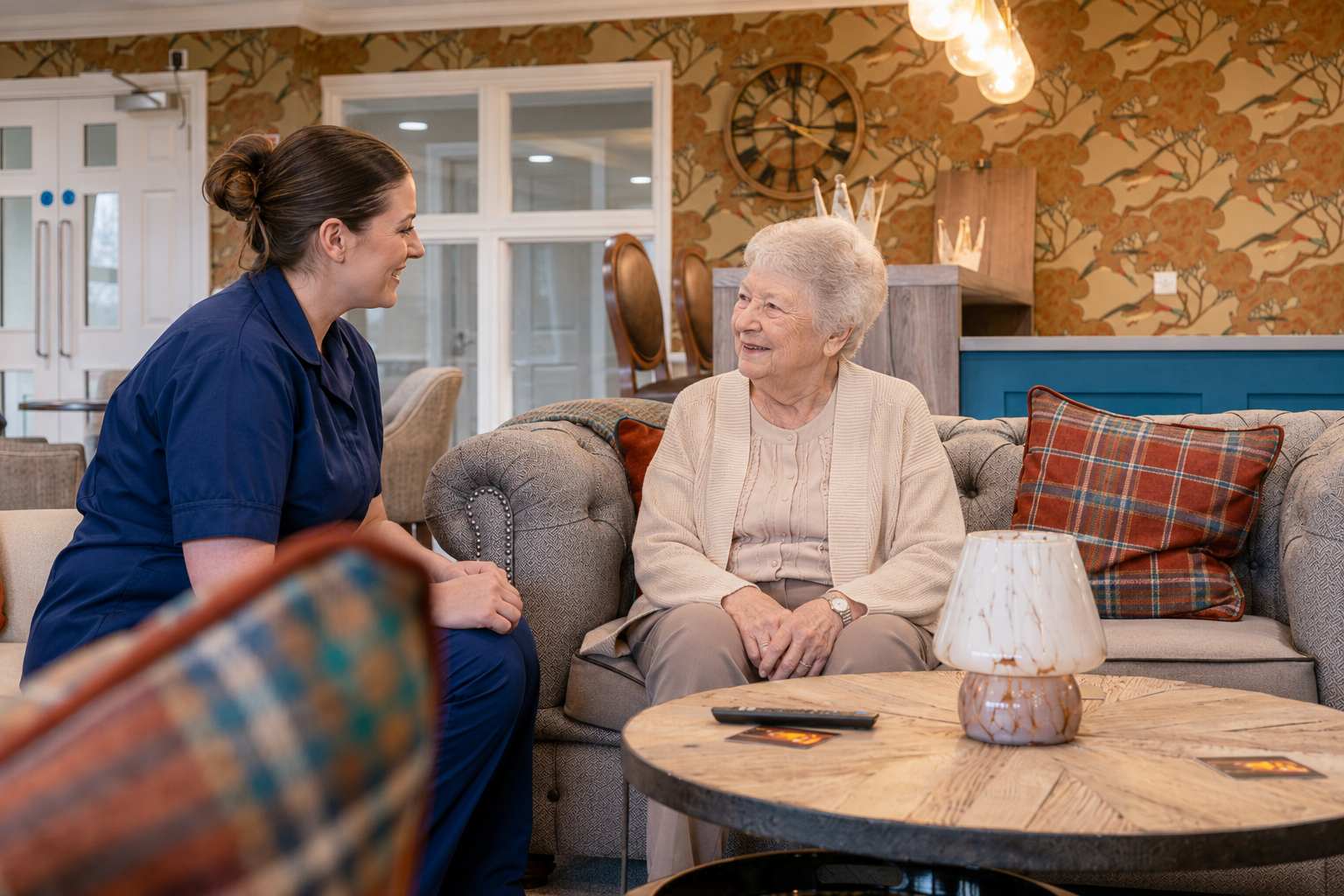
Long-Term Care Home in the Cotswolds
“Mum is no longer safe at home, but we do not know whether she needs residential care, nursing care or dementia care.”
Choosing long-term care for someone you love is one of the most emotional decisions a family can make. It often begins after a fall, a hospital stay, a change in memory, increasing frailty, carer exhaustion or the realisation that short visits and home support are no longer enough.
This guide explains how to choose a long-term care home in the Cotswolds, what the difference is between residential care, nursing care and dementia care, and what to check before arranging a visit.
Esmere Gardens is a CQC-rated Good residential, nursing, dementia and respite care home in Moreton-in-Marsh, Gloucestershire. We support families from Moreton-in-Marsh, Chipping Campden, Stow-on-the-Wold, Broadway, Kingham, Daylesford, Bourton-on-the-Water and the surrounding Cotswolds.
The quick answer
Residential care may be right when someone needs support with daily life, personal care, meals, routines, companionship and safety.
Nursing care may be right when someone has more complex health needs and requires care from qualified nurses as well as day-to-day personal support.
Dementia care may be right when memory loss, confusion, anxiety, wandering, unsafe routines or changing behaviour mean the person needs more structure, reassurance and support.
Permanent care may be right when short-term help is no longer enough and the safest, kindest option is a settled home where the person can be known, supported and cared for over time.
At Esmere Gardens, families can discuss residential, nursing, dementia, respite and urgent care with one team in one calm Moreton-in-Marsh home.
Trusted long-term care in the North Cotswolds
- CQC-rated Good overall, including Safe, Effective, Caring, Responsive and Well-led.
- 9.9 carehome.co.uk review score from 24 reviews.
- Permanent and respite care listed for residential, nursing, dementia residential and dementia nursing care.
- All-inclusive care, 24-hour nursing support and dedicated onsite/private GP support.
When should families consider long-term care?
Long-term care becomes worth considering when daily life at home no longer feels safe, settled or manageable. This may happen gradually, or it may happen quickly after a fall, infection, hospital discharge, bereavement, carer illness or a sudden change in mobility or memory.
Families often start searching for a care home when they notice:
- increasing falls, confusion or night-time wandering
- missed medication, poor nutrition or dehydration
- difficulty washing, dressing, eating or moving safely
- carer burnout or family support becoming unsustainable
- hospital discharge plans that require more support than home can provide
- dementia symptoms that make the person unsafe or distressed at home
A good long-term care decision should not feel like giving up. It should feel like choosing safety, dignity, companionship and clinical reassurance around the person you love.
Not sure what type of care is needed?
Our team can talk through what has changed, what support is needed now, and whether residential, nursing or dementia care may be suitable following assessment.
Residential care, nursing care and dementia care explained
Residential care
Residential care at Esmere Gardens supports people who need help with daily life, personal care, meals, medication routines, companionship and gentle reassurance. It may be suitable when someone does not require regular nursing care but would benefit from a safe, sociable and supportive home.
Nursing care
Nursing care at Esmere Gardens is for people with more complex or ongoing health needs. This may include clinical monitoring, mobility concerns, recovery after illness, medication support, frailty, wounds, long-term conditions or changing needs that require qualified nursing oversight.
Dementia care
Dementia care at Esmere Gardens focuses on safety, calm routines, dignity, familiarity and meaningful daily life. Dementia care may be appropriate when memory changes, confusion, anxiety, wandering or altered behaviour mean the person needs more structure and reassurance.
Respite that may lead to permanent care
Respite care can help after illness, surgery, hospital discharge or carer exhaustion. In some cases, a short stay helps families understand whether a longer-term move would be safer and kinder.
What to check when choosing a Cotswolds care home
When comparing care homes near Moreton-in-Marsh, Chipping Campden, Stow-on-the-Wold, Broadway, Kingham, Daylesford and Bourton-on-the-Water, look beyond the building. A beautiful home matters, but trust comes from care quality, communication, safety, staff knowledge and whether the person will be known as an individual.
1. Check the CQC rating
The Care Quality Commission regulates care homes in England. Esmere Gardens is rated Good overall by the CQC. You can check the public CQC profile here: Esmere Gardens CQC profile.
2. Read independent reviews
Reviews help families understand what daily life feels like from the perspective of residents, relatives and visitors. Esmere Gardens has a 9.9 carehome.co.uk review score from 24 reviews. Read the profile here: Esmere Gardens carehome.co.uk reviews.
3. Ask what happens if needs change
A care home should assess whether it can meet a person’s needs now and whether support can adapt if health, mobility, memory or personal-care needs increase. Esmere Gardens provides residential, nursing, dementia, respite and urgent care, subject to assessment and suitability.
4. Understand fees and what is included
Families should ask what is included, what may be charged separately, and how fees may change if care needs increase. Esmere Gardens provides an all-inclusive approach to care fees designed to make regular costs clearer from the beginning.
5. Use trusted external guidance
For additional independent advice, families may find the NHS guide to care homes, NHS dementia and care homes guidance and Age UK care home checklist helpful before visiting.
Why families choose Esmere Gardens for long-term care
Esmere Gardens is designed for families who want more than a bed in a care home. They want reassurance that Mum, Dad or a loved one will be safe, noticed, comfortable and supported by people who understand them.
- One home with several care pathways: residential, nursing, dementia, respite and urgent care.
- 24-hour nursing reassurance: support for residents whose health needs are more complex.
- Dedicated onsite/private GP support: added reassurance for families who worry about delays in medical review.
- All-inclusive care: clearer expectations around regular care, meals, activities and everyday support.
- Strong independent proof: CQC Good rating and high carehome.co.uk review score.
- Cotswold location: easy for families visiting from Moreton-in-Marsh, Stow-on-the-Wold, Chipping Campden, Broadway, Kingham, Daylesford and surrounding villages.
The best way to decide is to visit
Online research helps, but a private visit lets you see the atmosphere, meet the team, ask direct questions and picture whether your loved one could feel settled here.
Long-term care near Moreton-in-Marsh and the Cotswolds
Esmere Gardens is located on Stow Road in Moreton-in-Marsh, Gloucestershire, supporting families across the North Cotswolds and surrounding areas.
Our location is convenient for families looking for residential care, nursing care, dementia care or permanent care near:
- Moreton-in-Marsh
- Chipping Campden
- Stow-on-the-Wold
- Broadway
- Kingham
- Daylesford
- Bourton-on-the-Water
- Blockley, Bledington, Evesham, Chipping Norton and nearby Cotswold villages
A manageable distance helps families stay involved. They can visit for lunch, attend care discussions, enjoy time in the garden and remain part of everyday life.
Visit Esmere Gardens Nursing Home in Moreton-in-Marsh
Esmere Gardens Nursing Home is located at Stow Road, Moreton-in-Marsh, Gloucestershire GL56 0DS.
Questions to ask when visiting a long-term care home
Before choosing a permanent placement, take a written list of questions. The right home should welcome thoughtful questions and answer them clearly.
- What care does my loved one need now, and could that change?
- How are residents assessed before admission?
- How are families kept informed about health, mood and care changes?
- What nursing support is available day and night?
- How do you support people living with dementia?
- What is included in the weekly fee?
- Can families visit for meals, activities or time in the garden?
- How do you learn about a resident’s routines, preferences and life story?
- What happens if someone’s mobility, memory or health needs increase?
- What would the first week after moving in look like?
Bring your questions to Esmere Gardens
We will talk through care needs, fees, rooms, routines, nursing support, dementia care, family visits and the next steps calmly and clearly.
Frequently asked questions about long-term care at Esmere Gardens
What is the difference between residential care and nursing care?
Residential care supports people with daily living, personal care, meals, routines and companionship. Nursing care includes personal care, but also provides support from qualified nurses for people with more complex health needs.
Does Esmere Gardens offer permanent long-term care?
Yes. Esmere Gardens supports permanent and long-term placements, subject to assessment, availability and suitability. Care types include residential care, nursing care, dementia residential care and dementia nursing care.
Does Esmere Gardens provide dementia care?
Yes. Esmere Gardens supports people living with dementia, including those who may need residential dementia care or nursing dementia care, depending on their assessed needs.
Is Esmere Gardens a nursing home?
Yes. Esmere Gardens is a nursing home in Moreton-in-Marsh and provides 24-hour nursing support for residents who require nursing care.
What is Esmere Gardens’ CQC rating?
Esmere Gardens is rated Good overall by the Care Quality Commission, with Good ratings across Safe, Effective, Caring, Responsive and Well-led.
How much does care at Esmere Gardens cost?
Fees depend on the type of care, assessment outcome and current terms. carehome.co.uk lists guide weekly fees for Esmere Gardens, but families should always contact the home directly for current availability, personalised costs and what is included.
Can respite care become permanent care?
Sometimes. A respite stay can help a person experience the home, meet the team and understand daily life before a longer-term decision is made. Any move from respite to permanent care depends on assessment, consent, suitability and room availability.
Which areas does Esmere Gardens serve?
Esmere Gardens supports families from Moreton-in-Marsh, Chipping Campden, Stow-on-the-Wold, Broadway, Kingham, Daylesford, Bourton-on-the-Water and surrounding Cotswold communities.
How do I arrange a visit?
Call Esmere Gardens on 01608 692222 or use the website contact form to book a visit. The team can discuss care needs, availability, fees, assessment and next steps.

How connected medical teams and smart monitoring are improving safety in country residential settings
“If Mum moves to a care home in a country town, will somebody notice quickly if her health or mobility suddenly changes?”
It is one of the most important questions families ask when considering a care home in Gloucestershire or the Cotswolds.
Rural surroundings can offer peace, space and a calmer quality of life. However, families may worry about distance from hospitals, access to clinicians and what would happen if their relative fell, became unwell during the night or showed a subtle change that required attention.
At Esmere Gardens Nursing Home in Moreton-in-Marsh, safety does not depend on one device or one person.
It comes from several layers working together:
- attentive carers who get to know each resident
- registered nursing support available 24 hours a day
- dedicated private GP support included within the care package
- structured care planning and clinical escalation
- modern fall-detection and movement-sensing technology
- circadian lighting designed to support healthier day-and-night routines
- a connected wireless nurse-call system
- continued investigation and investment in technology that may improve residents’ safety, comfort and wellbeing
The result is a care environment designed to feel warm and homely while being supported by modern systems behind the scenes.
The quick answer
A rural care home can provide safe and responsive care when it combines strong staffing, clear clinical pathways, reliable communication and technology that supports—not replaces—human judgement.
At Esmere Gardens, carers and registered nurses remain at the centre of care. They are supported by:
- Cogvis movement and fall-sensing technology in suitable resident rooms
- Circadacare lighting designed around the body’s natural day-and-night rhythm
- a Prestige wireless nurse-call system
- 24-hour nursing oversight
- dedicated private GP support
- personalised care plans and regular review
Technology cannot prevent every fall, illness or hospital admission. Its value is in giving the team additional information, enabling quicker alerts and helping staff direct their attention where it may be needed most.
For families, that creates an extra layer of reassurance without turning the home into a clinical or intrusive environment.
Why do families worry about safety in rural care homes?
Choosing a country care home can create conflicting emotions.
Families may value the quieter surroundings, gardens, fresh air and sense of community. At the same time, they may wonder whether a rural location means slower access to healthcare or fewer resources when somebody becomes unwell.
Common questions include:
- What happens if Mum falls during the night?
- How quickly will somebody know that Dad has left his bed?
- Are registered nurses available in the home?
- How are gradual changes in health identified?
- Can a GP review a resident without the family arranging everything?
- How does the team respond outside normal surgery hours?
- Will the home tell us quickly if something changes?
- Can the home support increasing needs without another move?
These are not negative questions. They are exactly the questions families should ask when comparing long-term residential care, nursing care or dementia care.
A beautiful building and peaceful location matter, but they must be supported by clear systems for observation, communication, clinical review and escalation.
What does safety really mean in a residential or nursing home?
Care-home safety is sometimes reduced to preventing visible accidents. In reality, it is much broader.
Safe care includes:
- knowing each resident’s usual routines and abilities
- recognising when something has changed
- helping people move safely without unnecessarily restricting them
- managing medication correctly
- monitoring nutrition and hydration
- reducing avoidable falls and pressure damage
- supporting restful sleep and daytime engagement
- responding promptly when a resident requests help
- knowing when nursing or medical advice is needed
- communicating clearly with relatives
- respecting dignity, consent, choice and privacy
The strongest care homes do not rely on a single protective measure.
They create several connected layers of reassurance so that if one concern develops, staff have more than one way to notice it and respond.
At Esmere Gardens, this means combining human observation, 24-hour nursing care, private GP support, personal alarm systems and carefully selected care technology.
Technology should support carers—not replace human care
No sensor understands a resident in the same way as a carer who knows them well.
A device may detect movement, but it cannot fully understand why a resident is restless. It cannot know whether someone is missing their family, experiencing pain, looking for the bathroom or following a lifelong routine.
That understanding comes from relationships.
Care staff may notice that a resident:
- is quieter than usual
- has stopped enjoying a favourite meal
- appears more anxious in the evening
- is walking less confidently
- is sleeping more during the day
- has begun visiting the bathroom more frequently
- seems unusually confused
- is reluctant to join activities
These small observations can be clinically important.
Technology adds another layer of information, but trained staff remain responsible for interpreting what is happening, speaking with the resident and deciding what action is appropriate.
Our principle at Esmere Gardens: technology should give carers more opportunity to provide personal care, reassurance and companionship—not create distance between staff and residents.
Connected medical teams: the safety network behind everyday care
A connected care team is much more than having access to a telephone or occasional video appointment.
It means that carers, registered nurses, GPs, pharmacists, community clinicians and other professionals can contribute to one coordinated understanding of the resident’s needs.
The NHS Enhanced Health in Care Homes framework supports this proactive and multidisciplinary approach.
The framework is designed to move care away from waiting for a crisis and towards:
- personalised assessment
- shared care planning
- regular clinical review
- structured medication review
- better information sharing
- earlier recognition of deterioration
- coordination between care homes and wider health services
At Esmere Gardens, this connected approach is strengthened by registered nurses in the home and dedicated private GP support.
When somebody’s health changes, the team can provide clear observations about what has happened in the place where the resident lives.
This may include:
- changes in mobility or balance
- temperature, blood pressure or oxygen readings where clinically appropriate
- changes in appetite and fluid intake
- sleep disruption
- pain or discomfort
- skin concerns
- changes in behaviour or cognition
- the circumstances surrounding a fall
Better information supports better clinical decisions.
How do fall sensors support safer care at Esmere Gardens?
Falls are a major concern for older people and their families.
The risk can increase through frailty, reduced balance, medication effects, poor vision, dementia, infection or a sudden decline following hospital treatment.
Traditional alarms may only activate after a resident has pressed a button or when a basic mat detects pressure.
Esmere Gardens has invested in technology from Cogvis to provide more intelligent movement and fall-related monitoring for suitable residents.
The Cogvis system uses a 3D infrared sensor and software designed to recognise defined movements and critical events.
Depending on how an individual system is configured, functions may include:
- fall detection
- fall-event analysis
- bed-exit or room-exit alerts
- absence detection
- sit-to-stand detection
- movement and activity analysis
- restlessness or inactivity information
- support for personalised fall-prevention planning
Read more about the Cogvis monitoring solution for hospitals and care facilities.
The purpose is not to stop residents moving freely.
It is to help the care team understand individual risk and receive a timely alert when a movement may require support.
From responding to falls to understanding risk
Fall prevention is not simply about reacting after someone reaches the floor.
The team also needs to understand:
- when the resident is most likely to become unsteady
- whether they frequently attempt to stand without support
- whether sleep disruption is increasing movement at night
- whether the room layout contributes to risk
- whether medication or illness may have changed their mobility
- whether their current mobility plan remains appropriate
Technology can contribute additional information to these discussions.
It does not guarantee that every fall will be prevented. It can, however, support more personalised assessment and help staff respond to some events more quickly.
Can monitoring technology protect safety without compromising privacy?
Families may understandably feel uncomfortable with the idea of a camera inside a resident’s bedroom.
Cogvis states that its system does not use an ordinary video camera. It uses infrared depth information to interpret movement and critical situations.
According to the manufacturer:
- the sensor does not record conventional identifiable video footage
- information is processed on the device
- the system uses depth data to represent relevant events
- settings can be personalised for individual rooms and residents
This distinction is important.
A good safety system must balance several responsibilities:
- protecting a resident from avoidable harm
- supporting freedom of movement
- respecting privacy
- considering mental capacity and consent
- avoiding unnecessary or excessive monitoring
- reviewing whether the technology remains appropriate
Technology should be used in a personalised and proportionate way, based on the resident’s circumstances and care plan.
It should never become an excuse for reducing meaningful contact or routine care.
Why does Esmere Gardens use circadian lighting?
Lighting affects much more than whether a room appears bright enough.
Natural daylight changes throughout the day. Those changes help the body regulate its circadian rhythm—the internal cycle influencing sleep, alertness and patterns of activity.
Older people may spend more time indoors and receive less exposure to strong natural daylight. Dementia, reduced mobility and disrupted routines can make this more significant.
Esmere Gardens has invested in lighting technology from Circadacare.
The system is designed to vary aspects of light through the day, helping imitate the pattern of natural daylight:
- brighter, more stimulating light earlier in the day
- warmer and less stimulating light towards the evening
- lighting intended to support clearer distinctions between daytime and night-time
Circadacare explains that circadian lighting uses LED technology to adjust the intensity and wavelength of light in ways intended to support the body’s natural rhythm.
You can explore the science behind Circadacare’s circadian lighting.
How may circadian lighting support residents?
Appropriately designed lighting may support:
- healthier sleep-and-wake patterns
- greater daytime alertness
- improved engagement in activities
- a calmer evening environment
- safer visibility and movement
- wellbeing for residents living with dementia
- reduced disruption caused by harsh or unsuitable lighting
Lighting is not a medical treatment and will not resolve every sleep or dementia-related difficulty.
It forms part of a wider approach that includes meaningful activity, comfortable routines, pain management, nutrition, medication review and personalised dementia support.
How does the nurse-call system support residents day and night?
Residents need a simple and dependable way to ask for help.
A nurse-call system may appear basic compared with newer artificial-intelligence technology, but it remains one of the most important safety systems in a care home.
Esmere Gardens uses a wireless nurse-call solution supported by Prestige Nursecall.
Prestige describes its systems as using long-range wireless radio technology, rechargeable components and durable equipment designed for care environments.
A connected nurse-call system can support:
- resident call points in bedrooms
- requests for assistance from bathrooms and shared areas
- alerts reaching relevant members of staff
- visibility of where assistance has been requested
- faster prioritisation when several calls occur
- integration with appropriate falls and safety equipment
Technology still depends on people.
The important questions are not only whether the home has call bells, but also:
- how staff receive alerts
- how calls are prioritised
- what happens when a resident cannot press a button
- how the system is checked and maintained
- how faults are escalated
- how response patterns are monitored
At Esmere Gardens, the nurse-call system forms part of a wider safety process rather than operating as a stand-alone piece of equipment.
How can connected care identify changes before they become an emergency?
Serious health deterioration does not always begin with an obvious emergency.
It may start with subtle signs:
- a resident walking more slowly
- unusual tiredness
- reduced appetite
- drinking less
- increased confusion
- restlessness during the night
- a change in continence
- avoiding social activity
- breathing appearing slightly different
- requiring more help to stand
The NHS Enhanced Health in Care Homes framework refers to these kinds of observations as potential “soft signs” of deterioration.
They matter because changes may be noticed before traditional clinical measurements become clearly abnormal.
At Esmere Gardens, early recognition depends on bringing several pieces of information together:
- staff knowledge of the resident
- daily care records
- nursing assessment
- medication information
- nutrition and hydration records
- mobility and fall-risk information
- appropriate sensor or alert information
- input from relatives
- GP or wider clinical review
A sensor may show that someone is getting out of bed more frequently. A carer may know they are also eating less. A nurse may recognise that their confusion has increased.
Together, those details create a clearer reason to investigate.
How can technology support people living with dementia?
People living with dementia may experience changes in memory, spatial awareness, sleep, communication and judgement.
They may also become distressed by intrusive checks, unfamiliar equipment or environments that feel overly clinical.
The right technology should therefore be discreet and personalised.
At Esmere Gardens, technology may support dementia care by helping the team:
- recognise changes in night-time movement
- identify increasing restlessness
- support safer bed exits and movement
- reduce the need for unnecessarily disruptive checks
- create a clearer day-and-night lighting pattern
- respond more quickly when assistance may be needed
- review patterns alongside the resident’s wider care plan
However, technology is only one part of personalised dementia care.
Residents also need:
- familiar routines
- consistent and reassuring communication
- meaningful activity
- comfortable surroundings
- support with nutrition and hydration
- appropriate pain assessment
- understanding of their life history
- patient staff who recognise what individual behaviour may mean
Technology works best when it helps staff understand and respond to the person—not merely manage symptoms or movement.
What difference does private GP support make at Esmere Gardens?
Technology can identify a possible concern, but it cannot diagnose an infection, review medication or decide whether treatment is required.
That is why clinical access remains essential.
Esmere Gardens provides dedicated private GP support as part of its care package.
This gives residents and the care team an additional route to medical guidance and continuity.
The value is not simply the availability of a doctor.
It is the combination of:
- staff who know the resident
- registered nurses who can assess and explain clinical concerns
- care records showing what has changed
- technology or monitoring information where appropriate
- a GP who can consider the overall picture
This may support:
- review of new or changing symptoms
- medication discussions
- management of long-term conditions
- clinical advice following a fall
- review after a hospital stay
- earlier conversations when a resident’s health changes
Private GP provision does not replace emergency services, hospital specialists or all NHS community healthcare.
It adds another layer of clinical continuity within the home.
Can connected care prevent unnecessary hospital admissions?
No care home can promise that a resident will never need hospital treatment.
Some conditions require emergency assessment, specialist investigation or treatment that can only be provided in hospital.
In those circumstances, prompt hospital care is the right outcome.
However, proactive care may help reduce avoidable crises by:
- recognising deterioration earlier
- reviewing medication when problems arise
- supporting hydration and nutrition
- responding promptly after a fall
- identifying increasing mobility risk
- obtaining clinical advice before a concern becomes more serious
- planning for known long-term conditions
- supporting recovery following hospital discharge
The objective is not to avoid hospital at all costs.
It is to help residents receive the right care, in the right place, at the right time.
Families seeking temporary support following an illness or admission can explore respite and post-hospital care at Esmere Gardens.
Why ongoing investment in care technology matters
Technology develops quickly, but care homes should not adopt every new product simply because it appears innovative.
The important question is whether a system makes a meaningful difference to residents and staff.
At Esmere Gardens, we continue to investigate technologies that may:
- help identify risks earlier
- support safer movement and fall prevention
- improve sleep and daytime wellbeing
- strengthen communication and escalation
- give carers better information
- reduce unnecessary disruption for residents
- support more personalised care planning
- give staff more time for direct resident care
Before technology becomes part of care, it should be considered against practical questions:
- Does it solve a real resident need?
- Is it safe and reliable?
- Does it protect privacy?
- Can it be personalised?
- Will staff understand how to use it?
- How will alerts be acted upon?
- Does it integrate with existing care systems?
- Will it improve care rather than merely produce more data?
Investment is not only about purchasing equipment.
It includes training, maintenance, review and ensuring that the technology remains appropriate for the individual resident.
15 questions to ask about safety and technology when visiting a care home
Families are often shown bedrooms, lounges and menus without being told enough about what happens when a resident’s condition changes.
Ask the following questions when comparing residential or nursing homes:
- Are registered nurses available in the home, and at what times?
- What happens if a resident falls during the night?
- How do staff know when somebody who cannot use a call bell needs help?
- What fall-detection or prevention technology is available?
- Does bedroom monitoring use an ordinary camera?
- How are consent, privacy and mental capacity considered?
- How are call-bell alerts received and prioritised?
- How quickly are significant changes communicated to relatives?
- How do staff identify early signs of infection or deterioration?
- What GP or clinical support is available?
- How are medication reviews organised?
- How does the home support residents who are awake or restless at night?
- Can the home support increasing nursing or dementia needs?
- How are safety systems maintained and tested?
- Can you give a real example of how the team responded when a resident’s needs changed?
The final question is especially useful.
A practical example reveals whether the home’s systems genuinely work together or whether “innovation” is simply being used as a marketing phrase.
Safe residential and nursing care in Moreton-in-Marsh and the Cotswolds
Esmere Gardens is a residential and nursing home in Moreton-in-Marsh, Gloucestershire.
Our location is accessible to families looking for a safe care home near:
- Moreton-in-Marsh
- Stow-on-the-Wold
- Chipping Campden
- Blockley
- Broadway
- Bourton-on-the-Hill
- Bourton-on-the-Water
- Shipston-on-Stour
- Evesham
- Chipping Norton
- Northleach
- Stratford-upon-Avon
- the wider North Cotswolds
We also support families from across Gloucestershire and neighbouring parts of Warwickshire, Worcestershire and Oxfordshire.
Rural care should not mean choosing between peaceful surroundings and modern support.
The right home can provide both: a calm place to live and a connected care team ready to respond when something changes.
Esmere Gardens Nursing Home in Moreton-in-Marsh
Why Esmere Gardens is the easy choice for families
Choosing a care home can feel complicated because every provider appears to promise safety, dignity and person-centred care.
The real difference is what sits behind those promises.
At Esmere Gardens, families do not have to choose between a homely environment and strong clinical support.
Residents benefit from a complete care model that brings together:
- long-term residential care
- 24-hour registered nursing care
- personalised dementia support
- respite and short-term care
- dedicated private GP support
- Cogvis fall and movement-sensing technology
- Circadacare lighting designed around healthy day-and-night rhythms
- a connected Prestige nurse-call system
- clear care planning and family communication
- continued investment in relevant care innovation
- a clear all-inclusive care package
One home—even if needs change
An older person’s needs may change gradually or unexpectedly.
A resident who initially needs personal care may later require nursing support, dementia care or additional clinical oversight.
Having residential, nursing, dementia and short-term care available within one home may reduce the likelihood of another disruptive move, provided Esmere Gardens can continue meeting the person’s assessed needs.
Technology chosen for a reason
Our technology is not installed to make the home appear futuristic.
It is chosen to answer practical care questions:
- Can staff be alerted more quickly when someone may have fallen?
- Can we better understand changes in movement or night-time routine?
- Can lighting support a calmer and clearer daily rhythm?
- Can residents request help through a dependable system?
- Can care information support earlier clinical conversations?
Clinical reassurance built into everyday care
Fall sensors and lighting cannot replace clinical judgement.
That is why Esmere Gardens combines its technology with registered nurses and dedicated private GP support.
When something changes, residents are surrounded by people who know them, understand their care plan and can gather the information needed to decide what should happen next.
Peace of mind without losing warmth
The strongest safety systems are often the ones residents barely notice.
A bedroom should still feel like a bedroom. A corridor should feel welcoming. A resident should be supported as a person—not watched as a risk.
At Esmere Gardens, technology operates quietly behind a care approach built around relationships, dignity, choice and everyday quality of life.
See the difference for yourself
Visit Esmere Gardens to meet the team, see the home and ask how our nursing support, private GP service and care technology work together.
You do not need to make a decision during your visit.
Arrange a personal visit
or call
01608 692222.
Frequently asked questions about technology and safety in care homes
Can a rural care home provide safe clinical care?
Yes. A rural care home can provide responsive care when it has appropriate staffing, nursing oversight, reliable communication, clear escalation procedures and strong links with medical and community services. Location alone does not determine the quality of care.
Does Esmere Gardens have registered nurses available 24 hours a day?
Yes. Esmere Gardens provides 24-hour nursing care for residents whose assessed needs require registered nursing support.
Does Esmere Gardens have a private GP?
Esmere Gardens provides dedicated private GP support as part of its care package. This adds another route to medical advice and continuity alongside NHS, community, specialist and emergency services.
What fall-detection technology does Esmere Gardens use?
Esmere Gardens uses Cogvis movement and fall-sensing technology for suitable residents. The system uses 3D infrared depth information and can be configured to recognise defined events such as falls, bed exits, absence and certain movement patterns.
Does the Cogvis system film residents?
Cogvis states that its system does not use a conventional video camera. It uses infrared depth data rather than ordinary identifiable video footage. Monitoring should still be used proportionately and with appropriate consideration of consent, capacity and privacy.
Can fall sensors prevent every fall?
No. No technology can guarantee that every fall will be prevented. Sensors may provide earlier alerts, contribute information about movement patterns and support personalised fall-risk planning, but they must be combined with staff observation and appropriate clinical assessment.
What is circadian lighting?
Circadian lighting changes aspects of light through the day to reflect the natural pattern of daylight. It commonly provides brighter, more stimulating light earlier in the day and warmer, less stimulating light towards the evening.
Why is circadian lighting useful in a care home?
Appropriate lighting may support clearer sleep-and-wake routines, daytime alertness, evening calm, safer visibility and resident engagement. It forms part of a wider approach to sleep, dementia support and wellbeing rather than acting as a stand-alone treatment.
What nurse-call system does Esmere Gardens use?
Esmere Gardens uses a wireless nurse-call system supported by Prestige Nursecall. It helps residents request assistance and enables alerts to reach the relevant care team.
What happens if a resident cannot press a call bell?
The care plan should identify how the resident communicates and whether additional monitoring or assistance is required. Staff observation, scheduled support and suitable sensor technology may be used where appropriate.
Does technology replace regular checks by staff?
No. Technology supports care staff but does not replace personal contact, nursing assessment, reassurance, observation or companionship.
Can monitoring help someone living with dementia?
It may help the team identify changes in movement, bed exits, restlessness or night-time routines. Any monitoring must be personalised and considered alongside the resident’s privacy, preferences, mental capacity and wider dementia-care plan.
How does Esmere Gardens identify early health deterioration?
The team uses staff observations, care records, nursing assessment, medication information, nutrition and hydration monitoring, mobility information and relevant alert data. Concerns can then be escalated for nursing or medical review.
Can connected care reduce hospital admissions?
Earlier recognition and coordinated clinical support may help some concerns to be managed before they become emergencies. However, hospital treatment remains necessary when a resident requires emergency, specialist or acute care.
Is care technology included within Esmere Gardens’ fees?
Esmere Gardens operates an all-inclusive care approach covering its wider care package. Families should discuss the proposed care plan and included services with the admissions team so they understand what applies to their relative.
Can Esmere Gardens support residents whose needs increase?
Esmere Gardens provides residential, nursing and dementia care. This may allow support to adapt without a resident moving to another home, provided their changing needs remain within the services Esmere Gardens can safely provide.
Where is Esmere Gardens located?
Esmere Gardens Nursing Home is on Stow Road in Moreton-in-Marsh, Gloucestershire. It is accessible to families across the North Cotswolds and surrounding parts of Gloucestershire, Warwickshire, Worcestershire and Oxfordshire.
How can I arrange a visit to Esmere Gardens?
Call 01608 692222 or use the Esmere Gardens website contact form to discuss your relative’s needs and arrange a personal visit.

My Parent Refuses a Care Home: How to Talk About Long-Term Care Without Pressure or Guilt
“Mum needs more support—but every time we mention a care home, she refuses to discuss it.”
Few family conversations carry more emotion than suggesting that an older parent may need long-term residential care.
You may be worried about falls, missed medication, loneliness, memory loss or whether they are eating properly. Your parent may hear something very different: that their independence is being taken away, their home is being lost or decisions are being made without them.
When an elderly parent refuses a care home, the answer is rarely to argue harder. A calmer approach is to understand what they are afraid of, involve them in each step and focus on what good residential care could help them keep—not only what they may need to give up.
This guide offers practical and compassionate advice for families considering permanent residential care in Moreton-in-Marsh, Gloucestershire, the Cotswolds and surrounding communities within approximately 25 miles.
The quick answer
If your parent refuses to consider a care home, begin by listening rather than trying to win the argument.
Ask what worries them most. It may be losing control, leaving their home, being separated from familiar routines, worrying about money or believing that accepting care means they have failed.
Use specific examples of what has changed, discuss several possible solutions and involve them in visits and decisions wherever possible. A relaxed visit or agreed respite stay can sometimes make residential care feel more familiar and less frightening.
If you are concerned that your parent may not understand or weigh up the risks involved, speak with their GP, social worker or local adult social care team about a mental-capacity or care-needs assessment.
Unless there is an immediate safety concern, this should usually be a series of respectful conversations—not one confrontation.
Why might an elderly parent refuse to move into a care home?
Refusing residential care does not necessarily mean your parent is being stubborn or unreasonable.
For someone who has lived independently for decades, even mentioning a care home can feel like a threat to their identity. Their house may represent marriage, family life, work, memories, privacy and control. Leaving it can feel like losing far more than a building.
Common reasons an older parent may resist long-term care include:
- Fear of losing independence: They may assume every choice will be taken away from them.
- Attachment to home: Familiar rooms, neighbours, possessions and routines provide emotional security.
- Outdated ideas about care homes: Their expectations may be based on institutional settings from many years ago.
- Fear of being forgotten: They may worry that family visits will become less frequent.
- Concern about cost: They may be anxious about savings, property or becoming a financial burden.
- Embarrassment or pride: Accepting support can feel like admitting weakness.
- Lack of awareness: They may not recognise how much their mobility, memory or ability to manage daily life has changed.
- Fear of the unknown: They may imagine a care home without ever having visited one.
- Concern about a partner or pet: They may fear separation from someone or something they love.
- Loss of control: Decisions may already feel as though they are being discussed around them rather than with them.
The first useful question is therefore not:
“How do we convince Mum to move?”
It is:
“What does Mum believe she will lose, and how can we address that fear honestly?”
When may it be time to discuss long-term residential care?
Families often delay the conversation because they do not want to upset their parent. That is understandable, but waiting for a serious fall, hospital admission or care breakdown can leave everyone making decisions under pressure.
It may be time to discuss residential care if you are noticing several of the following:
- repeated falls or increasing unsteadiness
- missed, duplicated or incorrectly taken medication
- weight loss, dehydration or food being left uneaten
- difficulty washing, dressing or using the bathroom safely
- increasing confusion, anxiety or distress
- wandering, becoming lost or leaving the home at unsafe times
- unpaid bills, financial mistakes or vulnerability to scams
- burns, floods, appliances left on or doors left unlocked
- frequent calls to relatives because the person feels frightened or alone
- repeated infections or hospital admissions
- home-care visits no longer covering the amount of support required
- a spouse or family carer becoming physically or emotionally exhausted
- the person spending most of the day alone without stimulation or companionship
No single sign automatically means that somebody must move into permanent care. The important question is whether the current arrangement remains safe, sustainable and capable of supporting the person’s quality of life.
A good discussion should compare all realistic options. These may include additional care at home, adaptations, community support, sheltered accommodation, a temporary stay or long-term residential care.
How do you talk to an elderly parent about moving into a care home?
The setting and timing of the conversation matter almost as much as the words.
1. Choose a calm moment
Do not begin the conversation during an argument, immediately after a fall or when your parent is tired, frightened or unwell.
Choose a familiar, private setting and allow enough time so the discussion does not feel rushed.
2. Begin with what you have noticed
Use specific observations rather than general criticism.
For example:
“I’ve noticed you’ve had three falls recently and you seem worried about using the stairs. How are you feeling about managing at home?”
This is less confrontational than saying:
“You clearly can’t cope on your own anymore.”
3. Ask before offering solutions
Before mentioning a care home, ask what your parent finds difficult and what they would like to change.
- What is becoming harder at home?
- When do you feel least safe?
- What do you enjoy about living here?
- What would you never want to lose?
- What kind of help would feel acceptable?
- What worries you about residential care?
Their answers give you something real to work with. A person who fears loneliness needs a different conversation from someone whose main concern is privacy or cost.
4. Make it a shared problem
Avoid presenting your parent as the problem.
Instead of saying:
“We need to do something about you.”
try:
“We need to find a plan that helps you feel safe and gives everyone more confidence.”
5. Do not demand an immediate decision
A move into long-term care is a major life decision. Your parent may need time to absorb the idea, ask questions and revisit the subject.
A successful first conversation may simply be one in which they agree to look at some information or visit a local care home.
What should you say—and what language should you avoid?
The words families use can either open the conversation or make a parent feel cornered.
| Instead of saying | Try saying |
|---|---|
| “You can’t cope anymore.” | “Some parts of daily life seem to be getting harder. Which parts worry you most?” |
| “We’re putting you in a home.” | “Can we look together at places that could give you more support and company?” |
| “It’s for your own good.” | “I want to understand what would help you feel safer without losing the things that matter to you.” |
| “You’re being difficult.” | “I can see this feels frightening. What is worrying you most?” |
| “You have no choice.” | “Let’s look at the realistic choices and what each one would mean.” |
| “You’ll love it once you’re there.” | “It will be a big change. Let’s visit, ask honest questions and see how it feels.” |
Avoid promises you cannot guarantee. Moving into residential care may bring safety, companionship and reassurance, but it can still involve grief and adjustment.
Honesty builds more trust than pretending the move will be effortless.
Make the conversation about protecting independence—not removing it
Families often describe residential care in terms of what a parent can no longer do.
A more helpful approach is to discuss what the right support could allow them to continue doing.
Good long-term residential care may help an older person:
- choose when they wake, rest and go to bed
- enjoy meals without shopping and cooking becoming a burden
- move around with appropriate support
- take medication safely
- spend time outdoors without being alone
- join activities when they wish
- maintain hobbies and interests
- receive visitors in comfortable surroundings
- avoid repeated crises and emergency hospital visits where possible
- feel part of a community rather than isolated at home
The goal should not be to make every resident live the same way. It should be to provide enough care, structure and reassurance for the person to continue making meaningful choices.
You can explore what everyday life looks like on our Life at Esmere Gardens page.
Expect more than one conversation
It is common for families to raise the subject once, receive an immediate “no” and conclude that the conversation is impossible.
But the first refusal may be an emotional response rather than a considered final decision.
It can help to:
- leave a few days between discussions
- ask different family members not to apply pressure simultaneously
- return to the specific difficulties your parent has acknowledged
- bring photographs or brochures rather than presenting an abstract idea
- offer to visit a home for coffee or lunch without discussing admission
- ask a trusted GP or professional to explain the available options
- write down your parent’s questions and get clear answers
- discuss what they would want if their health changed suddenly
Repeated conversations should not become repeated attempts to wear the person down. The purpose is to give them time, information and genuine involvement.
When should you involve a GP, social worker or other professional?
Sometimes a parent dismisses concerns from relatives because they believe the family is overreacting. A trusted professional can bring an independent view.
Consider involving the person’s GP, community nurse, occupational therapist or social worker if:
- their health or mobility has noticeably deteriorated
- they are repeatedly falling or becoming lost
- medication is not being taken safely
- you suspect untreated pain, infection, depression or delirium
- their memory or judgement has changed
- home-care support no longer appears sufficient
- family carers cannot safely continue providing the required support
- you are uncertain whether they understand the risks and available choices
A professional may recommend a health review, medication review, occupational-therapy assessment, care-needs assessment or mental-capacity assessment depending on the circumstances.
Families in Gloucestershire can read about requesting an adult social care assessment through Gloucestershire County Council.
If there is an immediate danger or urgent medical emergency, contact the appropriate emergency service rather than waiting for a routine care assessment.
Can you make a parent move into a care home if they refuse?
This depends on whether they have the mental capacity to make the particular decision about where and how they should live.
Under the Mental Capacity Act, an adult must be assumed to have capacity unless it is established otherwise.
A person should not be treated as lacking capacity simply because:
- they are elderly
- they have dementia or another diagnosis
- their family disagrees with them
- their choice appears risky
- they make what others consider an unwise decision
Mental capacity is decision-specific and time-specific. Someone may be able to make everyday choices but be unable to understand or weigh up a complex decision about accommodation and care.
For this particular decision, the person generally needs to be able to:
- understand the relevant information
- retain it long enough to consider the decision
- use or weigh the information and likely consequences
- communicate their decision in some way
Before concluding that someone lacks capacity, reasonable steps must be taken to help them understand and decide. This could include simpler language, photographs, visiting at a better time of day, reducing distractions or involving someone they trust.
What happens if they have capacity?
If your parent has the capacity to decide where they live, their decision must generally be respected—even when the family believes another option would be safer.
That does not mean relatives must personally provide unlimited care. Families should be honest about what support they can realistically and safely continue to offer.
What happens if they lack capacity?
If a proper assessment concludes that your parent lacks capacity to decide where they should live, any decision made on their behalf must be in their best interests.
The process should consider:
- their past and present wishes
- their feelings, values and beliefs
- the views of those who know them well
- any relevant Lasting Power of Attorney or Court of Protection deputy
- the risks and benefits of each realistic option
- whether the decision can be delayed
- which option places the least restriction on their rights and freedom
The person should remain involved as far as possible. A best-inter interests decision is not simply a vote among relatives or a decision based on what is most convenient for everybody else.
Read the current government guidance on mental capacity and best-interests decisions.
Important: This article provides general information for families in England and is not legal advice. Complex disagreements about capacity, residence, safeguarding or Lasting Power of Attorney should be discussed with the relevant health, social-care or legal professional.
What if a parent with dementia refuses residential care?
A diagnosis of dementia does not automatically mean that someone lacks mental capacity.
However, dementia can affect insight, memory, reasoning and the ability to recognise risk. A person may genuinely believe they are managing well because they cannot remember recent falls, missed meals, night-time confusion or the amount of help relatives are providing.
The Alzheimer’s Society guidance on deciding whether someone should move into a care home emphasises that the person should remain central to the decision.
When talking with someone living with dementia:
- use short, clear sentences
- discuss one issue at a time
- choose the time of day when they are usually most alert
- avoid testing their memory or trying to prove they are wrong
- acknowledge the emotion behind their words
- use photographs and visits to make options more concrete
- repeat information calmly when needed
- involve familiar people without surrounding or overwhelming them
- look for pain, infection, medication effects or distress that could worsen confusion
If they say, “I’m not leaving my home,” responding with facts and arguments may increase distress.
A gentler response could be:
“Your home means a great deal to you. What is the most important thing you would want to keep with you wherever you lived?”
This does not avoid the issue. It helps you understand the sense of safety, identity or familiarity behind the refusal.
Families can learn more about our approach to personalised dementia care in Moreton-in-Marsh.
Can respite care help when a parent refuses permanent care?
For some families, the phrase “permanent care home” feels too large and final to discuss at the beginning.
An agreed respite or short-term care stay may provide a more manageable first step.
A respite stay can allow an older person to:
- experience the home without immediately committing to a permanent move
- meet carers, nurses and other residents
- join meals and activities
- experience support with medication and personal care
- recover following illness, surgery or a hospital stay
- give a spouse or family carer a necessary break
- see whether they feel safer and less isolated
It can also help the family and care-home team understand the person’s routines, preferences and level of support.
A trial stay should not be presented dishonestly. If the person has capacity, they should understand what is being proposed and agree to it.
The aim is not to trick someone into long-term residential care. It is to replace assumptions with a real experience.
How to visit a care home with a reluctant parent
The first visit does not need to be described as an assessment or final decision.
You might say:
“We are not agreeing to anything today. Let’s have a cup of tea, look around and see what questions we have afterwards.”
Before visiting, tell the home that your parent feels uncertain. A thoughtful care-home team should avoid overwhelming them with sales language or forcing a decision.
During the visit, pay attention to:
- how staff greet and speak to residents
- whether residents appear comfortable and known as individuals
- how much choice people have in their daily routines
- whether bedrooms can include personal furniture and possessions
- the quality and atmosphere of meals
- access to gardens and outdoor space
- activities, companionship and quieter areas
- how medication and health changes are managed
- how the home communicates with families
- whether care can increase if needs change
- what is included in the weekly fee
- whether visits from family and friends are encouraged
The Care Quality Commission describes a good care home as one that is safe, effective, caring, responsive and well-led. You can read what the CQC says families should expect from a good care home.
After the visit, ask open questions:
- What felt better than you expected?
- What did you dislike?
- Did anybody make you feel comfortable?
- Which room or area did you like?
- What would you need to know before considering another visit?
Do not demand an answer while you are still in the car park. Give the person time to reflect.
How can families help a parent settle into residential care?
Even when residential care is the right decision, the move can still involve uncertainty, sadness and adjustment.
Settling in is easier when the care-home team understands the person beyond their medical and personal-care needs.
Useful information includes:
- their preferred name and how they like to be addressed
- usual waking and bedtime routines
- favourite meals, drinks, music and television programmes
- work history, family relationships and important memories
- religious, cultural or personal preferences
- hobbies and subjects they enjoy discussing
- things that cause anxiety or frustration
- how they communicate pain or discomfort
- what helps them feel reassured
- how much social interaction or quiet time they prefer
Where suitable, bring familiar photographs, a favourite chair, artwork, bedding or small possessions so the bedroom feels personal rather than temporary.
Families may also find it helpful to:
- agree a visiting pattern with the home
- avoid making every visit about whether the person wants to leave
- join them for an activity, drink or meal
- maintain familiar routines and family traditions
- raise concerns privately with staff rather than in front of the resident
- allow time for relationships with carers to develop
At Esmere Gardens, person-centred care begins with understanding each resident’s routines, preferences, health needs, relationships and life story. Read more about our approach to care.
How to manage the guilt of considering a care home
Many adult children ask themselves:
- Am I letting Mum down?
- Should I be doing more?
- Will Dad think I am abandoning him?
- What will other relatives think?
- Should I reduce my work or change my whole family life?
These feelings are common, but guilt is not always evidence that a decision is wrong.
Supporting a parent does not mean one relative must personally provide every hour of care, nursing, supervision and companionship indefinitely.
There may come a point when keeping someone at home depends on exhausted relatives, fragmented visits and constant anxiety. In that situation, arranging professional long-term care may be an act of responsibility rather than abandonment.
The question is not simply:
“Can we keep Mum at home for a little longer?”
It is also:
“Is Mum safe, comfortable, engaged and receiving the right support throughout the day and night?”
A care home should not replace the family. It should allow relatives to become daughters, sons, partners and grandchildren again, while trained staff take responsibility for day-to-day care.
Finding long-term residential care near Moreton-in-Marsh
Esmere Gardens is a residential and nursing care home in Moreton-in-Marsh, Gloucestershire, serving families across the Cotswolds and surrounding areas.
Our location is accessible for families considering a long-term care home near:
- Moreton-in-Marsh
- Stow-on-the-Wold
- Chipping Campden
- Broadway
- Blockley
- Bourton-on-the-Hill
- Bourton-on-the-Water
- Shipston-on-Stour
- Evesham
- Chipping Norton
- Northleach
- Burford
- Winchcombe
- Stratford-upon-Avon
- surrounding villages across Gloucestershire, Warwickshire, Worcestershire and Oxfordshire
Distance matters because families want to visit and remain part of everyday life. However, the nearest care home is not automatically the right one.
Families should also consider:
- whether the home can meet the person’s current needs
- whether care can adapt if those needs increase
- the availability of residential, dementia and nursing support
- staffing, communication and medical oversight
- the quality of daily life
- fee clarity and additional charges
- independent inspection and review information
Esmere Gardens Nursing Home in Moreton-in-Marsh
Why families consider Esmere Gardens for long-term care
Choosing permanent residential care is rarely an ordinary purchase. Families are trying to answer a much more personal question:
“Can I trust this home to keep someone I love safe, comfortable and known as an individual?”
Esmere Gardens is a CQC-rated Good care home and nursing home in Moreton-in-Marsh. Families can independently view our current Care Quality Commission information and assessment.
We provide:
- permanent and long-term residential care
- 24-hour nursing care
- personalised dementia care
- respite, recovery and trial stays
- dedicated onsite/private GP support
- a clear all-inclusive approach to care-home fees
- comfortable bedrooms and welcoming shared spaces
- meaningful activities, social opportunities and outdoor space
- care that can adapt as a resident’s needs change
For a parent who is frightened of losing their independence, the first step does not need to be an admission decision.
It can simply be a conversation, a cup of tea and an informal look around.
Visit without pressure or commitment
Bring your parent to see Esmere Gardens, meet the team and experience the home for themselves. You do not need to make a decision during the visit.
Frequently asked questions when a parent refuses a care home
What should I do if my elderly parent refuses to go into a care home?
Start by asking what specifically worries them and listening without immediately challenging their answer. Discuss the changes you have observed, explore all realistic care options and involve them in visits and decisions. Unless there is an urgent safety concern, expect the process to involve several conversations.
How do I talk to a parent about moving into residential care?
Choose a calm time, use specific observations and ask open questions. Focus on the support, companionship and independence that good residential care may provide. Avoid telling them that they cannot cope or announcing that the family has already decided what will happen.
Can I force my parent to move into a care home?
If your parent has the mental capacity to decide where they live, their choice must generally be respected. If capacity is uncertain, a proper decision-specific assessment may be needed. When a person lacks capacity, any decision must be made in their best interests and follow the Mental Capacity Act.
Does dementia automatically mean someone cannot decide where to live?
No. A dementia diagnosis does not automatically mean somebody lacks mental capacity. Capacity relates to the specific decision at the particular time. The person should be supported to understand and participate in the decision wherever possible.
What if my parent does not recognise that they need help?
Lack of awareness can occur for several reasons, including dementia, illness or fear. Record specific incidents and discuss them with the person’s GP or social worker. Avoid repeatedly trying to prove that your parent is wrong, as this can increase distress and resistance.
Does a Health and Welfare Lasting Power of Attorney let me choose a care home?
A Health and Welfare attorney may be able to make accommodation and care decisions when the person lacks capacity, depending on the document and circumstances. The attorney must follow the Mental Capacity Act and act in the person’s best interests. An attorney cannot simply override a capable person’s decision.
When should adult social care become involved?
Contact adult social care if your parent may have unmet care needs, home support is breaking down, family carers cannot continue safely or there are concerns about neglect, self-neglect or mental capacity. In an immediate emergency, contact the appropriate emergency service.
Can respite care help before choosing permanent residential care?
Yes. An agreed respite stay can allow a person to experience the home, meet the staff and receive support without immediately committing to a permanent move. It can also support recovery or give family carers a necessary break.
What is long-term residential care?
Long-term residential care provides permanent accommodation, personal care, meals, medication support, safety and everyday companionship. It is suitable for people who need ongoing help but do not necessarily require continuous registered nursing care.
What is the difference between residential care and nursing care?
Residential care supports personal care, daily living, safety and wellbeing. Nursing care also includes 24-hour support from registered nurses for people with more complex health or clinical needs.
What should I look for when choosing a permanent care home?
Look at staff interactions, care planning, safety, communication, meals, activities, outdoor space, medical support, fee transparency and whether the home can support changing needs. Review the home’s CQC information and visit in person before making a decision.
How close should a care home be to the family?
A manageable distance can make regular visits easier, but the quality and suitability of care should remain the priority. Esmere Gardens is based in Moreton-in-Marsh and is accessible to families across the Cotswolds and neighbouring parts of Gloucestershire, Warwickshire, Worcestershire and Oxfordshire.
How does Esmere Gardens help a new resident settle?
Our approach is shaped around the resident’s routines, preferences, health needs, relationships and life story. Families are encouraged to share the small details that help the person feel familiar, reassured and understood.
Can I visit Esmere Gardens without committing to a move?
Yes. Families can arrange an informal visit to see the home, meet the team and ask questions without making a decision or commitment. Call 01608 692222 or use the website contact form.

How neighbourhood primary care partnerships are reshaping residential support in rural England
“How will Mum receive the right medical support if we choose a care home in a rural area?”
It is one of the most important questions families ask when comparing residential care, nursing care or dementia care in the Cotswolds.
Living outside a large town should not mean accepting fragmented healthcare. A well-run care home should have clear arrangements for GP support, medication reviews, community nursing, hospital discharge and urgent changes in a resident’s health.
For families considering a care home in Moreton-in-Marsh, Stow-on-the-Wold, Chipping Campden, Broadway or the wider Gloucestershire area, the key is not simply whether medical services are available. It is how confidently those services work together around the person.
The quick answer
Care homes in England normally work with local GP practices, Primary Care Networks, community nurses, pharmacists and other health professionals. NHS guidance expects care-home residents to receive proactive, coordinated healthcare rather than waiting for a crisis.
However, the consistency and accessibility of this support can vary. Families should therefore ask exactly who provides medical oversight, how often residents are reviewed, what happens when someone becomes unwell and how quickly the family will be contacted.
How does medical support work in a care home?
A care home is responsible for a resident’s day-to-day care, safety, comfort and wellbeing. Healthcare is normally delivered through a wider team that may include:
- GPs and advanced clinical practitioners
- Registered nurses employed by the nursing home
- District and community nurses
- Clinical pharmacists
- Physiotherapists and occupational therapists
- Community mental health and dementia teams
- Dietitians, speech and language therapists and specialist clinicians
- Urgent community response and ambulance services
The care-home team remains central because staff are with residents throughout the day and night. They may be the first to notice a subtle change in appetite, mobility, sleep, breathing, skin condition, confusion, mood or behaviour.
Good care is therefore not simply about calling a doctor when somebody becomes seriously unwell. It is about recognising changes early, recording them accurately and knowing who to contact before a manageable concern becomes a crisis.
This is particularly important for people receiving 24-hour nursing care, living with several long-term health conditions or needing specialist dementia care.
What are Primary Care Networks—and how do they support care homes?
Primary Care Networks, commonly called PCNs, bring local GP practices together with community, pharmacy, mental health, social care, hospital and voluntary services.
NHS England describes approximately 1,250 PCNs across England. They usually serve communities of around 30,000 to 50,000 people, although the structure can be adapted to reflect local geography and population needs.
For an older person living in a residential or nursing home, the purpose of this model is straightforward: different professionals should work as one connected team rather than expecting the resident or family to coordinate separate services themselves.
In practice, this may support:
- regular clinical reviews
- structured medication reviews
- frailty assessments
- personalised care planning
- support following hospital discharge
- earlier identification of deterioration
- planning for future or changing health needs
Not every resident will need every service. The important point is that there should be a clear pathway for accessing the right professional when needs change.
What does Enhanced Health in Care Homes mean for families?
The NHS Enhanced Health in Care Homes framework is intended to move care away from a purely reactive model and towards proactive, personalised support.
NHS England states that people living in care homes should expect the same level of healthcare support as somebody living in their own home. To help achieve this, the framework says every care home should:
- be aligned with a Primary Care Network
- have a named clinical lead
- receive a weekly home round supported by a multidisciplinary team
- have arrangements for information sharing and shared care planning
- identify residents who may benefit from a structured medication review
The framework also says that, within seven working days of admission or readmission, a resident should participate in a comprehensive personalised assessment and the development of their care and support plan.
For a family, these are useful expectations—but they should still be explored during a care-home visit. Ask how the arrangements work in that particular home, who attends clinical reviews and how decisions are communicated to relatives.
Why does joined-up medical support matter more in rural areas?
Rural life can offer peace, space and a calmer environment. Those qualities can be deeply valuable for an older person, particularly somebody who finds busy surroundings tiring or unsettling.
However, distance can make healthcare coordination more complicated. GP practices may serve several villages, community clinicians may cover a wide geographical area and hospital journeys may take longer.
That makes planning especially important for care homes in the Cotswolds and rural Gloucestershire.
A strong rural care home should be able to explain:
- which GP practice or clinical service supports its residents
- how routine and urgent reviews are requested
- how medicines are ordered, reviewed and monitored
- how community nursing and specialist referrals are coordinated
- what happens during evenings, weekends and bank holidays
- how residents are supported following an A&E visit or hospital stay
- when and how the resident’s family will be contacted
The answer should be more detailed than “we call the GP.” Families need to understand the complete process—from the first concern being noticed to assessment, treatment, monitoring and communication.
Why care-home staff are such an important part of the clinical picture
Doctors and community clinicians may only see a resident for a limited period. Care-home staff see the person throughout ordinary daily life.
They know whether someone is usually sociable or quiet, steady or unsteady, hungry or disinterested in food. This makes their observations particularly valuable.
Small changes can sometimes be early signs of infection, pain, dehydration, medication side effects, increasing frailty or emotional distress. In dementia care, a sudden change in behaviour or confusion may be the clearest indication that something is wrong.
A well-led care home creates a culture in which staff observations are taken seriously, documented clearly and escalated promptly. Families should ask how information passes between carers, nurses, managers, GPs and relatives—especially across different shifts.
What proactive care should look like
NHS neighbourhood-health policy increasingly focuses on providing more care closer to home, intervening earlier and using hospital care when it is clinically necessary rather than as the automatic first option.
The NHS neighbourhood-health guidance describes three broad shifts: from hospital to community, from treatment to prevention and from analogue systems to better use of digital information.
Within a care home, proactive support may include:
- planned health and wellbeing reviews
- regular monitoring of long-term conditions
- medication reviews and medicines optimisation
- falls-risk assessments
- nutrition and hydration monitoring
- pressure-area and skin-integrity checks
- advance care planning where appropriate
- clear guidance explaining what staff should do if a condition worsens
This does not mean that every hospital admission can or should be avoided. It means concerns are more likely to be recognised early and decisions can be made calmly, with the resident’s needs and wishes at the centre.
What should happen when someone moves from hospital into a care home?
Moving from hospital into residential or nursing care can feel overwhelming. Families may be processing a new diagnosis, a sudden decline in mobility or the realisation that returning home is no longer safe.
At this point, continuity matters. The care home should receive accurate information about:
- the person’s diagnoses and current health needs
- prescribed medication and recent changes
- mobility and falls risks
- nutrition, hydration and swallowing needs
- wound care or pressure-area support
- follow-up appointments and outstanding referrals
- communication, cognition and mental capacity
- the person’s preferences, routines and emotional needs
The first few days should not simply be about completing paperwork. They are an opportunity to help the person feel safe, observe how they settle and ensure the care plan reflects the individual rather than only the discharge summary.
Families considering a temporary recovery stay can learn more about respite and short-term care, while those comparing ongoing support can explore our approach to long-term residential care.
What difference can a care home with private GP support make?
NHS services remain an essential part of healthcare for care-home residents. However, some private care homes provide additional clinical support to improve accessibility, familiarity and continuity.
At Esmere Gardens, private GP support is included within the care package. This gives residents and the care team an additional route to medical guidance without families having to arrange separate private appointments themselves.
For relatives, the value is not simply that a doctor is available. It is the reassurance that clinical questions can be discussed by professionals who understand the resident, the care environment and the wider support already in place.
Private GP provision does not replace emergency services, hospital specialists or every part of NHS community care. It adds another layer of continuity around the resident.
Read more about our care home with private GP support and how it forms part of the wider Esmere Gardens care package.
12 questions to ask about medical support when visiting a care home
Families are sometimes shown beautiful bedrooms, gardens and dining spaces without being given enough information about day-to-day healthcare. These questions can help you look beyond appearances:
- Which GP practice or clinical service supports the home?
- Does the home have a named clinical lead?
- How often are clinical rounds or multidisciplinary reviews held?
- Are registered nurses available in the home, and at what times?
- What happens if a resident becomes unwell during the night or weekend?
- How are medication reviews organised?
- How do staff identify and escalate early signs of deterioration?
- What support is provided following hospital discharge?
- How are dementia-related changes distinguished from possible illness or pain?
- How quickly will the family be informed about a significant change?
- Are any healthcare services charged separately?
- Can you give a practical example of how the team managed a recent health concern?
The final question is particularly valuable. A real example can reveal more about a home’s communication, judgement and responsiveness than a general promise that everything is “person-centred.”
You can also use our detailed care-home viewing checklist for families.
Check the care home’s registration and inspection information
Before making a decision, families should review the provider’s regulatory information and ask the care home about any improvements made since its latest inspection.
You can use the Care Quality Commission care-service search to check registered services in England.
An inspection rating is useful, but it should form part of a wider decision. Visit the home, speak with staff, observe how residents are treated and ask detailed questions about care, communication and clinical oversight.
Finding a care home in Moreton-in-Marsh and the Cotswolds
Esmere Gardens is located in Moreton-in-Marsh, within reach of families looking for a care home near:
- Stow-on-the-Wold
- Chipping Campden
- Blockley
- Broadway
- Bourton-on-the-Water
- Shipston-on-Stour
- Evesham
- Chipping Norton
- Northleach
- Stratford-upon-Avon
Our location also makes Esmere Gardens accessible to families across Gloucestershire, Warwickshire, Worcestershire and Oxfordshire.
More important than distance alone is whether the home can safely meet the person’s needs. Families should consider the type of care required now, how those needs may change and whether nursing or dementia support can be increased without another disruptive move.
Esmere Gardens Nursing Home in Moreton-in-Marsh
Why families choose Esmere Gardens
Choosing care is rarely an ordinary purchase. It can involve worry, guilt and the fear of making a decision that cannot easily be reversed.
At Esmere Gardens, our role is to replace as much of that uncertainty as possible with clear information, dependable support and care that feels personal.
We provide:
- permanent residential care
- 24-hour nursing care
- personalised dementia care
- short-term and respite care
- private GP support included within the care package
- clear, all-inclusive fees designed to reduce unexpected costs
Our focus is not only on responding when something goes wrong. It is on knowing each resident, noticing changes, communicating clearly and helping families feel confident that somebody is paying attention.
Learn more about our all-inclusive care-home fees or arrange a visit to Esmere Gardens.
Frequently asked questions about medical support in care homes
Do care-home residents still have an NHS GP?
Yes. People living in a care home remain entitled to NHS primary and community healthcare. The home should explain which GP practice or clinical service supports its residents and how appointments and reviews are arranged.
How often should a GP visit a care home?
There is no single visit frequency that applies to every individual. Under the Enhanced Health in Care Homes model, homes should have a weekly home round supported by a multidisciplinary team, although the professionals involved and the way the round is delivered may vary locally.
What happens if someone becomes unwell at night?
Staff should assess the situation, follow the resident’s care and escalation plan, and contact the appropriate out-of-hours, urgent community or emergency service. A nursing home will also have registered nursing staff available to provide clinical assessment and support.
What is the difference between a residential care home and a nursing home?
A residential care home supports personal care, daily living, safety and wellbeing. A nursing home also employs registered nurses to provide ongoing nursing care for residents with more complex clinical needs.
Can a care home manage dementia and physical health needs together?
Many homes support residents who live with dementia alongside conditions such as diabetes, heart disease, reduced mobility or frailty. Families should ask about dementia training, nursing availability, medical oversight and how changes in behaviour are investigated.
Are medication reviews available in care homes?
Care-home residents should be considered for structured medication reviews where appropriate. These reviews can involve a GP, clinical pharmacist and the wider care team, with the resident and family included where suitable.
How quickly should a care plan be completed after admission?
NHS Enhanced Health in Care Homes guidance says a resident should participate in a comprehensive personalised assessment and care-plan development within seven working days of admission or readmission.
Does private GP support replace the NHS?
No. Private GP support can provide additional accessibility and continuity, but it does not replace emergency services, hospital specialists or all NHS community services.
Can a rural care home provide reliable medical support?
Yes, provided it has clear relationships with primary care, community services, pharmacies and urgent support. Families should ask how these arrangements work in practice rather than judging the quality of support by location alone.
What should I look for when choosing a nursing home in the Cotswolds?
Look at nursing availability, medical oversight, staff responsiveness, communication with families, medication management, dementia expertise, hospital-discharge arrangements, regulatory information and whether the home can meet changing needs.
Are private GP appointments included in Esmere Gardens’ fees?
Private GP support forms part of the Esmere Gardens care package. Families should speak with the team about how the service operates and what support would be appropriate for their relative.
How can I arrange a visit to Esmere Gardens?
You can contact the Esmere Gardens team to discuss your relative’s current needs, ask questions about availability and arrange a personal visit to the home in Moreton-in-Marsh.