
Emergency Care Home Placements: What Families Need to Know in 2026
Emergency care home placements: what families need to know in 2026
When a loved one needs care urgently after a fall, hospital discharge or sudden change at home, speed matters — but so does safety, oversight and clear assessment.
Emergency placements in care homes can be a lifeline, but they also bring understandable worries about safety, oversight and whether the setting can truly meet complex needs.
Across the UK we have our own regulatory landscape. Recent policy direction from the Prime Minister’s renewed focus on adult social care, ongoing Care Quality Commission (CQC) developments, and the continuing pressure of hospital discharges are all reshaping what a safe emergency admission looks like in practice.
This guide explains the current direction of travel and, most importantly, what families in Gloucestershire and the Cotswolds should look for when arranging urgent care.
Regulators are focusing more attention where risk is highest.
Emergency admissions still require clear assessment and documentation.
Preparedness, escalation pathways and night-time checks matter.
Clear processes help families feel more confident in urgent situations.
What families should expect from a safe emergency placement
A well-managed urgent admission should include:
- A prompt but thorough assessment of needs and risks
- Clear documentation that supports continuity of care
- Visible emergency and escalation procedures
- Evidence that the home can safely support the person’s needs
- Open communication with the family throughout the process
Speed is important. Thoroughness is essential. The best providers manage both.
The current UK policy direction
Adult social care has returned to the centre of national attention. The Prime Minister’s recent emphasis on reforming and strengthening adult social care reflects growing recognition that hospital pressures, delayed discharges and rising complexity of need cannot be solved by the NHS alone.
At the same time, the Care Quality Commission continues to refine its approach under the Single Assessment Framework. The direction of travel is clear: more attention on risk, outcomes and the lived experience of people using services, alongside greater expectations around preparedness and continuous improvement.
For families arranging an emergency placement, this means providers are under clearer expectations to demonstrate that they can respond safely at short notice.
CQC Single Assessment Framework
Hospital discharge pressures
Risk-based regulation
From routine inspection to risk-based oversight
Regulators across health and social care systems are moving toward more risk-based models of oversight. In the UK, this is visible in the CQC’s focus on targeting inspection and monitoring where the risk of harm, poor outcomes or persistent concerns is higher.
Rather than treating every service as requiring the same intensity of routine scrutiny, the emphasis is increasingly on identifying higher-risk providers earlier and maintaining sustained attention where problems persist.
Concentrated attention
Greater focus on homes with higher risk of harm, repeated concerns or complex needs.
Faster response to concerns
Serious complaints and safety signals can trigger more rapid regulatory attention.
Higher expectations of providers
Homes are expected to demonstrate clear processes even during busy or urgent periods.
What this means for families
A risk-based approach can improve safety if it leads to earlier identification of problems. It also raises the bar on what good providers must show at short notice: clear assessments, auditable decisions, and robust emergency procedures that stand up to scrutiny.
Risk assessment as a baseline expectation
Risk assessment is no longer treated as a “nice to have.” It is a core expectation of safe care, particularly when someone is admitted urgently.
This goes far beyond fire or flood planning. It includes the practical realities of keeping residents safe if circumstances change suddenly — staffing disruption, clinical deterioration, access to medicines, or the need to coordinate rapidly with external health services.
- Clear lines of clinical responsibility
- Contingency plans for deterioration
- Ability to coordinate with GPs, community nursing and hospitals
- Preparedness for overnight needs and unexpected events
In an urgent admission, these “behind the scenes” systems are often what prevent a crisis from turning into avoidable harm.
Faster assessments and tighter documentation
Emergency admissions compress the usual timescales for assessment and care planning. That does not remove the need for a structured process.
A safe urgent placement still requires rapid confirmation of needs and risks — particularly around mobility, cognition, swallowing, skin integrity, medication management and any behaviour changes linked to dementia or delirium.
Good documentation supports continuity. It helps staff across shifts understand the person’s baseline, identifies what must be monitored, and provides evidence that the placement decision was appropriate, not simply convenient.
Speed should not replace thoroughness
Even when a move needs to happen quickly, families should expect (and welcome) a clear paper trail. Structured assessment and transparent records are a sign of a provider that takes responsibility seriously.
Post-incident reforms and everyday safety
Regulation often tightens after serious incidents. Across the care sector there is growing emphasis on overnight safety checks, clearer emergency-response standards, improved incident tracking and visible evacuation procedures.
These expectations are especially important during emergency admissions. A person who is new to the home, disoriented, or unable to follow instructions needs systems that protect them from the first night.
Overnight safety
Who checks residents, how often, and what is recorded?
Incident tracking
How are concerns reported, reviewed and acted upon?
Evacuation readiness
Are procedures clear, practised and suitable for people with complex needs?
Funding, capacity and clearer boundaries
National conversations about adult social care funding and capacity continue to influence what can be delivered safely in different settings. As expectations around on-site health support become clearer, the boundaries between residential, nursing and more specialist care also become more important.
For families arranging urgent care, this can mean sharper questions about suitability: which needs can be met safely in a particular home, what would trigger a move to a higher-acuity setting, and what evidence supports that decision.
Clarity reduces the risk of repeated moves — something that is particularly distressing for older people.
Data-driven improvement and family conversations
Care systems are becoming more data-informed. Patterns around falls, medication incidents, delayed responses or repeated hospital transfers can help identify risk earlier.
For emergency placements, better use of information can support more structured conversations at admission: why the crisis occurred, what resources the person had at home, and what needs to change to reduce the chance of another emergency.
Practical questions families should ask
When arranging an urgent placement, these questions can help you assess whether a home is ready to support your relative safely:
- How quickly can a full assessment of needs and risks be completed?
- What information do you need from us, the hospital or the GP?
- How are overnight checks carried out and recorded?
- What happens if someone’s condition deteriorates suddenly?
- How do you coordinate with external health professionals?
- Can we see examples of how emergency procedures work in practice?
The fundamentals still matter most
For families in Gloucestershire and the Cotswolds seeking a calm, well-supported move, the strongest reassurance comes from the basics: prompt assessment, transparent documentation, clear escalation pathways and practised emergency procedures.
When those pieces are in place, an urgent admission can feel less like a crisis and more like the first step toward stability and dignity.
Visit Esmere Gardens Nursing Home in Moreton-in-Marsh
Esmere Gardens Nursing Home is located on Stow Road, Moreton-in-Marsh, Gloucestershire GL56 0DS. We support families facing both planned and urgent care decisions and welcome conversations at short notice.
Frequently asked questions
Can a care home accept an emergency admission at short notice?
Yes, many homes can consider urgent placements, subject to assessment, suitability and available capacity. A structured assessment is still required even when the move needs to happen quickly.
What information is needed for an urgent placement?
Key information usually includes current health needs, medication, mobility, cognition, any recent hospital information, and details of risks such as falls or swallowing difficulties.
How does the CQC approach risk in care homes?
The CQC uses a risk-based approach under its Single Assessment Framework, focusing greater attention on services where the risk of harm or poor outcomes is higher.
What should families ask about night-time safety?
Ask how often residents are checked overnight, who carries out the checks, what is recorded, and how concerns are escalated if someone deteriorates.
Is emergency placement only for hospital discharges?
No. Urgent placements can also be needed after a fall at home, a sudden decline in health, carer breakdown, or other crises that make remaining at home unsafe.
Does Esmere Gardens consider urgent admissions?
Yes. Esmere Gardens can discuss both planned and urgent placements, subject to individual assessment, clinical suitability and room availability.
How can I start a conversation about an urgent placement?
Call 01608 692222 or contact the team through the Esmere Gardens website. We will listen carefully and advise on the next practical steps.


Taylor and Taylor Care Named a Finalist at the Leaders in Care Awards 2026
Taylor and Taylor Care named a Leaders in Care Awards 2026 finalist
A proud recognition of the compassion, reliability and commitment to continuous improvement shared across the Taylor and Taylor Care family, including Esmere Gardens Nursing Home.
Everyone at Esmere Gardens Nursing Home is delighted to share some wonderful news.
Taylor and Taylor Care has been selected as a finalist at the Leaders in Care Awards 2026 in the category of Care Home Provider of the Year (Independent).
Announced by Care Home Professional and Home Care Insight, the national shortlist celebrates organisations and people making an important contribution to care. For our residents, relatives and colleagues, this recognition is a proud moment and a welcome reflection of the values and everyday dedication found across our care community.
This achievement provides another important sign of Taylor and Taylor Care’s commitment to dependable, person-centred care. It also strengthens our determination to keep listening, learning and helping improve the wider care sector.
A proud national recognition
Taylor and Taylor Care has been shortlisted for Care Home Provider of the Year (Independent) at the Leaders in Care Awards 2026.
The winners are due to be announced at the awards ceremony on 6 October 2026. Whatever the final result, being included on the national shortlist is already a significant achievement for everyone across the Taylor and Taylor Care family.
Awards are not why we care, but they provide an important opportunity to recognise the people whose commitment makes excellent care possible.
What this finalist recognition means
The Care Home Provider of the Year category recognises independent providers whose work is helping to shape high-quality care. Reaching the national shortlist places Taylor and Taylor Care alongside respected organisations from across the country.
For Esmere Gardens, it is an opportunity to celebrate the daily work behind the announcement: attentive support, thoughtful care planning, clinical professionalism, welcoming surroundings and strong relationships with residents and families.
It also brings responsibility. Meaningful recognition should encourage continued progress rather than complacency. We see this finalist position as further motivation to keep learning and finding better ways to support the people who place their trust in us.
Independent care
Person-centred support
Continuous improvement
How recognition strengthens trust and reliability
Choosing a nursing home is one of the most significant decisions a person or family can make. Families need more than reassuring words. They need evidence of dependable care, open communication and a culture that takes responsibility seriously.
External recognition can never replace visiting a home, meeting its team and asking careful questions. It can, however, provide an additional sign that a provider’s work is being noticed within the wider care community.
Confidence for families
Sector recognition gives families another useful point of reference when researching care and considering which provider may be right for someone they love.
Pride for colleagues
Being shortlisted acknowledges the contribution of care, nursing, catering, housekeeping, maintenance and administrative colleagues.
Motivation to improve
Recognition creates momentum to examine what works, learn from others and continue improving residents’ and families’ experiences.
Recognition supported by regulated quality
This award shortlisting sits alongside Esmere Gardens’ current Care Quality Commission rating of Good.
In its report published on 21 January 2026, the CQC rated Esmere Gardens Good overall and Good in each of the five assessed areas: Safe, Effective, Caring, Responsive and Well-led.
Together, regulated assessment and wider sector recognition offer helpful reassurance while keeping the focus where it belongs: on residents’ lived experiences and our continuing responsibility to improve.
The people behind the achievement
A care provider is only as strong as the people who bring its values to life. This finalist position reflects the combined effort of colleagues working across Taylor and Taylor Care.
At Esmere Gardens, that includes care teams who take time to understand every resident as an individual, nursing professionals who provide attentive clinical support and the many colleagues who make our home safe, welcoming and comfortable.
- Care shaped around the individual rather than simply a routine.
- Professional support delivered with kindness and respect.
- Open and honest relationships with residents and relatives.
- Teamwork across every part of the home.
- A willingness to listen, reflect and improve.
The recognition also belongs to our residents and their families. Their experiences, questions, feedback and ideas help us understand what good care feels like in practice and where we can do more.
A care sector that is changing and improving
Social care continues to evolve. People entering care have increasingly diverse needs, expectations and life experiences. Families rightly expect clearer communication, meaningful involvement and greater transparency.
Technology is creating new opportunities to support care planning and coordination, while professional development is strengthening the knowledge and confidence of care teams.
These changes bring opportunities as well as challenges. They ask providers to consider how care can become more personalised, inclusive and responsive without losing the human connection at its heart.
More connected
More transparent
More responsive
Progress with people at its centre
For Taylor and Taylor Care and Esmere Gardens, progress means considering new ideas thoughtfully while protecting the qualities that matter most: compassion, dignity, safety, kindness and respect.
Innovation is most valuable when it gives colleagues more time, insight or confidence to support residents well. The purpose is not change for its own sake; it is better care and a better quality of life.
Our commitment to continuous improvement
Being shortlisted is not a finishing point. It strengthens our determination to maintain high standards while continuing to ask what could be better.
Excellent care is built through consistent everyday actions: careful clinical decisions, thoughtful planning, meaningful activities, clear communication and small moments of kindness that offer comfort and reassurance.
Listen
We listen openly to residents, relatives and colleagues so that decisions are informed by real experiences.
Learn
We support training, professional development and shared learning across our care teams.
Improve
We use feedback and reflection to make meaningful improvements to safety, wellbeing and quality of life.
- Delivering care shaped around each resident’s needs and preferences.
- Supporting colleagues through training and development.
- Listening openly to residents, relatives and team members.
- Turning feedback into meaningful and lasting improvements.
- Exploring responsible innovations that can improve care.
- Sharing knowledge and good practice with the wider care community.
What this recognition means at Esmere Gardens
At Esmere Gardens Nursing Home in Moreton-in-Marsh, national recognition is meaningful because it reflects values we work to make visible locally every day.
Esmere Gardens provides residential care, nursing care, dementia care and respite care, subject to assessment, suitability and room availability.
Known as an individual
We take time to understand each resident’s needs, preferences, routines, relationships and personal history.
Clinical reassurance
Nurses onsite 24 hours a day can support residents whose health needs are complex or changing.
Partnership with families
Open communication helps residents and relatives feel heard, informed and involved in important decisions.
Thank you to our community
We would like to congratulate and thank everyone across Taylor and Taylor Care whose hard work has made this recognition possible.
We are especially grateful to our residents and their families for placing their trust in us and helping shape the Esmere Gardens community.
Whatever the final result, being named among the Leaders in Care Awards 2026 finalists is already a proud achievement—and further motivation to provide reliable, compassionate and continually improving care.
Visit Esmere Gardens Nursing Home in Moreton-in-Marsh
Esmere Gardens Nursing Home is located at Stow Road, Moreton-in-Marsh, Gloucestershire GL56 0DS. We welcome conversations with families who would like to learn more about our home, our approach and the care we provide.
Frequently asked questions
Which Leaders in Care Awards category is Taylor and Taylor Care shortlisted for?
Who announced the Leaders in Care Awards 2026 finalists?
When will the Leaders in Care Awards winners be announced?
What does this recognition mean for Esmere Gardens?
How does sector recognition help families considering care?
Is Esmere Gardens rated Good by the Care Quality Commission?
What types of care does Esmere Gardens provide?
How can I arrange a visit to Esmere Gardens?

How to Choose the Best Care Home Near Moreton-in-Marsh: Reviews, Fees, CQC Ratings and What’s Included
How to Choose the Best Care Home Near Moreton-in-Marsh: Reviews, Fees, CQC Ratings and What’s Included
Choosing a care home near Moreton-in-Marsh is not just a practical decision. It is an emotional one.
For many families, the search begins with worry. A parent may be struggling at home. A loved one may have had a fall. Dementia may be making daily life less safe. A hospital stay may have changed what support is now needed. Or you may simply feel that someone you love needs more care, more company and more reassurance than family can safely provide alone.
At that point, most families start looking online for things like care home near me, nursing home Moreton-in-Marsh, dementia care in the Cotswolds, care home reviews or care home fees in Gloucestershire.
But choosing the right care home is not about finding the lowest price or the grandest building. It is about understanding the full value of what is being offered.
Real value in care means safety, dignity, clear fees, good communication, trusted support, strong reviews, clinical reassurance and peace of mind for the whole family.
At Esmere Gardens Nursing Home in Moreton-in-Marsh, we support families across the North Cotswolds with residential care, nursing care, dementia care and respite care, with an all-inclusive care package designed to give families fewer surprises and greater peace of mind.
Start by asking what type of care is actually needed
Before comparing care homes, it helps to understand what kind of care your loved one may need.
Not every care home provides the same level of support. Some homes offer residential care only. Others provide nursing care, dementia care or respite care as well.
The main types of care are:
- Residential care — support with daily life, personal care, meals, medication, safety, routine and companionship.
- Nursing care — residential-style care with additional support from qualified nurses for people with more complex health needs.
- Dementia care — calm, person-centred support for people living with memory loss, confusion or dementia-related changes.
- Respite care — short-term care for recovery, family support, trial stays, holidays or temporary care needs.
If you are unsure where to start, read our guide: What is a care home? Residential, nursing, dementia and respite care explained.
One of the advantages of choosing Esmere Gardens care services is that families can explore residential, nursing, dementia and respite care in one place. This can be reassuring when someone’s needs may change over time.
Check the CQC rating, but do not stop there
The Care Quality Commission, often called the CQC, regulates and inspects care homes in England.
A CQC rating is an important starting point because it gives families an independent view of how a care home is performing. The four main CQC ratings are:
- Outstanding — the service is performing exceptionally well.
- Good — the service is performing well and meeting expectations.
- Requires Improvement — the service is not performing as well as it should.
- Inadequate — the service is performing badly and action has been taken.
Esmere Gardens is rated Good by the CQC. You can view the latest CQC profile for Esmere Gardens Nursing Home.
A CQC rating matters, but it should not be the only thing you consider. Families should also read the latest report, visit the home, speak to the manager, review family feedback and ask how the home responds when needs change.
For a more personal view of the home, you can also read about Esmere Gardens and our approach to care.
Read care home reviews properly
Reviews can tell you things that brochures cannot.
A review score is useful, but the words inside the reviews often matter more. Families should look for signs of kindness, communication, dignity, safety, food quality, cleanliness, activities and reassurance.
When reading care home reviews, ask:
- Are the reviews recent?
- Are there enough reviews to show consistency?
- Do families mention kindness and communication?
- Do reviews talk about safety and dignity?
- Are food, activities and daily life mentioned?
- Do families say they feel reassured?
- Are there reviews from sons, daughters, spouses or residents?
The most powerful reviews are often the ones that describe small moments of care: staff noticing a change, helping someone settle, remembering preferences, supporting families through difficult decisions, or making daily life feel more personal.
You can read independent family feedback on the Esmere Gardens carehome.co.uk profile.
Compare care home fees carefully
Care home fees matter, but the weekly price alone does not tell the full story.
When families compare care homes near Moreton-in-Marsh, Stow-on-the-Wold, Chipping Campden, Broadway, Blockley, Bourton-on-the-Water, Evesham or the wider Cotswolds, they may see very different weekly fees.
It is natural to start with price. But in care, the cheapest option is not always the best value.
A lower weekly fee may look attractive at first, but families should always ask what is included and what may cost extra. Some homes may charge separately for certain services, activities, transport, appointments, hairdressing, wellbeing extras or additional support.
When comparing care home fees, ask:
- What is included in the weekly fee?
- What is charged separately?
- Are meals, snacks and drinks included?
- Are activities and wellbeing support included?
- Is laundry included?
- Are communal facilities included?
- Is nursing care available if needs change?
- Is GP support included?
- How often are fees reviewed?
- Will the home provide a clear written fee breakdown?
For more guidance, read our page on paying for care at Esmere Gardens.
Understand what all-inclusive care really means
The phrase all-inclusive care should mean more than a nice promise.
For families, all-inclusive care should make things clearer. It should reduce uncertainty, limit unexpected extras and help everyone understand what is being paid for from the start.
At Esmere Gardens, our all-inclusive care package is designed to give families greater confidence and fewer surprises.
That matters because families do not only need a room. They need reassurance that daily life, care, comfort, health and communication are being properly supported.
Value is not just the price you pay. Value is what that price protects.
It protects safety. It protects dignity. It protects routine. It protects health. It protects family peace of mind.
Ask what happens if care needs change
One of the most important questions to ask any care home is:
What happens if my loved one’s needs increase?
This is especially important if someone is becoming frailer, living with dementia, recovering from illness, struggling with mobility or beginning to need more clinical support.
Ask the home:
- Can you support residential care and nursing care?
- Can you support dementia care?
- Can you support respite stays?
- What happens if mobility declines?
- How often are care plans reviewed?
- How do you manage medication?
- How do you communicate changes to families?
- How do you identify early signs of illness or decline?
- Do qualified nurses support residents 24 hours a day?
A care home that can support changing needs can give families greater reassurance. It may reduce the worry of having to move again if care becomes more complex.
At Esmere Gardens, families can explore residential care, nursing care, dementia care and respite care within one home.
Look for clinical reassurance, not just comfort
A comfortable room matters. Good food matters. Activities matter. But clinical reassurance matters too.
In later life, small changes can sometimes be important. A change in appetite, sleep, confusion, mood, skin condition, mobility or energy may need attention.
This is why families should ask how health concerns are noticed, reviewed and communicated.
Private GP access can add another layer of reassurance in a care home.
It can support:
- Earlier conversations about health concerns
- More familiar clinical oversight
- Continuity for residents and families
- Regular review where appropriate
- Clearer communication around medical concerns
- Greater peace of mind for relatives
Private GP support does not replace emergency care or NHS services, but it can help create a stronger sense of continuity and confidence.
At Esmere Gardens, dedicated onsite/private GP support is part of our wider all-inclusive approach. You can read more about onsite private GP support at Esmere Gardens.
Think about daily life, not just care needs
A good care home should support more than physical care. It should support the whole person.
Daily life matters. Meals matter. Conversation matters. Fresh air matters. Choice matters. Activities matter. Family visits matter. Familiar routines matter.
When visiting a care home, ask yourself:
- Does the home feel calm and welcoming?
- Are staff visible and approachable?
- Do residents look comfortable?
- Are communal spaces being used?
- Is there a choice of places to sit, eat and relax?
- Are activities meaningful?
- Does the home feel safe without feeling clinical?
- Are families welcomed warmly?
At Esmere Gardens, daily life is part of the value. Residents can enjoy comfortable spaces, social opportunities, activities and facilities designed to make life feel supported, engaging and reassuring. You can learn more about life at Esmere Gardens.
Check how families are kept informed
Good care is not only about the resident. It is also about families feeling informed, included and reassured.
When choosing a care home, ask how communication works.
Good questions include:
- Who will be my main point of contact?
- How often will care plans be reviewed?
- How will you let us know if something changes?
- Can families speak to senior staff when needed?
- How do you handle concerns or complaints?
- How do you involve families in care decisions?
For many relatives, peace of mind comes from knowing they will not be left chasing answers.
A good care home should make families feel supported too.
Use this care home visit checklist
Before visiting a care home, it helps to write down your questions.
Here is a simple checklist to take with you:
- Care: What type of care do you provide?
- Nursing: Are nurses available 24 hours a day?
- Dementia: How do you support people living with dementia?
- Fees: What is included and what costs extra?
- Reviews: Can I read recent family reviews?
- CQC: What is your latest CQC rating?
- Health: How are GP appointments and health concerns managed?
- Food: What meals are offered and can preferences be supported?
- Activities: What does daily life look like?
- Family: How do you keep relatives updated?
- Changing needs: What happens if care needs increase?
- Feeling: Does the home feel calm, kind and safe?
The right home should welcome these questions. You should never feel rushed or made to feel awkward for asking them.
Why the cheapest care home may not be the best value
There is a difference between price and value.
Price is the weekly fee.
Value is what that fee gives back.
In care, value can mean:
- Fewer unexpected extras
- Clearer financial planning
- Better continuity of care
- Nursing support when needed
- Dementia support where appropriate
- Private GP access for added reassurance
- Good food, activities and daily comfort
- Family communication
- A safer environment
- Confidence that your loved one is known and cared for
That is why care should not be judged by the room alone. It should be judged by the care, reassurance and quality of life around that room.
The real return on investment is peace of mind.
It is knowing your loved one is supported. It is knowing there is a team around them. It is knowing that health, dignity, comfort and companionship are being protected every day.
Why families compare Esmere Gardens differently
When families compare care homes, it is easy to start with the weekly fee. But Esmere Gardens is best understood as a value-led choice, not simply a room-led choice.
Our all-inclusive approach brings together care, comfort, nursing support, dementia care, respite care, daily wellbeing and dedicated onsite/private GP support.
This gives families a clearer picture of what they are paying for and what their loved one receives in return.
For many families, that value is not only financial. It is emotional. It is the confidence of knowing someone is safe, supported, known and cared for every day.
If you are comparing care homes in Moreton-in-Marsh, Stow-on-the-Wold, Chipping Campden, Broadway, Blockley, Bourton-on-the-Water, Evesham or the wider Cotswolds, Esmere Gardens offers a clear and reassuring choice.
Why Esmere Gardens is a strong-value care home in the North Cotswolds
Esmere Gardens brings together many of the things families are told to look for when choosing a care home:
- Residential care for daily support, comfort and companionship
- Nursing care for more complex health needs
- Dementia care for calm, person-centred support
- Respite care for short-term stays, recovery or family support
- All-inclusive care for clearer expectations and fewer surprises
- Dedicated onsite/private GP support for added peace of mind
- Comfortable facilities and meaningful daily life
- A calm, trusted care home in Moreton-in-Marsh
The value is not only in what is included. It is in the reassurance families feel when care is clearer, health support is closer and everyday life continues with dignity.
Choosing care is never just a financial decision. It is a decision about safety, comfort, health, confidence and trust.
At Esmere Gardens, our aim is to make that decision feel less overwhelming and more human.
If you are looking for a care home or nursing home near Moreton-in-Marsh, we would be happy to talk through your options and help you understand the right next step.
Contact Esmere Gardens to speak with our team or arrange a visit.
Frequently Asked Questions
How do I choose the best care home near Moreton-in-Marsh?
Start by understanding the type of care your loved one needs. Then compare the home’s CQC rating, recent reviews, fees, what is included, whether nursing care is available, how dementia is supported and how the home feels when you visit. You can also explore Esmere Gardens care services to understand the different types of support available.
What should I look for when visiting a care home?
Look for kindness, cleanliness, calm surroundings, visible staff, comfortable residents, clear answers, good food, meaningful activities and a manager who takes time to understand your concerns. You may also want to look at life at Esmere Gardens to see how daily life is supported.
Should I check the CQC rating?
Yes. The CQC rating is an important independent indicator of quality. Families should also read the latest report, check how recent it is, read reviews and ask detailed questions when visiting.
Are care home reviews useful?
Yes. Reviews can help families understand what relatives and residents say about the home. Read the words inside the reviews, not just the headline score. Look for comments about care, communication, dignity, food, activities and reassurance.
What should I ask about care home fees?
Ask what is included, what costs extra, how often fees are reviewed, whether activities and laundry are included, whether nursing care is available and whether GP support is included. You can read more on our paying for care page.
What does all-inclusive care mean?
All-inclusive care means more of the everyday care, support and lifestyle services are included within one clearer fee. This can reduce uncertainty and make planning easier for families. Learn more about all-inclusive care at Esmere Gardens.
Is the cheapest care home always the best value?
No. The cheapest care home is not always the best value. Real value depends on the quality of care, what is included, how changing needs are supported and how much reassurance the family receives.
Why might a nursing home cost more than residential care?
Nursing homes usually cost more because they provide qualified nursing support for people with more complex health needs. This can include medication support, clinical monitoring, wound care, frailty support and help with changing needs. You can read more about nursing care at Esmere Gardens.
What happens if my loved one’s needs increase?
This depends on the care home. Some homes only provide residential care, while others can support residential, nursing, dementia and respite care. Esmere Gardens offers different types of care in one home, including dementia care and nursing care.
Why is private GP access useful in a care home?
Private GP access can provide added reassurance by supporting earlier conversations, continuity and more familiar clinical oversight. It does not replace emergency care or NHS services, but it can give families greater confidence. Read more about onsite private GP support at Esmere Gardens.
Can respite care help before making a permanent decision?
Yes. Respite care can be a useful way to experience a care home before making a longer-term decision. It can also support recovery after illness, give family carers a break or provide temporary support. Learn more about respite care at Esmere Gardens.
What makes Esmere Gardens different?
Esmere Gardens offers residential, nursing, dementia and respite care in Moreton-in-Marsh, with an all-inclusive approach, dedicated onsite/private GP support, comfortable facilities and a calm Cotswolds setting. The focus is on value in care, value in clarity and value in peace of mind.
Looking for a care home or nursing home near Moreton-in-Marsh? Speak to Esmere Gardens and let our team help you compare your options with clarity and confidence.

What Is a Care Home? Residential, Nursing & Dementia Care Explained
What Is a Care Home? A Simple Family Guide to Residential, Nursing, Dementia and Respite Care
Choosing a care home is rarely a simple decision.
For many families, it starts with a worry. A parent may be struggling at home. A loved one may have had a fall. Dementia may be making daily life less safe. A hospital stay may have changed what is possible. Or you may simply feel that someone you love needs more support, more company and more reassurance than family can safely provide alone.
At that point, the search can feel overwhelming.
You may find yourself asking:
- What is a care home?
- What is the difference between a care home and a nursing home?
- Is residential care enough?
- What does dementia care include?
- What is respite care?
- How do I compare prices, reviews and what is actually included?
This guide explains the main types of care in plain English, so you can make a clearer, calmer and more confident decision.
At Esmere Gardens Nursing Home in Moreton-in-Marsh, we support families across the Cotswolds with residential care, nursing care, dementia care and respite care, all within one calm, purpose-built home.
What is a care home?
A care home is a place where someone can live when they need regular support with daily life.
This may include help with washing, dressing, medication, meals, mobility, personal care, safety, companionship and general wellbeing. A good care home should provide more than practical support. It should help someone feel safe, known, respected and part of daily life.
For many older people, moving into a care home is not about giving up independence. It is about gaining the right support around them, so they can live with more comfort, confidence and dignity.
The NHS explains that care homes can provide accommodation, personal care and, in some settings, nursing care. You can read more in the NHS guide to care homes.
What is the difference between a care home and a nursing home?
The phrase care home is often used as a broad term, but not all care homes provide the same level of support.
The main difference is this:
A residential care home supports people with daily living, personal care, meals, safety and companionship.
A nursing home provides all of this, but also has qualified nursing support for people with more complex health needs.
That difference matters.
Residential care may be suitable for someone who needs help with everyday life but does not need regular nursing care. Nursing care may be more suitable for someone with changing health needs, reduced mobility, complex medication, wound care, frailty, long-term conditions or a higher level of clinical oversight.
carehome.co.uk explains that a nursing home has a qualified nurse on-site to provide medical care, while residential care homes focus on personal care and daily support. You can read their guide to the difference between a care home and a nursing home.
At Esmere Gardens, we provide both residential care and nursing care, which means families can discuss current needs and future needs in one place.
What is residential care?
Residential care is for people who need support with daily life but do not necessarily need nursing care.
This could include help with:
- Washing and dressing
- Medication support
- Meals and nutrition
- Mobility and moving safely
- Personal care
- Companionship
- Daily routine
- Activities and social life
- Safety and reassurance
Residential care can be a positive choice for someone who is becoming isolated, finding home harder to manage, or needing more support than family carers can safely provide.
For families, residential care can also bring peace of mind. It means someone is not alone at night, meals are prepared, support is available and there is a team around them every day.
At Esmere Gardens Residential Care in Moreton-in-Marsh, residents receive everyday support in a calm, comfortable and friendly setting, while still being encouraged to keep their independence wherever possible.
What is nursing care?
Nursing care is for people who need support from qualified nurses as part of their daily care.
This may be needed when someone has more complex health needs, such as:
- Frailty or reduced mobility
- Complex medication needs
- Long-term health conditions
- Recovery after illness or hospital admission
- Wound care
- Diabetes or other clinical needs
- End-of-life care
- Higher risk of falls
- Changing or unpredictable health needs
A nursing home can provide greater reassurance because clinical support is available within the home. This can be especially important when a person’s needs are likely to change over time.
At Esmere Gardens Nursing Care, residents are supported with 24-hour nursing care in a warm, calm and comfortable environment. This helps families feel more confident that health needs can be monitored, reviewed and responded to with care.
What is dementia care?
Dementia care supports people living with memory loss, confusion, communication changes and other symptoms linked to dementia.
Good dementia care should be calm, patient and person-centred. It should focus on routine, reassurance, safety, dignity and meaningful daily life.
This may include:
- Familiar routines
- Personalised care plans
- Gentle communication
- Safe surroundings
- Meaningful activities
- Support with eating and drinking
- Help with personal care
- Family involvement
- Calm reassurance during moments of confusion or distress
Dementia does not affect every person in the same way, so care should never feel one-size-fits-all. The right home should take time to understand the person, not just the diagnosis.
At Esmere Gardens Dementia Care, support is calm, inclusive and person-centred, with nursing support available where dementia is combined with frailty, mobility changes or more complex health needs.
What is respite care?
Respite care is short-term care.
It may be used for a few days, several weeks, or sometimes longer depending on the person’s needs and the home’s availability.
Families often consider respite care when:
- A family carer needs a rest
- Someone is recovering after illness or hospital treatment
- Extra support is needed temporarily
- A loved one would benefit from company and routine
- A family wants to try a care home before making a permanent decision
- Emergency support is needed at short notice
Respite care can be helpful for the person receiving care and for the family. It gives everyone time to pause, recover and understand what level of support may be needed next.
At Esmere Gardens Respite Care in Moreton-in-Marsh, short-term residents receive the same warmth, attention and access to facilities as long-term residents.
What should a good care home include?
Every care home is different, so it is important to ask what is included before making a decision.
A good care home should usually provide:
- A clear assessment before admission
- Personalised care planning
- Safe, comfortable accommodation
- Nutritious meals and drinks
- Support with personal care
- Medication support
- Activities and social opportunities
- Laundry and housekeeping
- Family communication
- Access to healthcare support
- Safe communal spaces
- Respect for privacy, choice and dignity
Families should also ask what costs extra.
Some homes may charge separately for certain services, appointments, activities, hairdressing, transport or additional support. Others may offer a more inclusive model.
This is where value becomes important.
A lower weekly fee may look attractive at first, but it does not always mean better value. Real value depends on what is included, how needs are supported, how clearly fees are explained and how much peace of mind the family receives.
You can also read more about our all-inclusive care package at Esmere Gardens.
What does all-inclusive care mean?
All-inclusive care means that more of the everyday care, support and lifestyle services are included within one clearer fee.
This can make care easier to understand and easier to plan for.
For families, all-inclusive care can reduce uncertainty. Instead of worrying about lots of separate extras, they can focus on whether the home feels right, whether the care is safe and whether their loved one will be happy and well supported.
At Esmere Gardens, our all-inclusive approach is designed to provide clarity, comfort and reassurance. It supports the idea that care should feel joined-up, not fragmented.
Families looking for a care home in Moreton-in-Marsh should always ask:
- What is included in the weekly fee?
- What is charged separately?
- Are activities included?
- Is nursing care available if needs change?
- Is GP access included?
- How are families kept updated?
- What happens if someone’s care needs increase?
The answer to these questions will often tell you far more than the headline price alone.
Why private GP access can make a difference in a care home
One of the biggest worries families have is whether health concerns will be noticed quickly.
Small changes can matter. A change in appetite, mood, mobility, sleep, confusion or energy can sometimes be the first sign that something is wrong.
Private GP access in a care home can support earlier conversations, better continuity and more reassurance for families. It does not replace emergency care or NHS services, but it can provide another layer of clinical support and confidence.
At Esmere Gardens, residents benefit from dedicated onsite/private GP support as part of our care model. This helps families feel that health concerns can be discussed, reviewed and supported with greater clarity.
For many families, that is where the real value lies.
Not just in the room.
Not just in the food.
Not just in the building.
But in knowing that the right people are around their loved one, watching, listening and responding.
How do you know which type of care is right?
The right type of care depends on the person.
Residential care may be right if someone needs daily support, companionship and a safer routine.
Nursing care may be right if someone has more complex health needs or needs regular support from qualified nurses.
Dementia care may be right if memory loss, confusion or changes in behaviour are making daily life less safe or more distressing.
Respite care may be right if support is needed temporarily, or if a family wants to try a care home before making a longer-term decision.
The best first step is usually to speak with the care home and arrange a proper assessment. A good home will not rush you. It will listen carefully, ask about the person’s needs and help you understand what support is appropriate.
Age UK also provides a useful guide to choosing a care home, including what to look for when visiting.
What should families look for when visiting a care home?
When visiting a care home, try to look beyond the brochure.
Ask yourself:
- Does the home feel calm?
- Are staff warm and visible?
- Are residents treated with kindness?
- Does the home smell clean and feel well cared for?
- Are meals appealing?
- Are activities meaningful?
- Are family members welcomed?
- Are questions answered clearly?
- Does the manager understand your concerns?
- Do residents look comfortable and respected?
You should also check the home’s CQC rating.
The Care Quality Commission inspects and rates care homes in England. CQC inspection reports can help families understand the quality of care and how the home is performing. You can use the CQC website to find and compare care homes.
Reviews are also useful. Look at what families say about care, communication, kindness, cleanliness, food, activities and support during difficult moments.
A high review score is helpful, but the words inside the reviews matter most.
Why value in care is not just about price
Care home fees are important. Families need clarity, honesty and confidence about cost.
But the lowest weekly fee is not always the best value.
True value in care is about the whole picture:
- What care is included?
- Is nursing support available?
- Can the home support changing needs?
- Is dementia care available?
- Are activities and wellbeing part of daily life?
- Are families kept informed?
- Is the home safe, calm and well-led?
- Is there access to GP support?
- Are fees clear and easier to plan around?
- Will your loved one feel known, respected and cared for?
A care home should not just be judged by what it costs each week. It should be judged by what it protects.
Safety.
Dignity.
Health.
Routine.
Confidence.
Family peace of mind.
That is the real return on investment.
At Esmere Gardens, we believe value means giving families more certainty, fewer surprises and greater reassurance. Our all-inclusive approach, nursing support, dementia care, respite care and dedicated private GP access are designed to help residents feel well cared for and families feel more at ease.
Why families choose Esmere Gardens Nursing Home in Moreton-in-Marsh
Esmere Gardens Nursing Home is located on Stow Road in Moreton-in-Marsh, in the heart of the Cotswolds.
We support families from Moreton-in-Marsh, Stow-on-the-Wold, Chipping Campden, Broadway, Blockley, Bourton-on-the-Water, Evesham and the wider Gloucestershire area.
Families choose Esmere Gardens because we offer different types of care in one place:
- Residential care for daily support, comfort and companionship
- Nursing care for people with more complex health needs
- Dementia care for calm, person-centred support
- Respite care for short-term stays, recovery or family support
- All-inclusive care for clearer planning and peace of mind
Most importantly, Esmere Gardens is built around reassurance.
Reassurance that your loved one is safe.
Reassurance that care needs can be supported.
Reassurance that health concerns are taken seriously.
Reassurance that families are not facing the decision alone.
If you are beginning to look for a care home or nursing home in Moreton-in-Marsh, the Cotswolds or Gloucestershire, we would be happy to talk through your options and help you understand what type of care may be right.
Contact Esmere Gardens to speak with our team or arrange a visit.
Frequently Asked Questions
What is a care home?
A care home is a place where someone can live with regular support, personal care, meals, safety, companionship and help with daily life. Some care homes provide residential care only, while others also provide nursing care.
What is the difference between a care home and a nursing home?
A care home is a broad term. A residential care home supports people with daily living and personal care. A nursing home provides this support too, but also has qualified nursing staff available for people with more complex health needs.
When does someone need residential care?
Residential care may be suitable when someone is struggling to live safely at home, needs help with personal care, feels isolated, needs regular meals and routine, or would benefit from daily support and companionship.
When does someone need nursing care?
Nursing care may be needed when someone has more complex health needs, reduced mobility, frailty, complex medication, wound care, long-term conditions or changing health needs that require qualified nursing support.
What is dementia care?
Dementia care is specialist support for people living with memory loss, confusion or other symptoms of dementia. Good dementia care should be calm, patient, person-centred and focused on safety, routine, dignity and reassurance.
What is respite care?
Respite care is short-term care. It may be used after illness, during recovery, while a family carer takes a break, or as a trial stay before making a longer-term decision.
Are care home fees all-inclusive?
Not always. Every care home is different. Some include more services within one weekly fee, while others may charge separately for extras. Families should always ask what is included and what may cost more.
Why does all-inclusive care matter?
All-inclusive care can give families more clarity and confidence. It helps reduce uncertainty around extra costs and makes it easier to understand the full value of the care being provided.
Is the cheapest care home always the best value?
No. The cheapest care home is not always the best value. Real value depends on the quality of care, what is included, whether needs can be supported as they change, how families are updated and whether the resident feels safe, respected and well cared for.
Why is private GP access useful in a care home?
Private GP access can provide another layer of reassurance. It may support earlier conversations, regular review and greater continuity when health concerns arise. This can help families feel more confident that changes are being noticed and acted on.
Can someone move from residential care to nursing care if their needs change?
This depends on the care home. Some homes only provide residential care. Others, such as Esmere Gardens, provide residential, nursing, dementia and respite care, meaning changing needs can be discussed and supported in one place where appropriate.
How do I choose the right care home?
Start by understanding the type of care needed. Then compare CQC ratings, family reviews, what is included in the fee, whether nursing support is available, how dementia care is provided, how the home communicates with families and how the home feels when you visit.
Looking for residential, nursing, dementia or respite care in Moreton-in-Marsh or the Cotswolds? Speak to Esmere Gardens and let our team help you understand the right next step.

Should Mum or Dad Move from London to a Cotswolds Care Home?
Should Mum or Dad Move from London to a Cotswolds Care Home?
Searching for a care home is rarely a casual decision.
For many families in London, the search begins with worry. Mum is falling more often. Dad is becoming confused at night. A loved one is no longer eating properly, taking medication safely, or coping alone between care visits.
At first, most families look nearby. That makes sense. A care home close to home can feel practical and familiar.
But more families are also asking a different question:
“Would Mum or Dad be calmer, safer and better supported outside London?”
For some families, the answer may be yes.
A care home in the Cotswolds can offer something very different from a busy city setting: more space, a calmer pace, fresh air, garden access, a closer community feel and, at Esmere Gardens in Moreton-in-Marsh, residential, nursing, dementia and respite care with all-inclusive fees, 24-hour nursing support and dedicated on-site private GP support.
This is not about saying London care homes are wrong. Many provide excellent care.
It is about asking what your loved one needs now — and what will give your family the greatest peace of mind.
Esmere Gardens homepage:
https://esmeregardens.care/
Care services at Esmere Gardens:
https://esmeregardens.care/services/
Why families in London look for care outside London
Families often begin searching outside London when the usual options no longer feel right.
Sometimes it is about space. Sometimes it is about cost clarity. Sometimes it is about wanting somewhere calmer. Often, it is about feeling that Mum or Dad needs more than a room in a busy area.
Families may look beyond London because they want:
-
A calmer environment
-
Easier access to gardens and outdoor space
-
A more personal, community-style home
-
A setting that feels less clinical
-
Nursing care with more reassurance
-
Dementia care in a quieter environment
-
Clearer all-inclusive fees
-
Fewer hidden extras
-
A private GP service included
-
A place that feels like a home, not just a service
-
A safer long-term option if care needs increase
The real question is not simply, “Where is the nearest care home?”
The better question is:
“Where will my loved one feel safest, calmest and most known?”
Why the Cotswolds can appeal to London families
The Cotswolds has a very different feel from London.
For older people who are becoming frailer, more anxious, less mobile or more easily overwhelmed, that difference can matter.
A quieter setting can support:
-
Calmer routines
-
Less noise and overstimulation
-
More access to outdoor space
-
More relaxed family visits
-
A stronger sense of home
-
More meaningful daily life
-
A safer environment for people living with dementia
-
Time outdoors, fresh air and seasonal moments
For families, it can also feel emotionally different.
Visiting a loved one in a calm Cotswolds care home can feel less like entering a system and more like visiting someone in a place where life is still happening.
The best care homes are not just buildings. They are communities.
Is moving from London to the Cotswolds too far?
This is one of the first concerns families have.
If Mum or Dad moves out of London, will visits become harder? Will family still feel involved? Will the distance create guilt?
These are fair questions.
The answer depends on where family members live, how often they visit, and whether the care home is easy enough to reach.
Esmere Gardens is located in Moreton-in-Marsh, Gloucestershire, in the heart of the Cotswolds. Moreton-in-Marsh has direct rail connections with London Paddington, making it a practical option for many families who want countryside care without feeling completely disconnected from London.
Families should always check current train times before visiting.
National Rail journey planner:
https://www.nationalrail.co.uk/
Great Western Railway journey planner:
https://www.gwr.com/
Esmere Gardens contact page:
https://esmeregardens.care/
When a London care home may be right
A London care home may be the right choice if:
-
Most close family live nearby
-
Regular short visits are important
-
The person wants to remain in a familiar London area
-
They have strong local friendships or community ties
-
Their medical team is London-based
-
The family needs very frequent in-person involvement
-
The care home can meet all current and future needs
Location matters.
For some people, staying close to familiar streets, family routines and old memories can be very important.
But location should not be the only deciding factor.
A care home nearby is not always the best option if it cannot provide the right care, calm, staffing, medical support, environment or fee clarity.
When a Cotswolds care home may be better
A Cotswolds care home may be worth considering when families want more than proximity.
It may be suitable if your loved one:
-
Needs nursing care
-
Needs dementia care
-
Is becoming unsettled in a busy environment
-
Would benefit from gardens and outdoor space
-
Needs a calmer daily rhythm
-
Needs support day and night
-
Has changing medical needs
-
Needs medication support
-
Has had falls or hospital admissions
-
Is lonely or isolated at home
-
Needs a safer long-term setting
-
Would benefit from a more personal, community feel
It may also be suitable if the family wants more certainty.
Certainty that someone is nearby at night.
Certainty that health changes are noticed.
Certainty that medical support is part of the care model.
Certainty that fees are clearer.
Certainty that Mum or Dad is known, not just looked after.
At Esmere Gardens, this is where the all-round reassurance matters.
The difference between home care, London care and Cotswolds care
Before choosing any care home, families should compare the real options.
Home care in London
Home care, also called domiciliary care, can work well when someone is mostly safe at home and only needs support at set times.
But it can become harder when needs change.
A carer may visit in the morning and evening, but what happens in the hours between? What happens at 2am? What happens if medication is missed, the cooker is left on, or Mum falls when nobody is there?
Home care can be right for many people. But it works best while the person is safe between visits.
Live-in care
Live-in care may allow someone to stay in their own home with a carer living alongside them.
This can be a good option for some families.
However, live-in care is not the same as a nursing home. It may not provide a wider team, 24-hour nursing oversight, private GP support, regular activities, shared companionship, a purpose-built environment or the same level of backup if needs increase.
Care home or nursing home
A care home or nursing home provides a wider support system.
At Esmere Gardens, that includes care staff, nurses on site 24 hours a day, dedicated private GP support, meals, activities, personal care, medication support, dementia care where needed, family communication and all-inclusive fees.
This is the important difference.
At home, the family often becomes the safety net.
In the right care home, the safety net is built around the resident.
Why all-inclusive fees matter for London families
Families comparing care homes often focus on the weekly fee.
That is understandable. Care is a major financial decision.
But the weekly number does not always show the full picture.
Some care homes charge separately for regular extras such as:
-
Trips and outings
-
Hospital transport
-
Appointment escorts
-
Toiletries
-
Shampoo
-
Hairdressing
-
Chiropody
-
Wi-Fi
-
Private GP appointments
-
Specialist activities
-
Additional one-to-one support
A lower weekly fee may look attractive at first. But if regular extras are added later, the true cost can become harder to understand.
At Esmere Gardens, our fees may be higher than some other homes. We are open about that.
But our all-inclusive approach is designed to give families clearer value, fewer hidden extras and greater peace of mind.
It helps families know where they stand.
Paying for care at Esmere Gardens:
https://esmeregardens.care/paying-for-care/
NHS guidance on paying for care:
https://www.nhs.uk/social-care-and-support/money-work-and-benefits/paying-for-your-own-care-self-funding/
Age UK guidance on paying for a care home:
https://www.ageuk.org.uk/information-advice/care/paying-for-care/paying-for-a-care-home/
Why private GP support changes the decision
When families choose a care home, they are often thinking about daily care.
But one of the biggest worries is medical:
“What happens if Mum or Dad becomes unwell?”
This matters even more when someone has frailty, dementia, complex medication, repeated infections, falls, reduced mobility, diabetes or changing health needs.
At Esmere Gardens, residents benefit from dedicated on-site private GP support as part of our all-inclusive care model.
That means medical reassurance is not treated as an optional extra. It is built into daily life.
For families, this can mean:
-
Less waiting and wondering
-
Clearer medical oversight
-
More familiar support
-
Help when health changes
-
Medication reviews where needed
-
Earlier conversations
-
More confidence when concerns arise
A doctor who knows your loved one is different from a stranger reading notes in a crisis.
Private GP support at Esmere Gardens:
https://esmeregardens.care/news-onsite-gp-partnership-concierge-medical/
Why a care home with an onsite GP changes everything:
https://esmeregardens.care/why-a-care-home-with-an-onsite-gp-changes-everything-for-families-in-gloucestershire/
Why nursing care matters when needs change
Some families begin by looking for residential care, but later realise their loved one may need nursing support.
This can happen when someone has:
-
Complex medication
-
Falls risk
-
Wounds or skin concerns
-
Reduced mobility
-
Frailty
-
Diabetes
-
Long-term health conditions
-
Repeated hospital admissions
-
Recovery needs
-
Dementia with physical health needs
-
Changing symptoms
A nursing home can provide support from registered nurses as well as care staff.
At Esmere Gardens, nurses are on site 24 hours a day. This matters because health changes do not only happen between 9am and 5pm.
When something changes, help should not feel far away.
Nursing care at Esmere Gardens:
https://esmeregardens.care/nursing-care/
Why the countryside can support dementia care
For someone living with dementia, the environment matters.
Busy spaces, noise, disruption and confusion can increase distress for some people. A calmer setting, familiar routines, gentle activity and outdoor space may help a person feel more settled.
Good dementia care is not only about keeping someone safe.
It is about knowing what helps.
What calms them?
What worries them?
What routine makes the morning easier?
What music brings them back?
What do they like to eat?
How do they take their tea?
What does a difficult day look like for them?
At Esmere Gardens, dementia care is designed around familiarity, dignity, routine and reassurance, supported by nursing care and private GP access where needed.
Dementia care at Esmere Gardens:
https://esmeregardens.care/dementia-care/
NHS dementia and care homes guidance:
https://www.nhs.uk/conditions/dementia/care-and-support/care-homes/
What families should ask before moving a loved one out of London
If you are considering a Cotswolds care home instead of a London care home, ask:
-
Can family still visit regularly?
-
Is the home easy enough to reach by train or car?
-
Does the home provide the right type of care?
-
Can it support changing needs?
-
Are nurses on site?
-
Is dementia care available?
-
Is private GP support included?
-
What happens if Mum or Dad becomes unwell?
-
What is included in the weekly fee?
-
What costs extra?
-
Is hospital transport included?
-
Are trips and activities included?
-
Are toiletries included?
-
How are families kept updated?
-
Can we visit again before deciding?
-
What does daily life actually feel like?
A good care home should welcome these questions.
If the answers are vague, rushed or defensive, keep looking.
What to check before choosing any care home
Whether you choose London, the Cotswolds or somewhere else, always check:
-
CQC rating and inspection report
-
Care type provided
-
Nursing availability
-
Dementia support
-
Staffing approach
-
Family communication
-
Fees and extras
-
Reviews and reputation
-
Visiting arrangements
-
Food and activities
-
How needs are reviewed
-
How medical concerns are handled
-
How the home feels in person
CQC care home search:
https://www.cqc.org.uk/care-services/find-care-home
CQC guidance on choosing care:
https://www.cqc.org.uk/care-services/help-choosing-care
Age UK choosing a care home:
https://www.ageuk.org.uk/information-advice/care/arranging-care/care-homes/choosing-care-home/
Why Esmere Gardens appeals to families looking beyond London
Esmere Gardens is not just a care home in the countryside.
It is a care home designed around reassurance.
Families choose Esmere Gardens because it offers:
-
Residential care
-
Nursing care
-
Dementia care
-
Respite care
-
24-hour nursing support
-
Dedicated on-site private GP support
-
All-inclusive fees
-
Fewer common hidden extras
-
A calm Cotswolds setting
-
Comfortable rooms and shared spaces
-
Meaningful activities
-
Family communication
-
Support that can adapt as needs change
For London families, this can feel like a different kind of care decision.
Less rush.
More clarity.
Less uncertainty.
More medical confidence.
Less worry about hidden extras.
More peace of mind.
You are not just choosing where Mum or Dad will live.
You are choosing who will notice when something changes.
Visiting Esmere Gardens from London
Esmere Gardens is located in Moreton-in-Marsh, Gloucestershire, in the Cotswolds.
Families visit us from across Gloucestershire, the Cotswolds and further afield, including those comparing care options outside London.
If you are looking at care homes from London, we recommend arranging a visit, taking time to see the home properly, and asking direct questions about care, fees, nursing, dementia support, GP access and family communication.
You do not need to know exactly what type of care is needed before you contact us.
Many families are still working that out.
A good first conversation should help you feel clearer, not pressured.
Contact Esmere Gardens or book a visit:
https://esmeregardens.care/
Final thought: choose the place that reduces worry
Moving a loved one into care is never just a practical decision.
It is emotional.
Families often carry guilt, pressure and fear. They wonder whether they are doing the right thing. They worry about distance. They worry about cost. They worry about safety. They worry whether Mum or Dad will feel abandoned.
The right care home should reduce those worries, not add to them.
For some families, that may mean choosing a care home close to home in London.
For others, it may mean choosing a calmer setting in the Cotswolds, where nursing care, private GP support, all-inclusive fees and daily reassurance are built into the way care is delivered.
The best care is not always the nearest care.
It is the care that helps your loved one feel safe, known and supported — and helps your family stop carrying every worry alone.
FAQs
Is it worth looking for a care home outside London?
Yes, it can be worth looking outside London if your loved one would benefit from a calmer setting, more outdoor space, nursing care, dementia support, all-inclusive fees or a care home that can better support changing needs. The right choice depends on care needs, family visiting, location and long-term reassurance.
Why might a family choose a Cotswolds care home instead of a London care home?
Families may choose a Cotswolds care home because they want a quieter environment, more space, a stronger sense of calm, garden access, clearer value, nursing support, private GP reassurance and a home that feels less rushed.
Is Moreton-in-Marsh easy to reach from London?
Moreton-in-Marsh has rail connections with London Paddington. Families should always check live journey times before visiting.
National Rail journey planner:
https://www.nationalrail.co.uk/
Is countryside care better than city care?
Not always. Some people prefer or need to stay close to a city. Others may feel calmer and better supported in a quieter countryside environment. Families should compare the care, staffing, medical support, fees, visiting access and atmosphere of each home.
What type of care does Esmere Gardens provide?
Esmere Gardens provides residential care, nursing care, dementia care and respite care in Moreton-in-Marsh, Gloucestershire.
Care services at Esmere Gardens:
https://esmeregardens.care/services/
Does Esmere Gardens offer nursing care?
Yes. Esmere Gardens offers nursing care with nurses on site 24 hours a day.
Nursing care at Esmere Gardens:
https://esmeregardens.care/nursing-care/
Does Esmere Gardens offer dementia care?
Yes. Esmere Gardens offers dementia care in a calm Cotswolds setting, with support shaped around safety, routine, dignity and reassurance.
Dementia care at Esmere Gardens:
https://esmeregardens.care/dementia-care/
Is private GP support included at Esmere Gardens?
Yes. Esmere Gardens includes dedicated on-site private GP support as part of its all-inclusive care approach.
Private GP support at Esmere Gardens:
https://esmeregardens.care/news-onsite-gp-partnership-concierge-medical/
Are all-inclusive care home fees better value?
All-inclusive care home fees can offer better value when they include services that may be charged separately elsewhere, such as activities, transport, toiletries, GP support or everyday extras. Families should compare what is included, not just the weekly fee.
Paying for care at Esmere Gardens:
https://esmeregardens.care/paying-for-care/
How should London families choose a care home?
London families should compare location, travel time, CQC rating, nursing support, dementia care, fees, what is included, medical support, family communication and how the home feels in person. The right home should make the family feel more reassured, not more uncertain.
What Should I Look For and Ask When Choosing a Care Home?
What Should I Look For and Ask When Choosing a Care Home?
Finding the right care home is a deeply emotional decision.
Whether you are looking for Mum, Dad, a family member, a friend, or even planning ahead for yourself, it is rarely just about bedrooms, brochures or weekly fees.
You are trying to answer a much bigger question:
“Will this person be safe, known, comfortable and properly looked after when I am not there?”
That is why choosing care should start with feeling, not paperwork.
Look at the atmosphere first. Notice the staff. Watch the residents. Pay attention to how the home sounds, smells and moves. Then, once your instinct is forming, ask the practical questions about care, staffing, safety, fees, visiting, meals, medical support and what happens if needs change.
At Esmere Gardens in Moreton-in-Marsh, we support families through residential, nursing, dementia and respite care, with all-inclusive fees, 24-hour nursing support and dedicated on-site private GP support.
Our aim is simple: to reduce uncertainty for families.
Care should not leave you wondering whether help is nearby, whether health changes will be noticed, whether the bill will keep changing, or whether your loved one is being properly supported.
The right care should help everyone feel clearer, calmer and safer.
Esmere Gardens homepage:
https://esmeregardens.care/
Care services at Esmere Gardens:
https://esmeregardens.care/services/
First, what type of care does Mum, Dad or your loved one need?
Before choosing a care home, many families ask a slightly earlier question:
“Do we need a care home at all, or would home care be enough?”
That is a sensible question.
Not everyone needs a care home straight away. Some people can remain safely at home with the right support. Others reach a point where care at home becomes difficult, expensive, unpredictable or unsafe.
The key is not to ask, “What can we manage today?”
The better question is:
“What level of support will keep them safe, settled and properly cared for when things change?”
Home care, domiciliary care, live-in care and nursing care: what is the difference?
Care options can be confusing, especially when families are trying to make decisions quickly.
Here is a simple guide.
Domiciliary care or home care
Domiciliary care, often called home care, means carers visit the person in their own home.
This may be once a day, several times a day, or for longer planned visits. It can help with washing, dressing, meals, medication prompts, companionship, shopping, cleaning and getting ready for bed.
Home care can work well when someone is mostly safe between visits and only needs support at certain times of day.
Live-in care
Live-in care means a carer lives in the person’s home and provides support throughout the day, with agreed rest breaks and cover arrangements.
This can work well for someone who strongly wants to stay at home and whose needs can be safely managed by one main carer.
However, live-in care is not the same as having a full team around the person. It may not always provide nursing support, a wider activities programme, purpose-built safety features, or the same level of night-time reassurance as a nursing home.
Residential care
Residential care is for people who need help with daily living in a supported environment. This may include personal care, meals, routines, companionship, activities, medication support and help moving around safely.
Residential care can be a good option when someone is lonely, struggling at home, becoming less confident, or needs more regular support than home care can provide.
Residential care at Esmere Gardens:
https://esmeregardens.care/residential-care/
Nursing care
Nursing care is for people who need care staff and registered nursing support.
This may be suitable for someone with frailty, complex medication, wounds, diabetes, reduced mobility, repeated falls, recovery needs, long-term health conditions, dementia-related health changes, or needs that may change quickly.
At Esmere Gardens, nursing care means help is not far away when something changes. Nurses are on site 24 hours a day, with dedicated private GP support included as part of our all-inclusive approach.
Nursing care at Esmere Gardens:
https://esmeregardens.care/nursing-care/
Private GP support at Esmere Gardens:
https://esmeregardens.care/news-onsite-gp-partnership-concierge-medical/
When home care can work well
Home care can be a good option when someone is still safe and settled at home but needs extra help with daily tasks.
It may work well if your loved one:
-
Is confident at home
-
Can manage safely between visits
-
Has a safe living environment
-
Has family or neighbours nearby
-
Only needs support at predictable times
-
Does not need regular nursing care
-
Is eating, drinking and taking medication safely
-
Is not regularly falling or wandering
-
Sleeps safely through the night
-
Is not becoming isolated or distressed
Home care can feel emotionally easier at first because the person remains in familiar surroundings.
That matters. Home is powerful. It holds memories, routines and identity.
But home is only the best option while it remains safe, manageable and supportive.
NHS information about care services and care homes:
https://www.nhs.uk/nhs-services/care-services-and-care-homes/
Age UK information about arranging care:
https://www.ageuk.org.uk/information-advice/care/arranging-care/
When home care may no longer be enough
Home care can become harder when support is needed outside scheduled visits.
A carer may visit in the morning, at lunchtime, at teatime and before bed. But what happens in the hours between?
This is often where families begin to worry.
Home care may no longer be enough if your loved one:
-
Is falling when nobody is there
-
Is forgetting medication
-
Is taking medication incorrectly
-
Is leaving the cooker on
-
Is not eating or drinking properly
-
Is becoming confused at night
-
Is repeatedly calling family for reassurance
-
Is wandering or trying to leave the house
-
Is becoming distressed or frightened alone
-
Needs help during the night
-
Has health needs that are becoming more complex
-
Is struggling with personal care
-
Is becoming lonely or isolated
-
Needs support that cannot safely wait until the next visit
This is where a care home can become the safer, kinder option.
Not because the family has failed.
Because the person now needs more support than one house and a timetable of visits can provide.
Why a care home can offer all-round safety
A good care home does not just provide a room.
It provides a wider safety system around the person.
At Esmere Gardens, all-round safety means several things working together:
-
Nurses on site 24 hours a day
-
Care staff nearby day and night
-
Dedicated on-site private GP support
-
Personalised care planning
-
Support with medication
-
Dementia care where needed
-
Safer routines around meals, hydration and mobility
-
A purpose-built environment
-
Daily activities and companionship
-
Family communication
-
All-inclusive fees with fewer common extras
-
Support that can adapt as needs change
This is the real difference.
At home, family members often become the safety net. They check, chase, phone, visit, worry, organise, remind and respond.
In a care home like Esmere Gardens, the safety net is built around the resident.
That gives families breathing space.
The aim is not simply to care for Mum or Dad. It is to help the whole family stop carrying every worry alone.
Start with the “senses test”
When you visit a care home, try not to only listen to the tour or the sales explanation.
Use your senses.
A care home is a living environment. The feeling of the home can tell you a lot before anyone has handed you a brochure.
What does the care home smell like?
This may sound basic, but it matters.
A good care home should smell fresh, clean and comfortable. It may smell like cooking, baking, fresh laundry, flowers or normal daily life.
Be cautious if the home smells strongly of bleach, heavy air freshener or unpleasant odours. Strong artificial smells may sometimes be used to cover something up.
You are not looking for perfection. Care homes are real places where people live. But the overall smell should make you feel reassured, not uneasy.
What is the atmosphere like?
Look at the residents.
Do they seem comfortable?
Are they well dressed and groomed?
Are they sitting passively, or are they engaged in some way?
Are staff nearby and attentive?
Is there conversation, warmth and movement?
Does the home feel calm, or does it feel rushed?
Not every resident will want to join in with activities. Some people enjoy quieter time, and that should be respected. But you should still feel that residents are seen, included and supported.
A good care home should not feel like people are simply waiting for the next task. It should feel like people are living there.
Life at Esmere Gardens:
https://esmeregardens.care/life-at-esmere/
How do staff speak to residents?
Staff interactions are one of the strongest signs of care quality.
During your visit, watch how staff speak to residents when they are not “performing” for the tour.
Look for:
-
Staff using residents’ preferred names
-
Staff knocking before entering bedrooms
-
Staff bending down or sitting at eye level
-
Staff speaking warmly and respectfully
-
Staff offering choices rather than giving orders
-
Staff noticing small changes or needs
-
Staff not rushing residents
-
Staff treating people as adults, not tasks
The best care often shows in small moments.
A smile.
A quiet joke.
A staff member remembering how someone likes their tea.
A resident being spoken to with patience, not irritation.
A nurse noticing that someone seems a little quieter than usual.
These details are not small to families. They are exactly what builds trust.
Is the environment safe and easy to move around?
A care home should feel homely, but it also needs to be practical and safe.
Look for:
-
Clear walkways
-
Handrails in corridors
-
Good lighting
-
Safe flooring
-
Accessible toilets and bathrooms
-
Comfortable communal spaces
-
Calm dining areas
-
Easy access to gardens or outdoor space
-
Quiet areas for residents who need calm
-
Bedrooms that can feel personal
-
Good signage, especially for people living with dementia
-
Natural light where possible
Ask yourself whether your loved one would be able to move around with dignity and confidence.
At Esmere Gardens, our home is designed to feel comfortable, calm and supportive, with spaces that help residents feel settled, connected and safe.
About Esmere Gardens:
https://esmeregardens.care/about-us/
Questions to ask about care and staffing
Do not be afraid to ask direct questions.
A well-run care home should welcome thorough families. If a home becomes defensive, vague or impatient when you ask practical questions, that may tell you something important.
Ask:
-
What type of care do you provide?
-
Do you offer residential care, nursing care, dementia care and respite care?
-
How do you assess a new resident’s needs?
-
How often are care plans reviewed?
-
Who is responsible for updating families?
-
What is the staffing level during the day?
-
What is the staffing level at night?
-
How does weekend staffing compare?
-
Are registered nurses on site?
-
How do you support residents whose needs increase?
-
What happens if someone develops dementia or needs nursing care later?
-
Would they be able to stay here, or might they need to move?
At Esmere Gardens, families can access residential, nursing, dementia and respite care, which helps provide reassurance if needs change over time.
Care services at Esmere Gardens:
https://esmeregardens.care/services/
Questions to ask about medical support
Many families worry about what happens if their loved one becomes unwell.
This is especially important if the person has frailty, falls risk, diabetes, dementia, complex medication, mobility issues, wounds, infections or changing health needs.
Ask:
-
How do you handle medical emergencies?
-
What happens if a resident has a sudden health dip?
-
How are changes in health noticed and escalated?
-
How do you work with GPs?
-
Is private GP support available?
-
Are nurses available on site?
-
How are medication reviews handled?
-
How are families updated after a health concern?
-
Do you work with pharmacists, dentists, opticians, physiotherapists and other professionals?
-
What happens if someone needs hospital transport or appointment support?
At Esmere Gardens, residents benefit from 24-hour nursing support and dedicated on-site private GP support as part of our all-inclusive approach.
That means medical reassurance is built into daily life, not treated as an afterthought.
Private GP support at Esmere Gardens:
https://esmeregardens.care/news-onsite-gp-partnership-concierge-medical/
Why a care home with an onsite GP changes everything:
https://esmeregardens.care/why-a-care-home-with-an-onsite-gp-changes-everything-for-families-in-gloucestershire/
NHS guidance on care homes:
https://www.nhs.uk/social-care-and-support/care-services-equipment-and-care-homes/care-homes/
Questions to ask about daily life and freedom
A care home should support care needs, but it should also protect identity, choice and everyday pleasure.
Ask:
-
How flexible is the daily routine?
-
Can residents choose when they wake up?
-
Can residents choose when they go to bed?
-
Can residents choose when they bathe or shower?
-
Can residents spend time in their room when they want privacy?
-
Can residents join activities only when they want to?
-
Can residents continue hobbies or interests?
-
Can residents personalise their room?
-
Can they bring their own armchair, pictures, ornaments or furniture?
-
Can families bring familiar items to help the room feel like home?
-
Is there outdoor space?
-
Are residents supported to stay connected with family and community?
A good home should not feel like everyone is fitted into one routine. It should feel like care is shaped around each person.
At Esmere Gardens, daily life is designed to feel comfortable, engaging and personal, with meaningful activities, calm spaces, companionship and choice.
Life at Esmere Gardens:
https://esmeregardens.care/life-at-esmere/
Questions to ask about visiting
Visiting matters because families remain part of the person’s life.
Ask:
-
What is the visiting policy?
-
Are there fixed visiting hours?
-
Can family visit flexibly?
-
Can grandchildren visit?
-
Can relatives stay longer if someone is unwell?
-
Are family meals or private dining available?
-
How are families involved in care reviews?
-
How do you support family members during the move?
-
Can we visit again at a different time of day before deciding?
A care home should not make families feel like outsiders. The best homes understand that family connection is part of wellbeing.
Questions to ask about food and mealtimes
Food is not just nutrition. It is comfort, routine, pleasure and dignity.
When visiting, ask:
-
How are meals planned?
-
Can residents choose what they eat?
-
Are snacks and drinks available?
-
Can residents eat in their room if they prefer?
-
How are dietary needs supported?
-
How do you support residents who need help eating?
-
How do you support people with dementia at mealtimes?
-
What happens if someone is losing weight?
-
Can families join meals?
-
Are cultural, religious or personal food preferences supported?
Also look at the dining areas.
Do they feel calm and welcoming?
Are residents rushed?
Does the food look appetising?
Are staff supporting people discreetly and respectfully?
Small mealtime details often reveal a lot about the home’s culture.
Questions to ask about fees and the small print
Care home fees can be difficult to compare because every home includes different things.
Some homes have a lower weekly fee but charge separately for everyday extras. These may include trips, hospital transport, toiletries, shampoo, hairdressing, chiropody, appointment escorts, private GP support, Wi-Fi or certain activities.
At Esmere Gardens, our fees may be higher than some other care homes. We are open about that.
But our all-inclusive approach is designed to provide value through clarity, fewer hidden extras, enhanced safety and peace of mind.
Ask:
-
What is the weekly fee?
-
What exactly is included?
-
What is charged separately?
-
Are trips and outings included?
-
Is hospital transport included?
-
Are toiletries and shampoo included?
-
Is laundry included?
-
Is Wi-Fi included?
-
Are activities included?
-
Is private GP support included?
-
Are nursing needs included?
-
Could the fee change if care needs increase?
-
How often do fees increase?
-
How are fee increases calculated?
-
What is the notice period if we choose to leave?
-
What is the notice period if the home asks us to leave?
-
What happens if savings reduce over time?
-
Can local authority or NHS funding apply?
The lowest fee is not always the best value.
Families should compare what is included, what is extra and what will reduce worry later.
Paying for care at Esmere Gardens:
https://esmeregardens.care/paying-for-care/
NHS guidance on paying for your own care:
https://www.nhs.uk/social-care-and-support/money-work-and-benefits/paying-for-your-own-care-self-funding/
Age UK guidance on paying for a care home:
https://www.ageuk.org.uk/information-advice/care/paying-for-care/paying-for-a-care-home/
Why Esmere Gardens offers value beyond the weekly fee
When families compare care options, it is easy to focus only on price.
But the real value of care is not just the weekly number.
It is what that fee includes.
It is what the family no longer has to organise alone.
It is what happens when needs change.
It is who notices when something is not right.
It is whether support is nearby at 2am.
It is whether you know where you stand.
At Esmere Gardens, all-inclusive care means families have fewer common extras to worry about. Daily life, care, meals, activities, laundry, support and private GP reassurance are brought together into a clearer approach.
That gives families more certainty.
Certainty that help is close.
Certainty that health concerns can be raised.
Certainty that everyday life is supported.
Certainty that the fee reflects more than a room.
Certainty that the home is thinking about the whole person.
That is the value.
Not just care.
Peace of mind.
Check the CQC rating and report
In England, care homes are regulated by the Care Quality Commission, known as the CQC.
Before choosing a care home, check the latest CQC report and rating. It can help you understand how the service has been assessed for safety, effectiveness, care, responsiveness and leadership.
Care homes that have received an overall quality rating must display it by law, including at the service location and on their website if they have one.
Ask:
-
What is your current CQC rating?
-
When was your last inspection?
-
Were any improvements required?
-
What have you changed since the inspection?
-
Where can I read your latest CQC report?
-
How do you monitor quality between inspections?
A CQC rating is important, but it should not be the only thing you rely on. Combine it with your visit, questions, reviews, reputation and your own sense of whether the home feels right.
CQC care home search:
https://www.cqc.org.uk/care-services/find-care-home
CQC guidance on choosing care:
https://www.cqc.org.uk/care-services/help-choosing-care
CQC guidance on displaying ratings:
https://www.cqc.org.uk/cqc-ratings-and-promotional-graphics/how-providers-must-display-ratings
Red flags to watch out for during a care home visit
Sometimes a home may look good online but feel different in person.
Red flags may include:
-
A rushed or overly controlled tour
-
Refusal to allow a second visit at a different time
-
Residents appearing ignored or disengaged
-
Staff seeming stressed, cold or disconnected
-
Poor smells that are not being addressed
-
Strong air freshener or bleach smells
-
Vague answers about staffing
-
Defensive answers from management
-
Unclear fees or hidden extras
-
CQC rating not visible or not explained
-
Little evidence of activities or meaningful engagement
-
Residents sitting passively for long periods
-
Staff entering rooms without knocking
-
No clear answer about medical support
-
No clear answer about what happens if needs increase
One concern does not always mean a home is wrong. But if several things feel off, listen to that.
Care decisions are practical, but they are also emotional. Your instinct matters.
Why your gut feeling matters
Families often think they need to make the “logical” decision.
Of course, the practical details matter. You should ask about care, fees, staffing, safety, food, visiting and medical support.
But the emotional feeling matters too.
Can you imagine your loved one sitting in that lounge?
Would they feel comfortable in that dining room?
Did staff feel kind?
Did the home feel calm?
Were residents treated with dignity?
Would you feel reassured driving away after a visit?
A care home is not just a service. It is where someone will live.
That means the right choice should feel safe in both your head and your heart.
What to ask at Esmere Gardens
When you visit Esmere Gardens, we welcome detailed questions.
You may want to ask us:
-
What care would you recommend for my loved one?
-
Would home care, residential care, nursing care, dementia care or respite care be most suitable?
-
How do I know if Mum or Dad needs more than care at home?
-
How does your all-inclusive fee work?
-
What is included that other homes may charge extra for?
-
How does your on-site private GP support work?
-
What happens if care needs increase?
-
How do you support families during the move?
-
How do you help residents settle?
-
What does daily life look like?
-
How do you keep families updated?
-
Can we view bedrooms and communal spaces?
-
Can we visit again at another time?
Choosing care should not feel like being sold to.
It should feel like being guided through a difficult decision with honesty and patience.
At Esmere Gardens, we aim to give families clarity, comfort and peace of mind from the very beginning.
Visiting Esmere Gardens in Moreton-in-Marsh
Esmere Gardens is a residential, nursing, dementia and respite care home in Moreton-in-Marsh, Gloucestershire.
We support families across the Cotswolds, including Moreton-in-Marsh, Stow-on-the-Wold, Chipping Campden, Broadway, Blockley, Bourton-on-the-Water and surrounding villages.
If you are looking for a care home in Moreton-in-Marsh, or comparing home care, live-in care, nursing homes and care homes in Gloucestershire and the Cotswolds, we recommend visiting in person, asking direct questions and trusting what you notice.
Look for the atmosphere.
Watch the staff.
Ask about the details.
Understand the fees.
Check the CQC report.
Then ask yourself the most important question:
“Would my loved one feel safe, known and at home here?”
At Esmere Gardens, our answer is built around all-round reassurance: nurses nearby, private GP support, all-inclusive care, daily companionship, clear communication and support that can adapt as needs change.
Contact Esmere Gardens or book a visit:
https://esmeregardens.care/
FAQs
What should I look for when choosing a care home?
Look for a calm atmosphere, kind staff, clean and fresh surroundings, well-supported residents, safe spaces, clear communication, good food, meaningful activities, transparent fees and strong medical support.
Should I choose home care or a care home?
Home care can work well when someone is safe between visits and only needs support at set times. A care home may be more suitable when someone needs 24-hour support, nursing care, dementia support, help at night, regular supervision, companionship or a safer environment.
What is the difference between home care and domiciliary care?
Home care and domiciliary care usually mean the same thing. Both describe care provided in a person’s own home, often through scheduled visits from carers.
What is the difference between live-in care and a nursing home?
Live-in care means a carer lives in the person’s home. A nursing home provides a wider team, registered nurses, 24-hour support, meals, activities, companionship, safer surroundings and support if care needs increase.
When does someone need a nursing home?
A nursing home may be needed when someone has complex health needs, repeated falls, medication concerns, dementia-related risks, night-time confusion, frailty, wounds, reduced mobility or changing needs that cannot safely be managed at home.
What questions should I ask when visiting a care home?
Ask about staffing, night cover, medical support, fees, what is included, visiting, food, activities, personal routines, dementia care, nursing care, CQC ratings and what happens if care needs increase.
How do I know if a care home feels right?
Pay attention to both the facts and your instincts. A good home should feel calm, warm, respectful and organised. You should feel able to ask questions and leave with greater reassurance, not more confusion.
What are red flags when viewing a care home?
Red flags include poor smells, rushed tours, vague answers, hidden fees, defensive management, residents left unsupported, staff seeming disconnected, poor communication and no clear explanation of medical support or changing care needs.
Should I visit a care home more than once?
Yes, if possible. Visiting more than once, or at a different time of day, can help you understand the home’s real atmosphere, routines and staffing.
Should I choose a care home based on CQC rating alone?
No. CQC ratings are important, but they should be considered alongside your visit, questions, reviews, reputation, staff interactions, fees, care options and overall gut feeling.
CQC care home search:
https://www.cqc.org.uk/care-services/find-care-home
What should I ask about care home fees?
Ask what the weekly fee includes, what is extra, whether trips, transport, toiletries, laundry, activities and GP support are included, how often fees increase and what happens if care needs change.
Paying for care at Esmere Gardens:
https://esmeregardens.care/paying-for-care/
Can residents personalise their rooms?
Many care homes allow residents to bring personal items such as photos, ornaments, bedding, small furniture or a favourite chair. Always ask what is possible before moving in.
What should I ask about visiting?
Ask whether visiting is flexible, whether grandchildren can visit, whether relatives can stay longer if someone is unwell, and how families are involved in care reviews and daily life.
What should I bring to a care home viewing?
Bring a list of questions, notes about your loved one’s needs, medication details if relevant, funding questions, any concerns about dementia, falls or mobility, and another family member or friend if you would value a second opinion.
Is Esmere Gardens all-inclusive?
Yes. Esmere Gardens offers all-inclusive care designed to give families clearer costs, fewer common extras, enhanced safety and greater peace of mind.
Paying for care at Esmere Gardens:
https://esmeregardens.care/paying-for-care/
Does Esmere Gardens offer nursing care and dementia care?
Yes. Esmere Gardens supports residents through residential care, nursing care, dementia care and respite care in Moreton-in-Marsh.
Care services at Esmere Gardens:
https://esmeregardens.care/services/
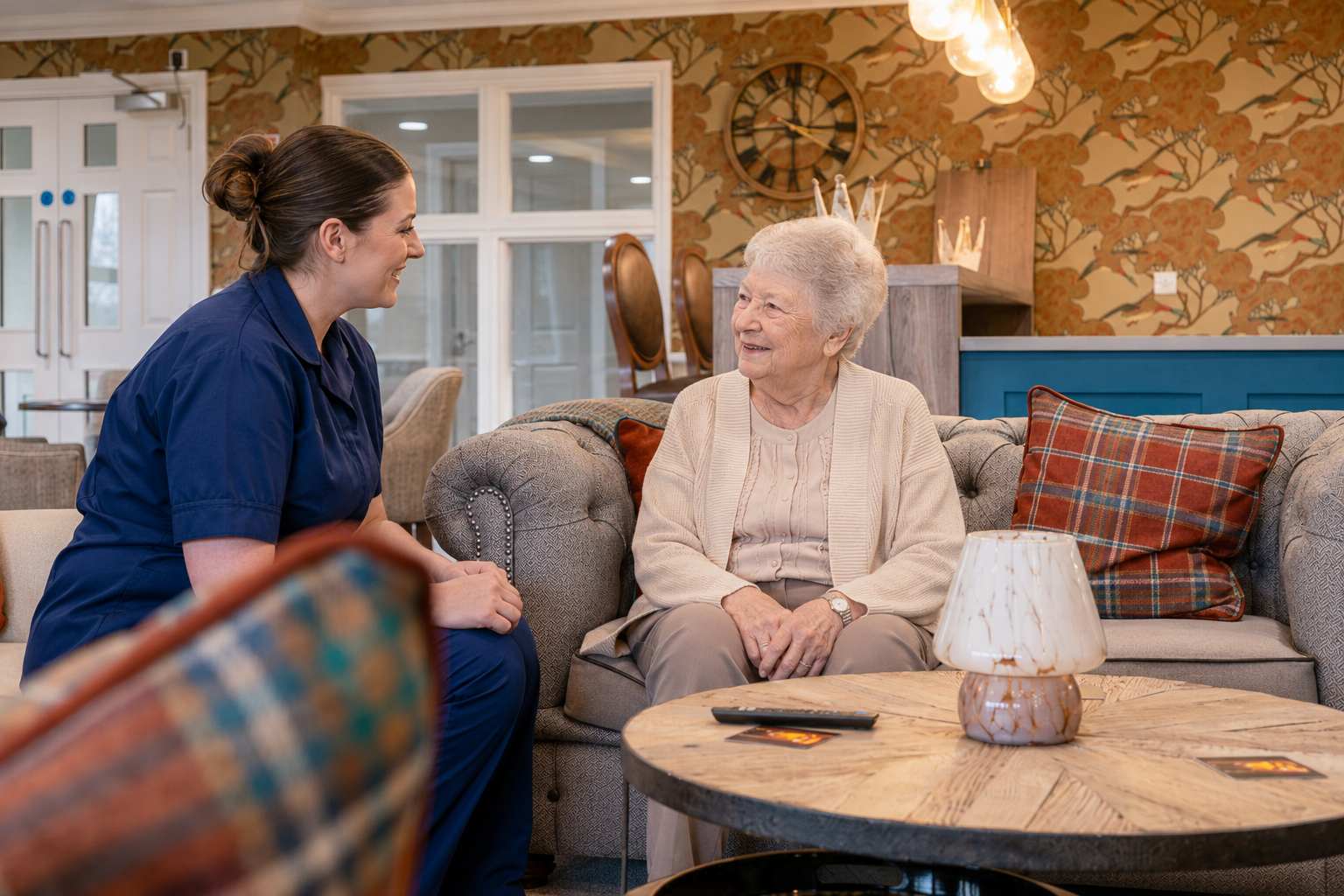
Care Home with Private GP Support: What Families Should Know
Care Home with Private GP Support: What Families Should Know
Choosing a care home is not only about the building, the room, or the location. Families also want to know what happens when Mum, Dad, or a loved one feels unwell, needs a medication review, or their health changes suddenly.
At Esmere Gardens in Moreton-in-Marsh, residents benefit from residential, nursing, dementia and respite care, with dedicated on-site private GP support included as part of our all-inclusive approach.
For families, this can bring something very simple but deeply important: reassurance. Not just that care is available, but that health concerns can be noticed, discussed and supported with greater familiarity and continuity.
Learn more about Esmere Gardens:
https://esmeregardens.care/
Learn more about our on-site private GP support:
https://esmeregardens.care/news-onsite-gp-partnership-concierge-medical/
What does private GP support mean in a care home?
A care home with private GP support means residents have access to dedicated GP input alongside their daily care, nursing support and wider healthcare services.
At Esmere Gardens, this support is designed to help residents with day-to-day health needs, changing symptoms, medication questions, clinical reviews and general wellbeing. It helps create a more joined-up approach between residents, families, care staff, nurses and medical professionals.
This does not mean residents are separated from NHS services. Private GP support works alongside existing healthcare pathways, helping families feel there is a clearer route when questions or concerns arise.
External guidance on registering with an NHS GP can be found here:
https://www.nhs.uk/nhs-services/gps/how-to-register-with-a-gp-surgery/
Why does GP continuity matter for older residents?
For many older people, health changes can be subtle. A small change in appetite, mood, mobility, confusion or sleep may be easy to miss in daily life, but it can sometimes be an early sign that something needs attention.
That is why continuity matters.
When a GP becomes familiar with a resident, they are not only looking at a set of symptoms. They can begin to understand the person behind those symptoms: what is normal for them, what has changed, what their family is worried about, and what support may help them stay well.
For families, this can feel very different from constantly repeating the same story to different people. Familiarity builds confidence. It helps residents feel known, not processed.
How private GP support helps families feel reassured
When a loved one moves into care, families often carry a quiet worry: “What happens if something changes?”
Private GP support can help answer that question.
It gives families greater confidence that medical concerns can be raised, reviewed and followed up with a more personal understanding of the resident. It can also support conversations around medication, ongoing conditions, frailty, dementia, infections, mobility, nutrition and general wellbeing.
The real value is not only clinical. It is emotional too.
Families want to feel that their loved one is known, watched over and supported before a small concern becomes a bigger worry.
Is private GP support included in care home fees?
At Esmere Gardens, private GP support is included as part of our all-inclusive care approach.
This matters because families often find care fees difficult to compare. One care home may appear cheaper at first, but additional services, appointments, transport, activities or support may not always be clear at the beginning.
An all-inclusive approach is designed to make things simpler. Families can better understand what is included, reduce uncertainty, and focus on whether the home feels right for their loved one.
You can read more about care home fees at Esmere Gardens here:
https://esmeregardens.care/paying-for-care/
Useful NHS information about NHS-funded nursing care can be found here:
https://www.nhs.uk/social-care-and-support/money-work-and-benefits/nhs-funded-nursing-care/
NHS information about continuing healthcare can be found here:
https://www.nhs.uk/social-care-and-support/money-work-and-benefits/nhs-continuing-healthcare/
How this works alongside nursing and dementia care
Private GP support is especially valuable when it works closely with the wider care team.
At Esmere Gardens, residents can receive residential care, nursing care, dementia care and respite care. This means support can be shaped around the person’s needs, whether they require help with daily living, clinical oversight, memory support, recovery after illness, or a short period of respite.
For residents living with dementia, familiar medical support can be particularly reassuring. Changes in behaviour, confusion, sleep, eating or distress may sometimes be linked to pain, infection, medication, anxiety or another health concern. Having joined-up support helps the team look at the whole person, not just the diagnosis.
Learn more about nursing care at Esmere Gardens:
https://esmeregardens.care/nursing-care/
Learn more about dementia care at Esmere Gardens:
https://esmeregardens.care/dementia-care-home-moreton-in-marsh/
Learn more about residential care at Esmere Gardens:
https://esmeregardens.care/residential-care/
Learn more about respite care at Esmere Gardens:
https://esmeregardens.care/respite-care/
Does private GP support help with medication reviews?
Medication can become more complex in later life. Some residents may take several medicines at different times of day. Others may need medication reviewed after a hospital stay, a change in health, or a new diagnosis.
Private GP support can help make medication conversations clearer and more consistent, working alongside nursing teams, pharmacies and wider healthcare professionals where appropriate.
NICE guidance on managing medicines in care homes explains the importance of safe, effective processes for prescribing, handling and administering medicines:
https://www.nice.org.uk/guidance/sc1
CQC medicines guidance for adult social care can be found here:
https://www.cqc.org.uk/guidance-providers/adult-social-care/medicines-information-adult-social-care-services
Questions to ask any care home about medical support
When visiting or comparing care homes, families may find it helpful to ask:
-
How are health concerns identified and escalated?
-
Does the home have nursing care on site?
-
How does the home work with GPs and other healthcare professionals?
-
Are medication reviews supported?
-
What happens if a resident becomes unwell?
-
How are families updated about health changes?
-
Is private GP support included in the fee?
-
How does the home support residents living with dementia?
-
Are NHS services still involved when needed?
-
Can families speak to the care team about ongoing medical concerns?
The answers can tell you a lot about how proactive, organised and reassuring a care home feels.
Visiting Esmere Gardens in Moreton-in-Marsh
Esmere Gardens is a care home in Moreton-in-Marsh, Gloucestershire, offering residential, nursing, dementia and respite care in the Cotswolds.
For families searching for a care home with private GP support in Gloucestershire, a private GP care home in the Cotswolds, or a nursing home with an onsite GP near Moreton-in-Marsh, Esmere Gardens offers a calm, all-inclusive approach designed around confidence, comfort and continuity.
Choosing care is a big decision. The right home should help your loved one feel safe, known and supported — and help your family feel clearer, calmer and less alone.
To learn more, visit Esmere Gardens online or contact the team to arrange a visit.
Esmere Gardens homepage:
https://esmeregardens.care/
Private GP support at Esmere Gardens:
https://esmeregardens.care/news-onsite-gp-partnership-concierge-medical/
About Esmere Gardens:
https://esmeregardens.care/about-us/
Care services at Esmere Gardens:
https://esmeregardens.care/services/
FAQs
What is a care home with private GP support?
A care home with private GP support gives residents access to dedicated GP input alongside daily care, nursing support and wider healthcare services. It can help with health reviews, medication questions, changing symptoms and family reassurance.
Is private GP support the same as NHS GP access?
No. Private GP support is additional support and does not remove the role of NHS services. Residents may still need NHS care, emergency support, hospital services or specialist referrals depending on their needs.
NHS GP registration information:
https://www.nhs.uk/nhs-services/gps/how-to-register-with-a-gp-surgery/
Can a GP visit residents in the care home?
Yes, where a care home offers onsite or visiting GP support, residents may be reviewed within the home. This can be especially helpful for older residents who may find travel difficult or tiring.
Does private GP support help with medication reviews?
Private GP support can help with medication questions and reviews, working alongside nursing teams, pharmacies and wider healthcare professionals where appropriate.
NICE medicines guidance for care homes:
https://www.nice.org.uk/guidance/sc1
Is private GP support included in Esmere Gardens’ fees?
Yes. At Esmere Gardens, private GP support is included as part of the all-inclusive care approach.
More about paying for care at Esmere Gardens:
https://esmeregardens.care/paying-for-care/
Can residents with dementia use the private GP service?
Yes. Residents living with dementia can benefit from familiar medical support, especially when changes in behaviour, mood, appetite, confusion or comfort need to be reviewed.
More about dementia care at Esmere Gardens:
https://esmeregardens.care/dementia-care-home-moreton-in-marsh/
What happens if a resident becomes unwell?
The care team will assess the situation, follow the resident’s care plan, involve nursing staff where needed, and seek appropriate medical advice or emergency support depending on the concern.
How often does the GP visit?
Families should ask the home directly about current GP arrangements, visit patterns and how reviews are arranged, as this may depend on resident need and the service model in place.
Can families speak to the GP?
This may depend on consent, confidentiality and the resident’s wishes. However, families can always speak with the care team about concerns, updates and how medical questions are managed.
Does Esmere Gardens still work with NHS services?
Yes. Private GP support works alongside NHS services where needed. It is designed to add reassurance and continuity, not replace emergency care, hospital services or specialist NHS support.
NHS continuing healthcare information:
https://www.nhs.uk/social-care-and-support/money-work-and-benefits/nhs-continuing-healthcare/
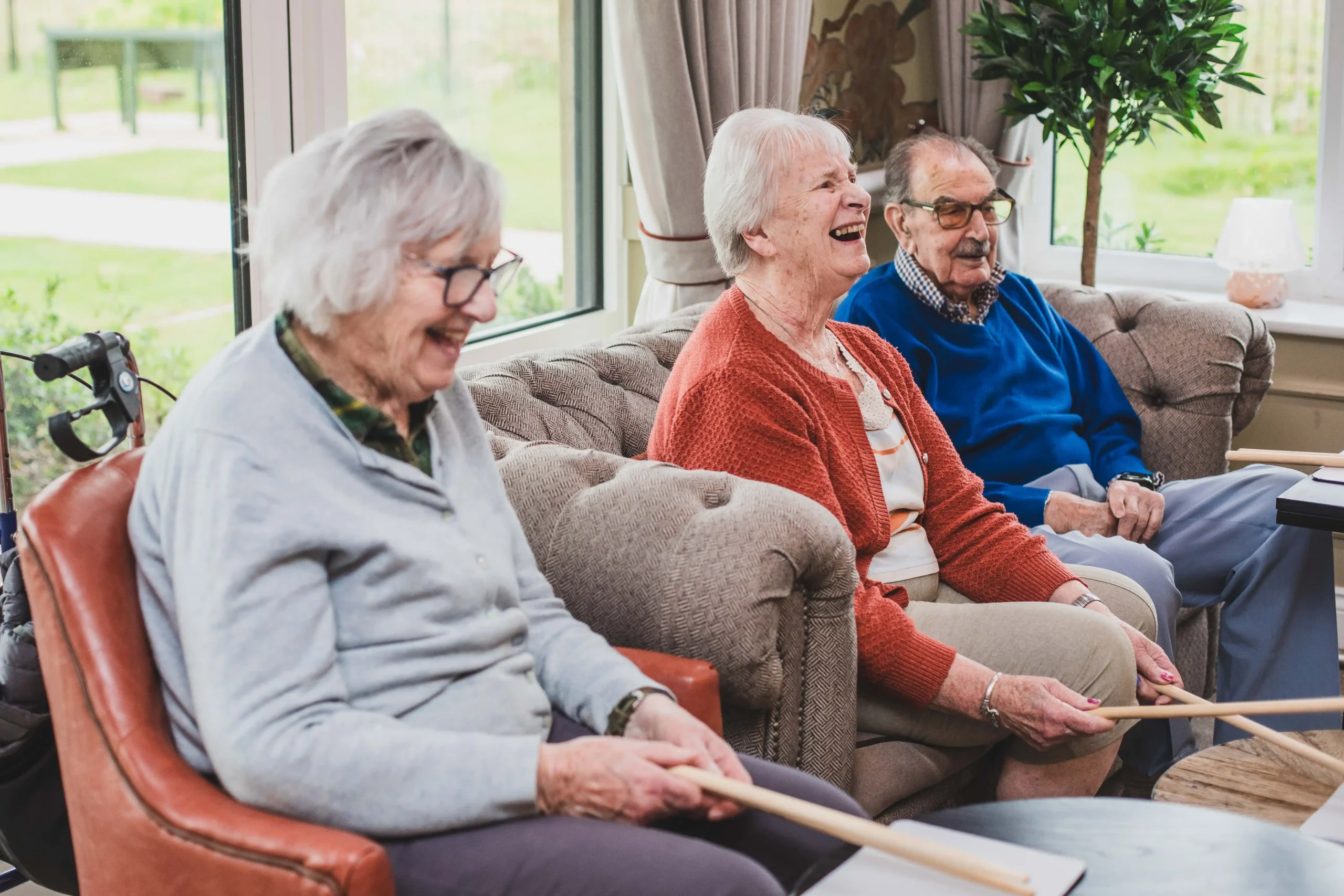
Private GP joins Cotswolds care home in Moreton-in-Marsh
How to Choose a Medical-Led, Compassionate Care Home in Gloucestershire
Choosing a residential home for an elderly parent can feel like one of the heaviest decisions a family will ever make.
You may be asking:
“Will Mum or Dad be safe?”
“Will their health needs be noticed early?”
“Will they be treated with kindness, dignity and respect?”
“What happens if they need more support than we can manage at home?”
For families in Gloucestershire, Moreton-in-Marsh and the wider Cotswolds, the best care home is usually one that combines two things: strong clinical oversight and genuine compassion.
A good home should feel warm, personal and reassuring. But it should also have clear systems for safety, medicines, care planning, dementia support, nursing care, GP input and communication with families.
This guide explains how to compare care homes calmly and confidently, whether you are considering residential care, nursing care, dementia care or respite care.
Quick Answer: What should I look for when choosing a care home?
When choosing a care home, look for CQC regulation, kind and consistent staff, safe medicines management, clear care plans, good communication, meaningful activities, dementia support where needed, nursing care if health needs are complex, and reliable access to GP or medical support. Always visit in person, ask practical questions and check whether the home can meet your parent’s needs now and if those needs change.
1) Start with the right type of care: residential, nursing, dementia or respite
Before comparing care homes, it helps to understand what type of support your parent needs now — and what they may need soon.
The NHS explains the difference between residential care homes and nursing homes in its guide to care homes.
Residential care
Residential care supports older people with daily living. This may include personal care, meals, routines, companionship, medication support and help staying safe.
It may be suitable if your parent no longer feels safe or confident living alone but does not need 24-hour nursing support.
Families looking locally can read more about residential care in Moreton-in-Marsh.
Nursing care
Nursing care includes support from registered nurses. This may be needed if your parent has more complex health needs, such as wound care, frequent monitoring, higher frailty, mobility problems, complex medication needs or support after hospital discharge.
You can learn more about nursing care at Esmere Gardens.
Dementia care
Dementia care should provide more than a safe environment. It should include trained staff, calm routines, personalised communication, meaningful activity, family involvement and awareness of how dementia can affect behaviour, mood, eating, sleep and mobility.
The NHS guide to dementia and care homes is a useful external resource for families.
Respite care
Respite care is short-term care. It can help after illness, during recovery, while family carers rest, or when a family is deciding whether permanent care may be needed.
For some families, respite care is also a gentle way to experience a care home before making a longer-term decision.
2) Use CQC regulation as a first filter — then look deeper
In England, care homes are regulated by the Care Quality Commission, known as the CQC.
The CQC inspects and regulates health and social care services. Families can use the CQC care home search to check a home’s rating, inspection reports and registration details.
CQC information is a useful first filter, but it should not be the only factor.
When reviewing a care home, look at:
-
Overall CQC rating
-
Ratings for safe, effective, caring, responsive and well-led
-
Inspection findings
-
Any repeated concerns
-
How the home responds to feedback
-
Whether the home is registered for the type of care your parent needs
-
Whether the home is transparent when you ask questions
A good care home should be open about its strengths and honest about how it improves.
Families considering Esmere Gardens can view the home’s CQC profile.
3) Staffing: look for enough skilled people and real continuity
When visiting a care home, it is natural to notice whether staff are friendly. Kindness matters deeply, but families should also ask whether there are enough skilled staff to provide safe and consistent care.
Useful questions include:
-
Who is on duty during the day?
-
Who is on duty overnight?
-
Are registered nurses on site?
-
How are new staff trained?
-
What dementia training do staff receive?
-
Who leads each shift?
-
How are agency staff used?
-
How does the home make sure residents see familiar faces?
-
What happens if several residents become unwell at once?
Continuity matters because long-standing staff often know residents well. They are more likely to notice subtle changes in appetite, mood, mobility, sleep, confusion or pain.
A good care home should not feel rushed or chaotic. Staff should have time to speak gently, respond properly and understand the person behind the care plan.
Watch how staff interact with residents during your visit. Small moments often say a lot.
4) Medical-led care: ask who leads clinically
A medical-led, compassionate care home should be able to answer direct questions clearly.
Ask:
“Who leads clinical care here?”
“How often are residents reviewed?”
“What happens if my parent becomes unwell?”
“How do you involve GPs, nurses, pharmacists and other professionals?”
Medical-led care does not mean the home should feel clinical or impersonal. It means there are strong systems behind the warmth.
This may include:
-
GP support
-
Nursing oversight
-
Medication reviews
-
Falls monitoring
-
Infection escalation
-
Nutrition and hydration checks
-
Pressure care
-
Dementia-related health reviews
-
Hospital discharge planning
-
End-of-life planning where appropriate
NHS England’s Enhanced Health in Care Homes framework supports more proactive care for people living in care homes, with stronger links between care homes, primary care, community services and wider health support.
At Esmere Gardens, residents have access to dedicated onsite GP support as part of the home’s all-inclusive care model. This can help families feel more confident that changes in health will be reviewed promptly and communicated clearly.
5) Care planning: look for assessment, reviews and quick adaptation
Strong care planning is where compassion becomes practical.
A good care plan should explain not only what support someone needs, but who they are as a person.
It should include:
-
Personal care needs
-
Health conditions
-
Medicines
-
Mobility
-
Falls risk
-
Nutrition and hydration
-
Continence
-
Sleep
-
Communication
-
Memory and cognition
-
Skin integrity
-
Pain
-
Preferences and routines
-
Family contacts
-
Life history
-
What helps the person feel calm
-
What a good day looks like
Ask how often care plans are reviewed and what happens when needs change.
For example:
-
What happens after a fall?
-
What happens after hospital discharge?
-
What happens if eating or drinking reduces?
-
What happens if dementia symptoms change?
-
What happens if medication is altered?
-
How are families involved in reviews?
A good home should be able to show how care plans are used in daily life, not just stored in a file.
Person-centred care should feel specific. You want to hear about your parent as an individual, not only as a list of tasks.
6) Match the home to your parent’s real medical complexity
It is easy to choose a home based on how your parent is on their best day. But families should also think about harder days.
Before visiting, make a list of your parent’s needs, including:
-
Diagnoses
-
Medicines
-
Falls history
-
Mobility issues
-
Memory concerns
-
Continence needs
-
Eating and drinking
-
Weight loss
-
Swallowing concerns
-
Pain
-
Sleep
-
Mood or anxiety
-
Hospital admissions
-
Support with washing, dressing or eating
-
Behaviour changes
-
Family concerns
Then ask the home how each area would be supported.
Do not be afraid to be specific.
For example:
“Dad has fallen three times in six months. How would you reduce his falls risk?”
“Mum forgets to drink. How would hydration be monitored?”
“My parent becomes distressed in the evening. How would staff respond?”
“There has been recent weight loss. How would nutrition be reviewed?”
Good homes give practical answers.
They should be able to explain what they would observe, record, review and escalate.
7) Safety, medicines and safeguarding: what safe care looks like
Safety is more than call bells and handrails.
A safe care home should have clear systems for:
-
Medicines management
-
Falls prevention
-
Infection prevention
-
Food safety
-
Moving and handling
-
Pressure care
-
Safeguarding
-
Fire safety
-
Risk assessments
-
Staff training
-
Reporting incidents
-
Learning from concerns
-
Communicating with families
Medicines are especially important. NICE guidance on managing medicines in care homes sets out good practice for prescribing, handling and administering medicines in care homes.
Ask:
-
How are medicines ordered?
-
How are medicines stored?
-
Who administers medicines?
-
How are errors reported?
-
How are side effects monitored?
-
Are medicines reviewed regularly?
-
How are families told about changes?
-
What happens after hospital discharge?
Safeguarding is also essential. Ask how staff are trained to protect residents from abuse, neglect, poor practice or avoidable harm.
A compassionate home should protect dignity as actively as it protects health.
8) Compassion you can see: routines, relationships and daily life
Clinical competence is essential, but it is not enough on its own.
A good care home should also support emotional wellbeing, purpose, friendship and belonging.
When you visit, look for compassion in ordinary moments:
-
Do staff use residents’ preferred names?
-
Do they speak gently?
-
Are residents offered choices?
-
Are people rushed?
-
Is there laughter?
-
Are residents dressed comfortably and respectfully?
-
Does the home feel calm?
-
Are activities meaningful?
-
Are visitors welcomed?
-
Are people supported to spend time outside?
-
Do staff seem to know residents as individuals?
Daily life matters.
A care home should offer more than tasks. It should offer companionship, activity, familiar routines, quiet spaces, conversation, good food and moments of comfort.
For some residents, that might mean music, gardening, baking, crafts, gentle exercise, a film, a quiet cup of tea, a favourite chair or a walk in the garden.
You can explore daily life at Life at Esmere Gardens.
9) Family partnership: you should feel included, not in the way
Families should not feel pushed aside after a parent moves into care.
A good care home should welcome family involvement, while respecting the resident’s wishes and privacy.
Ask:
-
Who is our main contact?
-
How often will we receive updates?
-
How are concerns raised?
-
Are family meetings offered?
-
How are care plans reviewed with us?
-
How are changes in health communicated?
-
What happens if we disagree with something?
-
How are complaints handled?
-
How are end-of-life wishes discussed?
-
How are visitors supported?
Good communication is one of the clearest signs of a well-run care home.
Families should feel listened to, not managed.
The right home will understand that relatives often know the person best. Your knowledge of routines, preferences, worries, habits and history can help staff provide better care.
10) Questions to ask when touring a care home
Take a checklist with you. It helps keep the visit grounded when emotions are high.
Clinical and care questions
-
Who is the clinical lead?
-
Is nursing care available?
-
Is there GP support?
-
How are residents reviewed?
-
How are medicines managed?
-
How are falls prevented?
-
How is hydration monitored?
-
What happens if a resident becomes unwell?
-
How are hospital discharges handled?
-
How are families updated?
Dementia questions
-
What dementia training do staff receive?
-
How do you support communication?
-
How do you respond to distress?
-
How do you identify pain or infection in someone with dementia?
-
Are routines personalised?
-
How do you support orientation and familiarity?
Daily life questions
-
What activities are offered?
-
Can residents use outdoor spaces?
-
Are meals flexible?
-
Are visitors welcome?
-
How do staff learn about life history?
-
How are birthdays, interests and personal routines supported?
Cost questions
-
What is included in the weekly fee?
-
Are there extra charges?
-
Is GP support included?
-
Are activities included?
-
Are appointments or transport included?
-
What happens if care needs increase?
-
Is respite priced differently?
The best homes answer these questions calmly and clearly.
If a home seems defensive or vague, that is worth noticing.
11) What this means for families choosing care near Moreton-in-Marsh
If you are exploring care in Moreton-in-Marsh, Gloucestershire or the wider Cotswolds, it helps to compare homes through both a practical and emotional lens.
You are looking for:
-
Safe care
-
Kind staff
-
Clear communication
-
Good CQC information
-
Strong care planning
-
Dementia awareness
-
Nursing support where needed
-
Medicines safety
-
Meaningful daily life
-
GP or medical continuity
-
Transparent costs
-
A home where your parent can feel known
Esmere Gardens is a care home in Moreton-in-Marsh providing residential, nursing, dementia and respite care with all-inclusive pricing and dedicated onsite GP support.
Families can read more about Esmere Gardens’ care services or contact Esmere Gardens to ask questions or arrange a visit.
The right home should welcome your questions. It should help you understand not only how your parent will be cared for, but how they may belong.
Conclusion: choose evidence, observation and family fit
The best care-home decision is usually made through a blend of evidence, observation and family instinct.
Use CQC information to shortlist. Use NHS guidance to understand care types. Use your visit to observe staff, routines, communication and atmosphere. Use direct questions to test whether the home can meet your parent’s real needs.
A medical-led, compassionate care home should offer both clinical confidence and everyday warmth.
It should help your parent feel safe, respected and known.
It should help your family feel informed rather than overwhelmed.
If you are exploring residential, nursing, dementia or respite care near Moreton-in-Marsh, Gloucestershire or the Cotswolds, take your checklist, ask the difficult questions and look for a home that treats your parent not as a placement, but as a person.
Frequently Asked Questions
How do I compare care home costs?
Ask for a written breakdown of what is included in the weekly fee and what costs extra. Check whether meals, activities, GP support, appointments, transport, hairdressing, chiropody, continence products or personal expenses are included.
Is residential care enough if my parent’s health is fragile?
Not always. Residential care supports daily living, but nursing care may be more suitable if your parent needs registered nursing support, frequent monitoring, wound care, complex medication support or higher clinical oversight.
How can I judge safety quickly on a care home visit?
Look for calm staff, clean surroundings, clear medication processes, good infection prevention, safe movement around the home and residents who appear respected and comfortable. Also ask about safeguarding, falls, medicines and incident learning.
What should I ask about dementia care?
Ask about dementia training, personalised routines, distress, communication, meaningful activities, pain recognition, night-time support and how staff respond when behaviour or confusion changes.
Why does GP support matter in a care home?
GP support can help with medical reviews, medication changes, infections, falls, pain, long-term conditions, dementia-related changes and decisions about whether hospital care is needed.
What is the difference between residential care and nursing care?
Residential care supports daily living, personal care, meals, companionship and safety. Nursing care includes support from registered nurses for people with more complex health or clinical needs.
Can respite care help before making a permanent decision?
Yes. Respite care can provide short-term support, give family carers time to rest and help an older person experience a care home before a longer-term move is considered.
How do I check a care home’s CQC rating?
Use the Care Quality Commission website to search for the care home. The CQC profile will show ratings, inspection reports, registration details and regulated activities.
What makes a care home compassionate?
Compassion shows in small daily actions: respectful communication, personal choices, familiar routines, gentle support, meaningful activities, family involvement and staff who know residents as individuals.
What should I bring when visiting a care home?
Bring a list of your parent’s health conditions, medicines, routines, likes, dislikes, risks, recent changes and key questions. This helps the home explain whether it can meet their needs safely and personally.
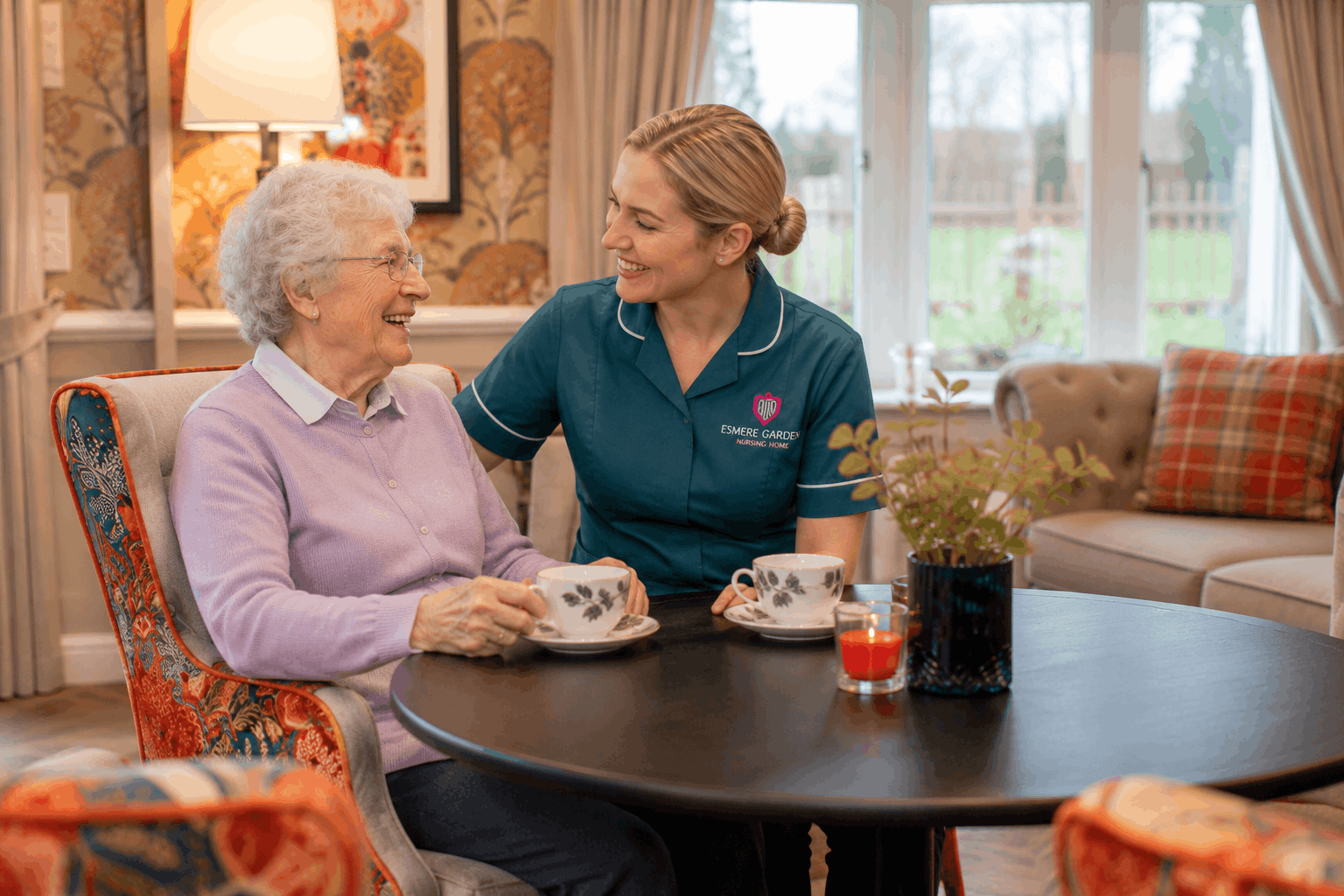
Why on-site doctor partnerships are becoming a selling point for rural residential communities
For families looking for residential care in rural towns and villages, one question now comes up as early as “Is it homely?” or “Are they kind?”: “How easy is it to see a doctor?” In 2026, access to primary care is no longer a nice-to-have,it’s a practical, day-to-day quality of life issue that shapes safety, confidence, and continuity of care.
That’s why on-site doctor partnerships are becoming a genuine selling point for rural residential communities. For adult children arranging residential, dementia, nursing, or respite care near Moreton-in-Marsh and across Gloucestershire and the Cotswolds, a dedicated private GP relationship can mean fewer worries, quicker decisions, and a calmer routine for everyone.
1) Rural doctor access is scarce,so “GP on-site” feels like a real amenity
Rural primary-care shortages remain severe. HRSA’s 2026 shortage-area data lists 5,451 rural primary medical HPSA designations nationwide, with 17,306 practitioners needed to remove those designations (as of March 31, 2026). In plain terms, many rural communities are still competing for too few clinicians.
The Commonwealth Fund has also highlighted that more than 40 million rural Americans live in areas with too few primary care providers, and HRSA projects that by 2037 only 68% of rural primary-care physician demand will be met. When families hear projections like that, they understandably look for stability,especially if an older relative has multiple conditions or needs frequent medication reviews.
This is one reason “doctor access” is increasingly marketed like community infrastructure. Just as people compare parking, gardens, or security, they now compare how quickly a resident can be assessed, how often a clinician reviews their care plan, and whether a familiar doctor can help avoid unnecessary disruption.
2) The closure of independent rural practices raises the value of partnerships
Another structural shift is the decline of independent physicians in rural areas. Medical Economics reported a 43% drop (about 9,500 doctors) in independent rural physicians between January 2019 and January 2024. For families, that trend can translate into fewer “long-standing local GPs” and more uncertainty about continuity.
CMS notes that only 12% of physicians practice in rural communities, while 61% of federally designated health professional shortage areas are in rural areas. That mismatch explains why, in many rural locations, getting an appointment can feel like a project,especially if mobility, hearing, or cognition makes travel and waiting rooms difficult.
A residential community that builds a formal partnership,rather than relying on “whatever appointments we can find”,can create a more predictable system. It’s not about VIP treatment; it’s about practical reliability when health needs change quickly.
3) Why families feel the difference: time, travel, and reduced stress
The Commonwealth Fund points out that rural access is constrained by long travel distances, along with limited broadband and transportation. For older adults, a short trip can become exhausting: getting ready, managing continence needs, coping with pain, then sitting in a busy waiting room.
When a GP is on-site or closely partnered with the home, routine care can happen in a calmer way,often in familiar surroundings, at a pace that suits the person. That can be especially important for dementia care, where unfamiliar journeys and environments can increase confusion or distress.
For adult children, easier access can reduce the emotional load. Instead of juggling work and travel to attend appointments, families can focus on meaningful visits,sharing tea, conversation, and small daily updates,while still feeling confident that medical concerns will be addressed promptly.
4) On-site doctors support safer residential, nursing, dementia, and respite care
Families often ask early, “What type of care does Mum or Dad actually need,residential, nursing, dementia, or respite?” A strong on-site doctor partnership helps across the spectrum because medical needs don’t always stay neatly in one category.
In residential care, the benefit is proactive oversight: medication reviews, monitoring new symptoms, and early intervention when someone seems “not quite themselves.” In nursing care, it supports complex medical needs,timely clinical decisions, coordination with community services, and clear escalation plans.
In dementia care, consistency matters. A familiar clinician who understands a resident’s baseline can help distinguish delirium, infection, medication side effects, and progression,reducing avoidable distress. In respite care, it provides reassurance that even a short stay comes with proper clinical continuity, not a “pause” in healthcare.
5) Cost and value: what families are really paying for
When people search for care home costs in Gloucestershire or the Cotswolds, they’re usually trying to understand value,not just a weekly figure. An on-site GP partnership can influence value by reducing preventable crises, minimising unnecessary travel, and keeping care plans aligned with current health status.
It can also bring clarity and speed to decisions. If a resident’s health changes, families want timely updates and confident clinical guidance,particularly when weighing options like increased nursing support, therapy input, or a hospital visit.
Every home structures medical support differently, so it’s reasonable to ask what is included and what may be additional. A transparent explanation of the GP arrangement,frequency of visits, how urgent concerns are handled, and how families are kept informed,helps you compare like-for-like rather than guessing.
6) Recruiting clinicians is hard,so communities are getting creative
To make doctor access more viable, some organisations are addressing the practical barriers clinicians face when relocating. In October 2025, Corewell Health broke ground on a 118-unit physician housing complex, noting that housing is a major stressor for physicians moving to unfamiliar areas.
UPMC-affiliated coverage in December 2025 echoed the same challenge from a rural residency leader: housing for trainees is “really difficult to get” and a “universal issue” in rural areas. This matters because clinician recruitment affects whether rural communities can sustain consistent medical presence.
For residential communities, partnerships that reduce “relocation friction” can make a difference,whether that’s through local collaboration, predictable scheduling, or support that makes it easier for clinicians (and their families) to commit long-term. Over time, this stability becomes something families feel as reliability and continuity.
7) Policy is making rural care partnerships more workable (but not effortless)
Rural care models already reflect shortage-area reality. CMS notes that a Rural Health Clinic (RHC) must be located in a rural area designated as a shortage area,built around the idea that care needs to be close to patients when access is limited.
CMS has also expanded support for rural primary care in practical ways. From January 1, 2025, RHCs/FQHCs can bill for a broader set of care coordination services, including advanced primary care management, chronic care management, and remote monitoring,tools that help clinicians manage long-term conditions more proactively.
In 2025, CMS announced the Office of Rural Health Transformation to coordinate federal and state partnerships and implement rural transformation plans through September 30, 2031. These shifts won’t magically solve local shortages, but they do help explain why “health-forward communities” are becoming more feasible,and more marketable.
8) What to ask when comparing homes near Moreton-in-Marsh
Whether you’re viewing homes around Moreton-in-Marsh, Stow-on-the-Wold, Bourton-on-the-Water, Chipping Campden, or across the wider Cotswolds, it helps to ask the same practical questions everywhere. Start with: “How does GP access work here in real life, on an average week?”
Then ask about safety and escalation: Who assesses new symptoms first? How quickly can a clinician review? How are falls, infections, pain, and medication changes handled? For dementia care, ask how the team minimises distress during assessments and how families are involved in decisions.
Finally, ask about everyday life,because health is not only clinical. What activities are offered? How do staff encourage routines, hydration, nutrition, and companionship? A strong community feels like gentle structure: familiar faces, conversations, hobbies, and the steady reassurance that medical support is close at hand.
FAQ: On-site doctor partnerships in rural residential communities
Does telehealth replace the need for an on-site or local GP?
Telehealth helps, but it doesn’t fully replace in-person access. The Commonwealth Fund notes it remains useful, yet rural shortages and long travel distances still make face-to-face care difficult,especially for frailty, complex needs, or dementia-related distress.
Is a dedicated private GP useful for dementia care?
Yes, because continuity matters. A familiar GP is better placed to spot subtle changes, review medications thoughtfully, and coordinate with the wider care team,often reducing avoidable upheaval.
How does GP support affect safety in a nursing home?
It can improve speed and clarity of clinical decisions, support medication management, and strengthen care planning. For families, that often translates into peace of mind and fewer “unknowns.”
Will on-site medical access change care home costs?
It depends on what’s included in the home’s fees and how the partnership is structured. The key is transparency: ask what is covered, how often the GP attends, and how urgent concerns are managed.
In rural communities, doctor access is shifting from a background concern to a deciding factor. With shortages continuing and independent rural practices declining, a clear, dependable GP partnership has become a genuine differentiator,one that supports continuity, safety, and calmer day-to-day living.
If you’re exploring residential, dementia, nursing, or respite care near Moreton-in-Marsh, it’s worth prioritising questions about medical access early. Choosing support for a parent isn’t “giving up”,it’s an act of love that protects dignity, comfort, and companionship, while giving your family the reassurance that help is close when it’s needed.
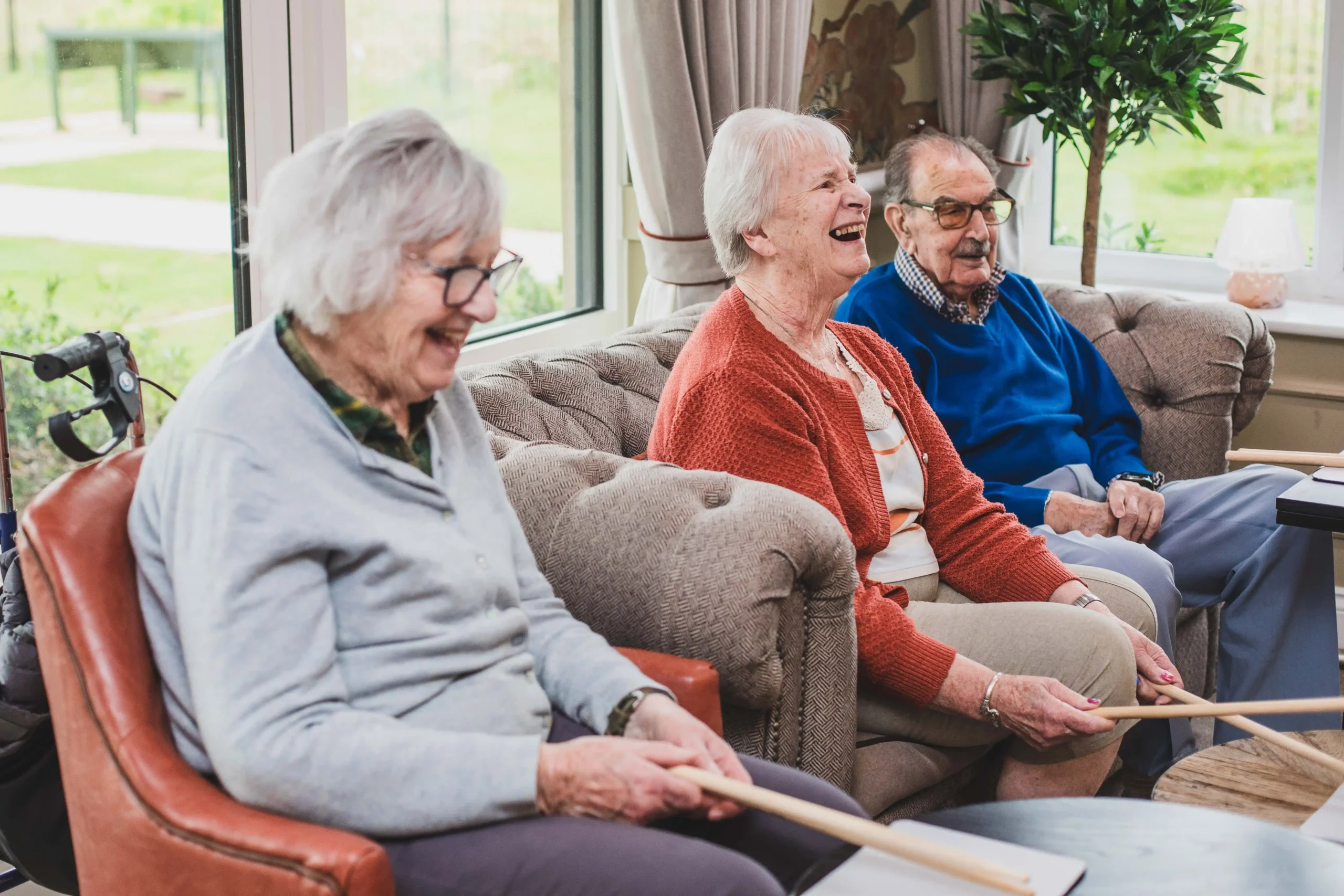
Why families are choosing living communities with on-site medical teams
For many families, choosing the right care setting for an older loved one is one of the most important,and emotional,decisions they will make. Increasingly, families are looking beyond traditional care homes and seeking living communities with on-site medical teams that can provide both daily support and clinical reassurance in one place.
This shift reflects a simple priority: peace of mind. When care, companionship, and medical oversight are seamlessly integrated, families feel confident their loved ones are safe, supported, and truly known. Across Gloucestershire and the Cotswolds, including Moreton-in-Marsh, this approach is becoming the preferred choice for those seeking high-quality residential, nursing, dementia, or respite care.
Care and Clinical Support in One Place
Living communities with on-site medical teams offer something traditional models often cannot: immediate access to professional healthcare without the disruption of external appointments. Whether it is a routine health check, medication adjustment, or a sudden concern, having clinicians on site ensures faster responses and more consistent care.
This is particularly important for older adults with complex or evolving needs. Industry trends in 2025 and 2026 show a clear rise in demand for high-acuity assisted living, where residents benefit from both daily support and enhanced medical oversight. Families are increasingly choosing environments that can adapt as needs change.
In a setting like a family-run care home in Moreton-in-Marsh, this integrated model can feel especially reassuring. Residents are not just supported,they are closely monitored by familiar faces who understand their health history, preferences, and routines.
Why Families Value Immediate Medical Access
One of the strongest reasons families choose living communities with on-site medical teams is the confidence that help is always nearby. Even minor changes in health can be noticed and addressed quickly, preventing escalation and reducing hospital visits.
Recent data highlights how important this reassurance is. Satisfaction among families in assisted living and memory care reached 867 out of 1000 in 2025, with care quality at an all-time high of 8.89 out of 10. These improvements are closely linked to visible, responsive staff and reliable care delivery.
For families in the Cotswolds, this often means fewer worries about emergencies and more time enjoying meaningful visits,sharing tea in the garden, chatting in a comfortable lounge, or simply knowing everything is under control.
Stronger Coordination and Communication
Modern care is no longer just about providing a safe place to live,it is about coordinating every aspect of a resident’s wellbeing. Communities with on-site teams increasingly use digital care records, medication management systems, and clinical assessment tools to ensure nothing is missed.
This approach allows for near real-time updates. In some cases, medication changes that once took 15 minutes to process now take seconds, with families informed almost immediately. This level of transparency builds trust and keeps everyone involved in the care journey.
For adult children balancing busy lives, clear communication is invaluable. Knowing that a parent’s health is being carefully monitored,and that they will be informed of any changes,removes a significant layer of stress.
Balancing Cost with Real Value
Cost is understandably a key concern for families exploring care options in Gloucestershire. In 2025, the average cost of assisted living and memory care rose by 10% year over year. However, satisfaction levels still increased, suggesting that families are willing to invest more when they see clear value.
That value often comes from integrated care. When accommodation, daily support, medical oversight, and social engagement are all included, families avoid the hidden costs,both financial and emotional,of fragmented care arrangements.
In places like Moreton-in-Marsh, families are increasingly recognising that a well-supported environment can prevent complications, reduce hospital stays, and ultimately provide better long-term outcomes.
Supporting Dementia and Complex Needs
For those seeking dementia care in the Cotswolds, the presence of an on-site medical team is particularly important. Dementia often brings unpredictable changes, and having skilled professionals nearby ensures those changes are managed with sensitivity and expertise.
Communities are now designed to support both cognitive and physical health, blending structured routines with clinical oversight. This creates a calm, stable environment where residents can feel secure and families can feel reassured.
It also allows care to evolve naturally. As needs increase, residents do not necessarily need to move again,support simply grows around them, maintaining familiarity and continuity.
The Role of Trust in Decision-Making
Trust is at the heart of every care decision. Families want to know that their loved one is not only safe but genuinely cared for. Studies consistently show that satisfaction is closely tied to confidence in staff and the quality of daily interactions.
On-site medical teams strengthen this trust by providing visible expertise and consistency. Families see that there is always someone qualified to respond, assess, and act when needed.
In a family-run care home, this trust is often deepened by a more personal approach. Residents are known as individuals, not just patients, and relationships with staff develop naturally over time.
A Shift from Lifestyle to Care-Ready Living
Senior living is increasingly viewed not just as a lifestyle choice, but as a comprehensive care solution. Families are prioritising environments that can handle daily health needs, medication management, and rapid coordination with healthcare providers.
This shift is reflected in industry data, including clinical benchmarking across tens of thousands of residents in over 500 communities. The focus is now on measurable health outcomes and consistent standards of care.
For families exploring residential care in Moreton-in-Marsh or nearby areas, this means looking for communities that are not only welcoming, but fully equipped to support long-term wellbeing.
Everyday Life Still Feels Like Home
Importantly, the presence of medical support does not mean a clinical atmosphere. The best communities balance care with comfort,gardens to stroll through, familiar routines, shared meals, and friendly conversation.
Residents can enjoy a sense of normality while knowing help is always close at hand. This blend of independence and support is what makes these environments so appealing.
For families, it offers a powerful reassurance: their loved one is not just being cared for, but truly living.
Choosing a care setting is never just about services,it is about finding a place where your loved one will feel safe, valued, and at ease. Living communities with on-site medical teams offer a thoughtful balance of professional support and everyday comfort.
For many families across Gloucestershire and the Cotswolds, this choice brings a profound sense of relief. Seeking the right care is not giving up independence,it is ensuring dignity, companionship, and peace of mind for the years a.