

Questions to Ask a Care Home: A Family Visit Checklist
Choosing a care home can feel like a lot to hold at once, especially when someone you love needs more support. You can take the decision one practical step at a time. A calm visit, careful questions and public information each offer a different way to understand a home. Together, they can help you decide whether it may suit your family. Before you go, note your loved one’s needs, routines and preferences. Think about what matters most to them, from familiar meals to time with family. This gives you a clear starting point and helps staff understand the person behind the care needs. You do not need to settle every detail during one visit. A few well-chosen questions can help you leave with clearer information and a sense of what to explore next. Here are practical questions to bring with you.
Key Takeaways
- Write down your loved one’s needs and preferences before visiting.
- Ask for clear examples, not broad assurances.
- Notice how residents and staff interact during your visit.
- Read the CQC report alongside your own observations.
- Ask for a written breakdown of fees and any exclusions.
Questions to Ask a Care Home / Signs of Good Care / Checking CQC Reports: What Should You Check?
Take a short written list of questions so important concerns are easier to raise during your visit. Useful answers explain what happens in daily life and who takes responsibility. Ask staff to describe a real example when a reply sounds general.
Ask for a clear example when an answer feels broad. You should leave knowing what staff do and who you can contact.
Questions about daily life and personal choice
Ask how residents choose when to wake, what to eat and how to spend the day. Find out whether activities reflect personal interests, rather than following one fixed timetable. Ask how family visits fit around residents’ routines.
Care plans should include the resident’s preferences and show how staff support their choices. Ask how residents and families can help shape or review those plans. You might also ask whether a resident can change their mind about an activity or meal.
Questions about staffing, health and changing needs
Ask who is available during the day and overnight, and what training staff receive. Find out how staff support health needs, who families contact with a concern, and what happens when a resident’s needs change.
These questions can help you understand how care works in practice:
- How do care plans reflect each resident’s preferences?
- How do residents choose their daily routines?
- How do staff respond when someone’s health changes?
- How can families share a concern?
- How does the home keep families informed?
Listen for specific steps, such as who reviews a plan or who calls a family member. Clear answers should make it easier to understand how staff offer support. For more ideas, read these questions to ask when choosing a care home.
Once you have heard how staff describe care, you can compare their answers with what you see during the visit.
What Are the Signs of Good Care During a Visit?
The way people interact can tell you more than how polished a room looks. Look for respectful care in ordinary moments, while remembering that one visit shows only part of daily life. A quiet moment alone does not explain what usually happens.
Examples of good practice in care homes
Notice whether staff speak to residents with warmth and respect, and give them time to respond. Staff should support choice and protect privacy, including when they enter bedrooms or help with personal care.
Residents may be talking, relaxing or taking part in activities. What matters is whether people seem involved in ways that suit them. Examples of good practice in care homes can include adapting an activity for someone who prefers a quieter pace.
Concerns that deserve a follow-up question
A resident who appears isolated, a call bell that sounds unanswered, or staff who seem rushed can raise questions. These moments are not proof of poor care by themselves. Ask calmly what is happening and observe for a little longer.
Use what you notice to ask for context, rather than drawing a firm conclusion from one moment:
| What you notice | Possible positive sign | What to ask or check |
|---|---|---|
| Staff address a resident by name | A familiar, respectful interaction | How staff learn each person’s preferences |
| Residents take part in an activity | Opportunities to follow personal interests | How activities suit individual needs |
| Staff knock before entering a bedroom | Privacy is being respected | How staff protect privacy during personal care |
| A call bell is sounding | A resident may need assistance | How staff know and respond when help is needed |
One observation can prompt a useful conversation, but patterns matter more than a single moment. The home’s care options and fee approach also shape whether its support may fit your family.
Which Care Options and Support Should You Discuss?
The right care option depends on the person’s needs now and the support they may need over time. Esmere Gardens Nursing Home offers residential, nursing, dementia and respite care, with 24-hour nursing support and dedicated private GP support.
A private dentist is planned for the near future. Esmere Gardens describes its fees as an all-inclusive approach, intended to offer more than financial simplicity. It aims to give reassurance through care in a safe, trusting environment. All-inclusive does not explain every charge, so request a written breakdown.
Ask what the fee includes, what it excludes, what may cost extra and how changing care needs could affect it. Do not assume personal purchases or external costs are covered. For more on nursing, dementia support and medical cover, see this guide to care in the Cotswolds. An independent inspection can add another source of information about the home’s care.
What Does the CQC Assess During an Inspection?
The CQC assesses whether a service is safe, effective, caring, responsive and well-led. The Care Quality Commission is the independent regulator of health and social care in England. A CQC rating is the Care Quality Commission’s published judgement of a care service’s quality.
The CQC looks at evidence from its inspection work, rather than giving a simple pass or fail. The five areas offer a useful frame for understanding what the regulator checks.
What are CQC’s five key questions and answers?
The five key questions help families understand different parts of care. Safe checks whether people avoid harm, such as harm linked to unsafe medicines. Effective looks at whether care meets assessed needs, such as help that follows a person’s care plan.
Caring considers dignity and respect, including how staff protect privacy. Responsive checks whether support is personal and staff act on feedback. Well-led looks at leadership and learning, such as whether managers use concerns to improve care.
These CQC questions and answers explain the five areas for families. They are not a script for staff to memorise. The CQC’s guide to good care in a care home also gives examples of the standards behind these judgements.
What questions can CQC ask care staff?
What questions CQC ask care staff can depend on the service and inspection. Inspectors may ask about residents’ preferences, safeguarding, staff training, how concerns are raised, and what staff do when needs change.
Questions about training may explore whether staff know how to carry out their duties safely. Inspectors can also look at care records and ask how staff share information. The CQC 5 key questions and answers help families understand these topics, but do not tell staff what to say.
What are the four types of CQC inspections?
There is no universal four-type list to rely on here. Inspection work can be comprehensive, covering all five areas, or focused on a particular area. A focused inspection may look at a specific concern or part of a service.
- Safe: checks for risks of harm.
- Effective: checks whether care meets assessed needs.
- Caring: checks dignity and respect.
- Responsive: checks personal support and feedback.
- Well-led: checks leadership and learning.
Check the scope of the specific CQC report to see which areas inspectors assessed. The published findings show the evidence behind the regulator’s judgements.
How Can You Check CQC Reports and Ratings?
Search for the service by its exact name and location on the CQC website. Confirm the correct service, then check the inspection date and full findings. A headline rating alone cannot explain what inspectors saw or what changed later.
Read the report with the date in mind, as well as the details of the findings. Check whether the service name and address match the home you are considering.
How do you find a CQC care home report?
Use the CQC online search and enter the home’s name or location. Open the named service listing, then check its address to make sure you have the right place.
Read the full CQC report, not only the overall rating. Look for repeated issues, evidence of improvement and feedback from residents or families. The inspection date helps you judge how closely the findings match the service you are considering today.
Can you use a CQC care home ratings map?
A CQC care home ratings map can help you explore services in an area. It should not replace checking the named service’s own CQC listing. Search by name or location, then confirm the address and report for that specific home.
This extra check matters when homes have similar names or sit close together. The listing connects the rating to the service inspectors assessed, rather than a nearby location with a different name.
What do the CQC ratings mean?
The five rating categories describe different levels of evidence and performance. Use the meaning of each rating as a starting point, then read the findings that support it.
- Outstanding: care is exceptional.
- Good: the service meets expected standards.
- Requires Improvement: some areas need work.
- Inadequate: the report signals serious concerns.
- Insufficient Evidence to Rate: the CQC lacks enough evidence for a rating.
Look for issues that appear more than once and note any action or improvement recorded. Read resident and family feedback where the report includes it. Ask whether the inspection date still feels relevant to your decision, especially if the home has since made changes.
A report is valuable evidence about the inspection, while some parts of daily life still need to be judged in person.
How Should You Compare Homes After Reviewing the Evidence?
No single rating captures every part of life in a home. Care home ratings in the UK help families compare the CQC’s view of quality, but they cannot settle which home suits one resident. Your loved one’s needs and priorities must guide the choice.
How do care home ratings in the UK help you compare?
Ratings give families a shared way to consider findings against expected standards. They can help you spot differences between homes, including areas where a service has been asked to improve.
Use that information alongside what matters most to the resident. Their health needs, routines, preferred activities and links to family can all shape which home feels suitable. A rating can inform your choice without making it for you.
What a rating cannot tell you about everyday life
A CQC rating does not show a home’s location, fees, availability, atmosphere, staff continuity, activities programme or food quality. A visit or conversation can help you explore how these things affect daily life.
Use each kind of evidence for a different purpose:
| Evidence | Useful for | What it cannot settle |
|---|---|---|
| CQC report | Recorded findings, ratings and areas for improvement | How the home feels today |
| Family visit | Current surroundings and observed interactions | The full inspection history |
| Manager conversation | Explanations of support and changes made | Whether every explanation matches daily experience |
Note any questions that remain unanswered. Seek clear, consistent replies, especially when different people explain the same care process in different ways.
Families considering Esmere Gardens can use these questions to prepare for a private conversation about the support they need.
How Can You Take the Next Step With Esmere Gardens?
A private conversation or visit can help you understand whether Esmere Gardens may suit the person’s needs. Esmere Gardens Nursing Home is part of Taylor & Taylor Care and welcomes families who want to discuss care or arrange a private visit.
The home is at Stow Road, Moreton-in-Marsh, Gloucestershire, GL56 0DS. Call 01608 692222 or email hello@esmeregardens.co.uk. You can also visit esmeregardens.care.
Short-notice admissions depend on assessment and availability. A conversation can help you understand the next steps for your family.
Families in Moreton-in-Marsh and the surrounding Cotswolds can take this step at their own pace, with their loved one’s needs in view.
Conclusion
You do not need to make every decision in one visit. Use inspection information alongside what you observe and hear, then keep the resident’s needs and preferences at the centre of each choice.
Care decisions can take time, and it is reasonable to pause when something needs a clearer answer. Your loved one’s daily life matters, not only the information on a page. A thoughtful visit can help your family explore that difference.
Write down the questions that matter most to your family, then arrange a private visit to discuss them. You can contact Esmere Gardens to talk through care needs or book a visit when you feel ready.
FAQ
What are the 5 questions CQC asks?
What are some common questions I am asked by the CQC?
What questions should I ask about a care home?
What are CQC key questions?
What are the 5 key lines of enquiry in CQC?
How to pass a CQC inspection?
What would trigger a CQC inspection?
What questions can the CQC ask care staff?
Related articles
- What Should I Look For and Ask When Choosing a Care Home?
- Choosing local residential care in the Cotswolds: questions families should ask about nursing, memory support and on-site medical cover
- How to choose a medical-led, compassionate residential home for an elderly parent
Sources
- What can you expect from a good care home? - Explains the five assessment areas and gives examples of good care, including dignity, privacy and safe support.


Care Home in Moreton-in-Marsh | Esmere Gardens
Esmere Gardens is a care option for families looking in Moreton-in-Marsh. Choosing support for someone you love can bring practical questions and strong feelings, often at the same time.
This home is run by Taylor & Taylor Care, and offers families a local place to explore. You can consider what matters to your loved one, what questions to ask and what information would help you decide. You do not need every answer before starting a conversation.
A private visit can help you get a feel for everyday life and decide whether the setting seems suitable. Respite care is a short planned stay that provides care temporarily, including when family carers need a break. This overview will help you check key details with care and confidence, without pressure to make a choice before you are ready.
Esmere Gardens is in the Cotswolds, in Moreton-in-Marsh. Start with its location and the practical details you may want to check first.
Key Takeaways
- Esmere Gardens Nursing Home is in Moreton-in-Marsh, Gloucestershire.
- Families can ask about residential, nursing, dementia and respite care.
- Nurses are onsite 24 hours a day, with dedicated private GP support included.
- Short-notice stays depend on assessment and availability.
- Families receive fee inclusions, exclusions and relevant terms in writing before admission.
- A private visit can help you discuss individual needs and daily preferences.
Where is Esmere Gardens Nursing Home?
Esmere Gardens Nursing Home is at Stow Road, Moreton-in-Marsh, Gloucestershire, GL56 0DS. That full address identifies the home and its location in the Cotswolds.
The home is part of Taylor & Taylor Care, its parent organisation. Check the address before setting off, especially if several family members are arranging a visit.
Check the full address before setting off, particularly when family members are travelling separately.
Moreton-in-Marsh is a town in Gloucestershire, within the surrounding Cotswolds. This gives families a clear starting point when considering a local care home and planning a visit.
If you are using a map or travel app, enter the street, town and postcode together. That simple check can help avoid confusion between similarly named roads or places.
Once you know where the gardens nursing home is, you can ask what support is available at this location.
Care Home Moreton-in-Marsh: What support is available?
Esmere Gardens Nursing Home offers residential care, nursing care, dementia care and respite care. These options are starting points, not a decision about what will suit one person.
Suitability depends on the person’s needs and should be discussed with the home. The table can help you begin that conversation and identify what to ask about.
| Care option | May suit when | What to discuss |
|---|---|---|
| Residential care | Help is needed with everyday personal care | Routines and preferred support |
| Nursing care | Nursing support is part of the person’s needs | Current health needs and nursing support |
| Dementia care | A person is living with dementia | Personal history, routines and support needs |
| Respite care | A temporary stay is being considered | Length of stay and suitability |
Residential care can provide day-to-day help with personal care and other everyday needs. Families may want to explain which tasks need support and which the person prefers to manage independently.
Nursing care is for people whose needs include nursing input. A discussion about current health needs can help the home understand what support may be needed and whether it can meet them.
Dementia care supports people living with dementia. Personal history and familiar routines can help staff understand what feels reassuring to the person. You can ask how this information shapes care.
Respite care is a temporary stay for someone who needs support for a set period. It may also give family carers time to rest or manage other demands.
These descriptions are only a way to begin asking questions. The residential care information offers further detail about this type of support.
The right option depends on the person’s needs, preferences and circumstances. From there, families may want to ask about nursing and GP support.
What clinical support is available day and night?
Nurses are onsite at Esmere Gardens 24 hours a day. That nursing presence is separate from the dedicated private GP support included for residents.
Dedicated private GP support is included, while nurses are onsite around the clock. Families can ask how the GP support works for an individual resident and how the team discusses clinical needs.
Nursing support onsite around the clock
Nursing care includes access to nurses onsite at all hours. Families can ask how residents’ needs are shared with the nursing team and how the team responds when those needs change.
It may help to discuss medication, health concerns and the support a person needs with daily living. The home’s information about nursing expertise and reassurance also explains how nursing staff support residents and families.
Nursing presence onsite is not the same as GP support. Asking about both can clarify who is involved in care and how the support fits together.
Dedicated private GP support
The home includes dedicated private GP support. Ask how residents access this support, how it relates to their personal health needs and how discussions include family members where suitable.
Families may also want to ask how the home works with NHS services and other health professionals involved in a resident’s care. A clear explanation can help everyone understand how information is shared.
Private dentist access is planned, but it is not described as available now. Ask about timing only when discussing current arrangements, and do not assume the service has started.
The details can help you judge what support may fit a temporary stay or a move. Discuss timing and suitability if your family is considering a short-notice admission.
Can Esmere Gardens support short-notice or temporary stays?
A family may need temporary support after a carer becomes unwell or daily care changes suddenly. Respite care may help in some situations, but an admission is not automatic.
Short-notice admissions depend on assessment and availability. Families can ask about respite care when a carer needs a break, or when support is needed for a limited time.
A temporary stay may also be worth discussing following major surgery or another surgical procedure. The person’s needs after surgery, the support required and the available place all matter. Dementia respite care may also be discussed where a person is living with dementia.
Be ready to explain what has changed and what help the person needs now. A clear account can help the home understand the situation and discuss whether it can assess the person’s needs.
- Explain the person’s current needs, including any changes after surgery or illness.
- Ask whether the home can assess the situation and whether a place is available.
- Confirm the proposed stay and support before making arrangements.
Some families begin this conversation while they are still working out what support is needed. You can ask about the assessment process without assuming that a short-notice place or a particular stay length will be available.
For more detail, read about respite care in Gloucestershire. Once timing is clearer, it may help to consider the routines and familiar details a person would want to keep.
What can everyday life feel like at Esmere Gardens?
Knowing how someone takes their tea can help staff make a day feel more familiar. Small preferences matter because they show what the person enjoys and how they like to spend their time.
Staff aim to learn each resident’s everyday preferences, from what makes them laugh to when they prefer quiet. Families can share these details and explain why they matter.
Everyday life can include meals, activities and conversation in the café and lounges. Residents may also choose quieter time, keep familiar belongings nearby and stay connected with family and friends.
Interests and energy can vary from day to day. Activities may appeal to some residents and not others, so families can ask how staff learn what a person enjoys and how they support different choices.
Before a visit or conversation, you might mention details such as:
- Favourite drinks, preferred mealtimes and usual eating habits.
- Activities the person likes, or the kind of conversation they enjoy.
- Times when quiet is welcome and what helps the person relax.
- Familiar belongings and ways to keep in touch with family and friends.
These examples can help a care team build a clearer picture of someone beyond their care needs. A favourite mug, familiar photograph or preferred time for a chat may be worth mentioning.
Families may want to know whether someone can spend time alone as well as join shared activities. You can explain how your loved one balances company and quiet, and ask how those preferences can be discussed.
A private visit helps families raise these details and see whether the environment feels suitable. It also gives the person a chance to experience the setting for themselves.
What should you look for on a private visit?
Pay attention to how your loved one feels during a visit, not only to the building. The person’s response can help guide questions about comfort, routines and daily life.
Esmere Gardens offers private visits, giving families a chance to ask about individual needs in person. Photos, if you come across Esmere Gardens Nursing Home photos, offer only a first impression.
Use a visit to notice whether the person seems at ease and whether staff make space for their questions. A brief visit cannot answer every question about ongoing care, so raise personal needs directly.
| Area to consider | What to notice | A question to ask |
|---|---|---|
| Personal routines | Whether staff ask about preferences | How can we discuss the person’s usual routine? |
| Shared spaces | Whether the person feels comfortable there during the visit | What quieter options are available? |
| Activities and conversation | Whether the examples sound appealing to the person | How do you discover residents’ interests? |
| Family connection | How visits and time together can be discussed | How can family and friends stay involved? |
You do not need to ask every question in one visit. A few questions that relate to your loved one’s daily habits may be more useful than a long general list.
Notice how the person responds to the pace of the visit. They may want time to look around, take a break or ask something privately. Tell the home what would help them feel comfortable.
If you have seen pictures, treat them as a starting point rather than a full picture of life there. A private visit lets you ask about details that photographs cannot show.
That visit can help you identify what information you still need. Written details about fees are another important part of making an informed choice.
How do all-inclusive care fees work?
All-inclusive fees cover a defined everyday care package, with terms to check before admission. The written details set out what the fee includes and any clearly identified exclusions.
The fee does not increase simply because assessed care needs change. Standard annual reviews, contractual terms and clearly identified exclusions still apply.
| Fee area | Included support | What to verify in writing |
|---|---|---|
| Accommodation and personal care | Accommodation and personal care | Any relevant contractual terms |
| Nursing and GP support | Nurses onsite 24 hours a day and dedicated private GP support | How the support applies to the person |
| Meals and refreshments | Meals, drinks and refreshments | Any clearly identified exclusions |
| Activities and wellbeing | Activities and daily wellbeing | The terms for any exclusion |
| Housekeeping and laundry | Housekeeping and laundry | The relevant written terms |
The everyday package includes accommodation and personal care, along with nurses onsite 24 hours a day. Dedicated private GP support is included too.
Meals, drinks and refreshments form part of the package. Activities and daily wellbeing, housekeeping and laundry are included as well.
The fee does not rise simply because an assessment shows a change in care needs. This does not remove standard annual reviews or the terms set out in the agreement.
Families should read any clearly identified exclusions and ask how they apply to the person. Do not rely on an assumption about what a fee covers when the written terms can explain it.
Inclusions, exclusions and relevant terms are provided in writing before admission. Take time to read them and ask about any point that is unclear, including how the agreement handles reviews.
An all-inclusive care arrangement can make the everyday package easier to understand, but the written agreement still matters. The terms give families a practical basis for considering costs and planning a move.
Use those written details to prepare for the practical steps involved in a move into care.
How can you prepare for a move into care?
A family might write down a loved one’s usual morning routine before speaking with the home. That simple note can help explain what feels familiar and what support is needed.
Sharing needs, preferences and questions helps the care team understand the person. You can ask for guidance if you are unsure what information to prepare.
Share the person’s needs and routines
Note the support your loved one needs now, including tasks they manage alone and where they need help. Include health or daily care details that the family thinks the home should understand.
Familiar habits can be just as useful. Share preferred routines, interests and things the person finds difficult, along with any questions you want answered.
A short written outline can help you remember details during a conversation. It does not need to be complete or formal; families can add to it as they learn more.
Agree who will stay involved
It may help to agree which family members will contact the home and share updates. This can make communication clearer, especially when several relatives are involved in decisions.
Talk as a family about how you will share information and questions. The person’s wishes should guide who is involved, where they can take part in the conversation.
These points can help you prepare:
- Note the person’s current support needs.
- Write down familiar routines and preferences.
- Gather the questions your family wants answered.
- Agree who will be the main family contact.
| Planning point | What to prepare | Why it helps |
|---|---|---|
| Support needs | A clear outline of current needs | Starts a focused discussion |
| Routines | Familiar preferences and daily habits | Explains what matters to the person |
| Family communication | Who will stay in contact | Makes communication clearer |
| Questions | Concerns the family wants resolved | Helps avoid leaving important topics unasked |
You can still contact the home if you have not gathered these details. Ask what would be useful to share, and take the conversation one step at a time.
Once you have a starting point, you can contact Esmere Gardens directly to discuss the person’s needs.
How can you contact Esmere Gardens?
Contact Esmere Gardens even if your family is still working out what support may be needed. A first conversation can begin with the questions you already have.
Families can call, email or use the website to discuss care or arrange a private visit. You can choose the route that feels easiest.
Telephone: 01608 692222. Email: hello@esmeregardens.co.uk. Website: https://esmeregardens.care/. Address: Stow Road, Moreton-in-Marsh, Gloucestershire, GL56 0DS.
Call to discuss your needs or book a private visit. You can explain what has changed for your loved one and ask what information would help the home understand the situation.
If writing is easier, email the team with a brief outline and your questions. You do not need to share every detail in your first message. You can ask what to discuss next.
The website gives families another way to find information about Esmere Gardens. If you are planning a visit, use the full address when arranging travel with relatives.
These are the four contact routes:
- Telephone: 01608 692222.
- Email: hello@esmeregardens.co.uk.
- Website: https://esmeregardens.care/.
- Postal or visiting address: Stow Road, Moreton-in-Marsh, Gloucestershire, GL56 0DS.
Families searching for Esmere Gardens jobs are making a recruitment enquiry, rather than asking about care. Use one of the listed contact routes to ask where to direct an employment question.
No specific recruitment process or contact hours are set out here. Asking the team where to direct your enquiry is a straightforward first step.
You can call with one or two questions rather than a complete plan. The first conversation can focus on what matters to your family, then lead to a private visit if that feels helpful.
When you feel ready, make contact and talk through the next practical step.
How can you tell whether care feels personal?
Care feels personal when the person’s preferences and needs shape the conversation. Their own story should help guide how people understand their routines and support.
Person-centred care starts with preferences, history, routines and changing needs. Families can ask how the home learns about these details and uses them in daily care.
Ask how the person can express their choices and how staff make room for those views. Some people may speak openly, while others need more time or a different way to share what they want.
You can also ask how family members can pass on useful information. A loved one’s history, habits or signs of discomfort may help the team understand what matters to them.
Consistency across the team is worth discussing. Ask how information is shared with every member of staff, so the person’s preferences are understood by those involved in their care.
Families may find the Care Quality Commission’s caring assessment useful. It rated Esmere Gardens Good for Caring, with a score of 75 out of 100, and considered dignity, preferences and responses to needs.
Ask how the person’s choices and needs are shared across the team, and how you can raise concerns.
A question or concern does not need to be fully formed before you raise it. Ask for a clear explanation if something feels uncertain or does not match what your loved one needs.
Families can also reflect on whether the conversation feels attentive and specific to the person. Answers about how choices are heard may be more useful than general assurances.
You can take a next step when it feels right for your family. There is no need to make a decision before you have had the chance to ask questions.
Conclusion
You do not need every answer before speaking with Esmere Gardens. A conversation can help your family explain what support your loved one needs and what matters in daily life.
Written all-inclusive fee terms can help you understand the package and make an informed decision. Take time to ask questions and consider whether the home feels right for your family.
Call to discuss your needs or arrange a private visit when you feel ready.
FAQ
What types of care does Esmere Gardens offer?
How quickly can someone move into Esmere Gardens?
Can a person stay at Esmere Gardens for respite after surgery?
Is private GP support included?
What does the all-inclusive fee cover?
Can I visit before deciding?
What should we prepare before speaking with the home?
Related articles
- Home
- The Role of Nursing Expertise in Providing Reassurance to Residents and Families
- Residential Care-near-evesham
- Respite Care in Gloucestershire
Sources
- Esmere Gardens HTML report "Caring" for assessment AP17869 — The assessment rated the service Good for Caring, with a score of 75 out of 100, and considered dignity, individual preferences, independence and responses to people’s needs.
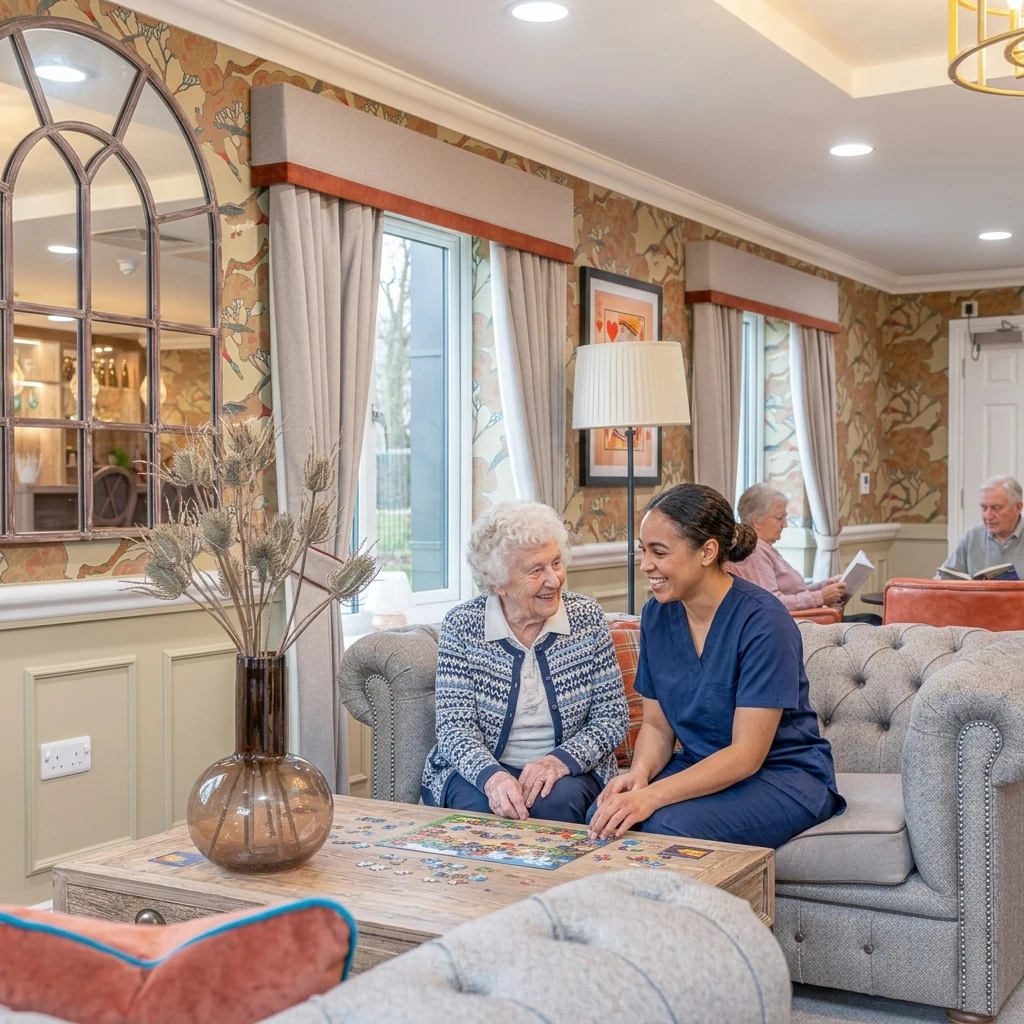
Care Home After Hospital Discharge: A Family Guide
Has your loved one been told they may leave hospital soon, while everyday tasks still feel uncertain? A temporary care home after hospital, convalescent care or respite after surgery may offer another step between treatment and managing alone.
It can be hard to know what will feel safe after surgery, illness or a fall. Recovery, mobility and confidence may have changed, and the family may not live close enough to help each day. The right choice depends on an individual assessment, recovery goals and the support available at home.
You may be able to consider NHS intermediate care, a privately arranged temporary stay, or support at home. These options are different, and each suits different needs. Understanding what NHS support may be available is a helpful first step.
Key Takeaways
- NHS intermediate care supports recovery and independence after illness or hospital.
- A private respite stay is arranged separately from NHS support.
- Support may take place at home or in another setting.
- An assessment should guide the plan and match support to changing needs.
- Ask who will fund the support and what happens when it ends.
What NHS Intermediate Care Can Provide After Hospital
Intermediate care is assessed, short-term recovery support arranged through NHS and adult social care services. It helps someone recover and regain independence after illness or a hospital stay.
Eligible intermediate care is free for as long as it is needed, usually for a maximum of six weeks. Six weeks is a usual maximum, not a guaranteed stay or an entitlement for every person.
Eligible intermediate care is free while it is needed, usually for up to six weeks. The length depends on assessed needs and progress.
Who arranges intermediate care and how long it lasts
An assessment informs the support, setting and recovery goals. The team considers what the person can do safely and what help may make daily life easier.
Support may take place at home, in a care home or in a community hospital. Most people receive intermediate care at home, and plans can change as recovery progresses.
Depending on assessed needs, a team may include:
- Nurses
- Physiotherapists
- Occupational therapists
- Care workers
The NHS explains how intermediate care supports recovery after a hospital stay, illness, injury or fall. It is not the same as arranging a private care home stay.
What reablement works towards
Reablement helps a person practise tasks they want or need to manage again. Goals might include dressing, preparing a meal or using the stairs safely.
For example, someone may practise getting dressed with less help each morning. A therapist may suggest a safer way to move, while care workers support agreed daily tasks.
This rehabilitation aims to build confidence and independence, but it cannot promise a particular result. A person may still need help after the short-term support ends.
Families sometimes call this NHS respite care after hospital or rehab after a hospital stay. The terms can cause confusion, since a privately arranged care home stay has different arrangements.
A care home stay can be a different option when home is not a suitable recovery setting.
What Does Temporary Care Home After Hospital / Convalescent Care / Respite After Surgery Involve?
When someone is not ready to manage alone, families must decide where support can work safely. A temporary care home after hospital may provide accommodation and care for a period of recovery.
Setting matters, but so does the person’s health, routine and available help. Intermediate care may happen at home, in a community hospital or in a care home, though most people receive it at home.
Recovery support in a care home
A private respite stay may suit someone who cannot safely manage at home, lives without nearby support or needs round-the-clock nursing support. Services differ between care homes, so families should ask what a particular provider can offer.
Convalescent care is another term families may use for recovery support after illness or surgery. Respite after surgery can mean a short-term care home stay, but a private stay is not NHS-funded simply because it follows a hospital discharge.
A stay can provide temporary accommodation and care suited to assessed needs. Some families also consider a respite stay when a regular carer needs time to rest.
Read about short-term respite care at Esmere Gardens, including the value of a tailored stay for the person and their carer.
Choosing between a care home and support at home
Home care brings visits into familiar surroundings, while live-in care provides support in the person’s home for more of the day. The right option depends on the level of help needed and what can be arranged safely.
A temporary home care after surgery plan may work when the home is suitable and the person can manage between visits. A care home may be more suitable when regular supervision or nursing support is needed.
| Option | Where support takes place | Main focus | How it is arranged |
|---|---|---|---|
| NHS intermediate care | Home or another setting | Short-term recovery and independence | Assessment through NHS or adult social care |
| Private respite stay | Care home | Temporary accommodation and care suited to assessed needs | Agreed with the provider |
| Home care or live-in care | The person’s home | Help shaped around the home setting | Arranged through an appropriate service |
From home care to a care home, the setting should reflect what the person can manage and what support is available. The next step is to recognise when a temporary stay may be worth discussing.
When Might a Temporary Care Stay Be the Right Choice?
After a hospital stay, families may find that their loved one’s needs have changed. Everyday tasks such as washing, dressing or making meals may now take more effort.
A temporary stay may be worth discussing after surgery, illness, injury or a fall. Changes in mobility, confidence or daily care needs are reasons to ask for an assessment, not proof that someone must move.
For example, a person who managed stairs before surgery may now need support to move safely. A person recovering from illness may struggle to prepare meals or keep up familiar routines.
Consider whether any of these signs apply, then share them with the discharge team or a care provider:
- Walking or moving between a bed, chair and toilet feels unsafe.
- Personal care, including washing and dressing, is hard to manage.
- No suitable support is available at home.
- Nursing or supervision needs make recovery at home difficult.
These prompts can help families describe care needs clearly. They are not a diagnosis, and none automatically means a person should move into a care home.
Think about what happens at different times of day, not only during a planned visit. For instance, someone may manage breakfast but need help getting ready for bed.
It can also help to note what the person wants to regain, such as walking to the garden or preparing a simple lunch. These goals give the team useful information about recovery.
An assessment should turn these concerns into a clear, person-centred support plan.
What Support Can Someone Receive During Recovery?
Someone may manage breakfast alone but need help washing, dressing or moving safely. Support should fit the person’s abilities, agreed goals and care needs.
A care plan should set out who provides support and which tasks need a health professional. Care workers do not take on clinical tasks that require a registered nurse or another qualified professional.
Personal care, meals and mobility
Personal care may include help with washing and dressing, while still allowing the person time to do what they can. Staff can offer support in a way that respects familiar routines and personal choices.
Meal support can reflect appetite, preferences and what the person can manage. Someone might need a meal prepared, help carrying a plate or a reminder to drink.
Moving safely may involve support with walking or transfers, based on the care plan. The person should not be pushed to do more than they can manage.
Daily routines can make recovery feel less daunting. Keeping a familiar time for getting dressed or having breakfast may help someone regain confidence.
Families choosing a home may find information about safer short stays and person-centred support useful when discussing how care is delivered.
Nursing oversight and coordinated recovery
Nurses and other professionals work to the person’s care plan and their own professional roles. Where appropriate, they can follow instructions shared by hospital or therapy teams.
Some needs call for nursing input or review by another health professional. Care workers can support everyday tasks, but they should not replace clinical care.
Rehabilitation may include daily activities and exercises recommended by a qualified professional. These could help someone practise standing from a chair or taking safe steps with the right aid.
Progress can differ from one day to another. A care plan should reflect changes, rather than assume that a person will recover at a set pace.
Families can share useful details about routines, communication and what the person hopes to do again. These details help staff offer care that feels personal, not like a list of tasks.
Safe, consistent support depends on practical planning before discharge or admission.
How Can Families Arrange Care Around Hospital Discharge?
Raise support needs with the hospital discharge team as soon as discharge is being discussed. Early planning gives the person and family time to explain what may help.
The person and their family or carer should be involved in discharge planning. An assessment may consider daily tasks, mobility, safety, what the person can do and their goals.
Start the conversation before discharge
Use these steps to keep the discussion focused and agree what happens next:
- Speak with the hospital discharge team about likely support needs.
- Describe daily care tasks and any nursing needs.
- Ask what NHS or local authority support may be available.
- Agree the next contact and what to do if needs change.
Ask the team to explain the options in clear terms. If you are unsure whether the plan covers a task, name that task and ask who will help.
Families arranging a care package for someone coming home from hospital can ask how support will work at different times. For example, find out how the person will manage meals or washing between visits.
What to share during an assessment
Give a clear picture of the person’s usual routine and what has changed. Mention falls, pain, confusion or tasks that now take much longer.
It may help to describe the home, including stairs, bathroom access and who lives nearby. Explain what family or friends can realistically do, rather than assuming they can provide daily care.
Ask what recovery goals the person wants to work towards. A goal might be getting dressed with less help or moving safely from bedroom to kitchen.
Age UK home from hospital services may be available in some areas. Check with your local Age UK to find out whether a service operates nearby.
Age UK’s guidance on support after hospital discharge explains how needs may be reviewed as someone recovers. It also covers planning for care at home.
Keep a note of agreed actions and who will follow them up. A plan should also make clear who will fund the chosen support.
How Are Temporary Care Fees and Funding Worked Out?
NHS-funded recovery support and a private care home stay have different funding arrangements. Who pays depends on the type of support and the person’s eligibility.
Eligible intermediate care is free while needed, usually for up to six weeks. Longer-term local authority support may depend on a financial assessment.
NHS-funded support and longer-term social care
When short-term NHS support ends, someone with ongoing social care needs may be assessed by their local authority. A financial assessment may decide whether the council contributes to longer-term care costs.
Some people with complex, long-term health needs may be assessed for NHS Continuing Healthcare. A multidisciplinary team considers whether the person meets the criteria.
These routes are different from privately arranged care services. A private stay is arranged with the provider, and families agree its fees and terms directly.
| Funding route | Who decides or arranges it | How costs are treated | What families should clarify |
|---|---|---|---|
| NHS intermediate care | NHS or adult social care assessment | Free while needed, usually up to six weeks | When support will be reviewed |
| Local authority support for longer-term care | Local authority assessment | Contribution may depend on financial assessment | What the assessment covers |
| NHS Continuing Healthcare | Multidisciplinary team assessment | May fund care for eligible people with complex, long-term health needs | Eligibility and the care being assessed |
| Private care home stay | Provider and family agree arrangements | Fees and terms agreed directly | What the fee includes and any separate charges |
Questions to ask about private fees
Ask for the fee and terms in writing, including any items charged separately. Make sure the agreed arrangement reflects the person’s needs and the planned length of stay.
Esmere Gardens describes its care fees as all-inclusive. Families should confirm the precise inclusions and exclusions directly before agreeing a stay.
It is also sensible to ask how a change in needs could affect the arrangement. For instance, ask who will discuss a change in support and how any change to the fee would be agreed.
Understanding the funding route helps families plan beyond the first few weeks. Ask how long the planned support can continue and what happens when it ends.
What Happens When Short-Term Support Comes to an End?
The next step depends on the person’s progress, not simply on the passage of time. A review should consider what the person can safely manage and what support remains needed.
A recovery plan can be reviewed and changed as needs or abilities change. Some people need no further care, while others may continue rehabilitation or need longer-term help.
Reviewing progress and changing the plan
During a review, the team can discuss daily tasks, mobility, safety and the person’s goals. Families can explain what works at home and where concerns remain.
Recovery may not follow a straight line. A person could manage more on one day and need extra help after a tiring appointment or a poor night’s sleep.
If circumstances change, tell the team or service responsible for the support. Share what has changed and when it began, so the plan can respond to the person’s current needs.
Planning for ongoing support
If care needs remain, the local authority may organise a care needs assessment. This can help identify what support may be suitable for the longer term.
An unpaid carer can request a carer’s assessment. It gives them a chance to discuss the effect of caring and any help they may need.
Longer-term support could take place at home or in another setting, depending on assessed needs. Some people need ongoing help; others regain enough independence to manage without formal care.
Talk through any proposed change with the person wherever possible. Clear information can help families understand who will provide support and how to contact them if needs shift.
Families considering care nearby can contact Esmere Gardens to discuss whether a temporary stay may suit their situation.
What Can Families Expect at Esmere Gardens?
Esmere Gardens Nursing Home is a local care home families can contact to discuss a possible stay. Based in Moreton-in-Marsh, it is part of Taylor & Taylor Care and serves families across the surrounding Cotswolds.
Short-notice admissions depend on assessment and availability. The home offers residential, nursing, dementia and respite care, with 24-hour nursing support.
A dedicated private GP service is available. Access to a private dentist is planned for the future, but is not currently available as a service.
Families can discuss the person’s care needs and what a stay might involve. This is a chance to share important details and ask direct questions before deciding.
Short-notice admission depends on an assessment of the person’s needs and a place being available.
Useful questions to discuss include:
- Can the home meet the person’s care needs?
- What assessment is needed before a stay?
- Is a short-notice admission available?
- What does the fee include, and what does it exclude?
Families can also ask how the home plans care and communicates with people close to the resident. Esmere Gardens provides dedicated private GP support at its Cotswolds care home.
The address is Stow Road, Moreton-in-Marsh, Gloucestershire, GL56 0DS. Visit esmeregardens.care, call 01608 692222 or email hello@esmeregardens.co.uk.
Call or email with your needs, or arrange a private visit.
Conclusion
You can ask questions and explore support before deciding on a temporary stay. The best next step is to match the person’s assessed needs with their likely recovery and the help available around them.
Share what your loved one can manage, what feels difficult and what they hope to do again. A clear conversation can help your family understand whether a short stay is suitable and what the arrangement would involve.
If you are considering Esmere Gardens, call to discuss your needs or book a private visit. Call 01608 692222 or arrange a private visit.
FAQ
How to get an elderly person into a care home?
What financial support are available for elderly people who live at home?
How to get respite care for a dementia patient?
What are some ways to care for an elderly person at home?
What are some things an elderly mother can no longer fully care for herself?
What are the signs that an elderly person is deteriorating?
Related articles
- On-site GP model promises safer short stays and faster medical response for local providers
- Private GP joins Cotswolds care home in Moreton-in-Marsh
- Respite Care Reimagined: A Gentle Pause for Renewal
Sources
- Support after hospital discharge - Age UK explains discharge planning, recovery support and how longer-term care needs may be assessed.
- Care to support recovery after leaving hospital - NHS guidance explains intermediate care, its usual duration, settings and follow-on support.

Moving into a Care Home: Your Essential Checklist
Arranging a move for someone you love can feel like a lot to hold at once. A moving into a care home checklist can bring order to the tasks, while leaving space for mixed feelings about this change in life. Person-centred care means support shaped around an individual’s health needs, preferences, routines and life story.
Start by checking that the care home can meet the resident’s needs. Then prepare everyday essentials, sort practical arrangements and help your loved one adjust. If the move must happen at short notice, focus first on safety, health information and the resident’s immediate needs. Friends family may also need time to understand what is changing and how they can help.
You can work through each decision one step at a time. Begin by considering what to look for when visiting a home.
Key Takeaways
- Match the home’s support to the resident’s assessed needs.
- Pack daily clothes, health aids and a few familiar belongings.
- Agree medication, paperwork and fee arrangements before arrival.
- Keep moving day calm and give the resident time to adjust.
- Contact Esmere Gardens Nursing Home to discuss needs or arrange a visit.
What should you look for when choosing a care home?
A useful visit shows you not only the building, but how residents are treated during an ordinary day. Look for a welcoming feel and signs that staff notice each person. Ask specific questions about care, staffing and daily life, then compare the answers with the resident’s needs.
Notice cleanliness, clear walkways, good lighting and access to shared spaces. See whether staff speak respectfully with residents, and whether people can make choices about meals, activities and their routines. A quiet or busy home may suit different people, so consider what helps your loved one feel comfortable.
Look beyond the building: ask how staff, routines and care plans support the resident each day.
Notice the feel of the home and the way people are treated
Watch a meal or activity if the home allows it. Ask what food choices residents have and how staff support people who need help eating. Check whether activities reflect different interests, rather than expecting every resident to join in.
Ask how visitors are welcomed and how family members can share concerns or useful information. A good conversation should include how the home handles complaints, who receives them and how families hear about the outcome. The National Institute on Aging’s care home choosing guidance also recommends visiting and asking about care, staffing and services.
Check whether care can meet current and changing needs
Ask how the home assesses needs before admission and reviews care plans later. Find out who is on duty during the day and at night, and how staff respond if a resident’s health changes. Staffing arrangements matter because support needs can vary across the day.
If you are using a dementia care home checklist, ask about staff experience, communication and routines for people living with dementia. Find out how staff respond to distress and help residents feel safe. Ask how the home will involve your family in reviews, with the resident’s consent.
Ask about daily life, visits and communication
Use these five checks during a visit, then write down the answers while they are fresh:
- Observe how staff speak with residents.
- Ask who is on duty during the day and night.
- Check access around the home and bedroom arrangements.
- Ask how staff review care plans.
- Request the complaints procedure.
Possible red flags include unanswered questions, poor communication or a lack of choice. One observation does not prove poor care, but it can prompt calm, specific follow-up questions. Record answers after each visit, then use them to prepare the resident’s room and belongings.
Moving into a care home checklist: what should you pack?
Begin with the belongings the resident uses every day, then add a few items that make the room feel recognisable. Choose useful, familiar items that suit the resident’s habits and the space available. Check the home’s policy and safety assessment before bringing anything that could pose a risk.
Start with enough clothes for roughly one to two weeks. Add seasonal items as needed, rather than filling the room at once. Clothes for care home residents in the UK should suit their usual style as well as comfort and ease of dressing.
Choose clothes and personal essentials
A practical moving care home list can group essentials by how the resident uses them:
- Comfortable clothes labelled with the resident’s name.
- Nightwear and safe footwear that fits well.
- Toiletries the resident knows and prefers.
- Glasses and hearing aids, with cases or chargers.
- Mobility aids agreed with the home.
- Familiar photographs or small comfort items.
Ask how the home labels clothes and handles laundry. Check which clothes are easiest for the resident to put on, and pack suitable layers for the season. A few preferred outfits can help the room feel personal without crowding drawers.
Make the room feel familiar without overcrowding it
Photographs, a familiar cushion or a small keepsake can help make the bedroom feel less strange. The resident might choose which pictures to display. Leave valuable or fragile belongings at home unless staff and the resident agree there is a safe place for them.
| Item group | Examples | Check before packing |
|---|---|---|
| Clothing | Daywear, nightwear, slippers | Labels, fit and laundry process |
| Health aids | Glasses, hearing aids, charger | Storage and identification |
| Personal comforts | Photographs, cushion, keepsake | Space and safe placement |
| Electrical or large items | Radio, lamp, chair, heater | Home policy and safety check |
Items not allowed in nursing homes depend on the home’s rules and individual safety checks. Ask first about heaters, electrical equipment, candles and large furniture. None is automatically prohibited in every home, but staff need to check risks and room space.
For respite care, pack the same essentials for the agreed stay. Confirm medication, laundry and labelling arrangements before arrival. Check the bedroom’s size and safety arrangements with staff before moving furniture, then prepare health information and paperwork.
How should you prepare health information and medication?
A clear handover helps the team understand what the resident needs from the first day, not only what appears on a diagnosis list. Share everyday details alongside clinical information. Ask the care home which records it needs and follow its process for handing over medicines.
Family observations can add useful detail to clinical records. You may know what helps the resident eat, sleep or feel calm, or how their needs change during the day. Keep this information clear and factual, so staff can use it as part of the care plan.
Gather the records the care team needs
Prepare these five information groups, then ask staff how they prefer to receive them:
- Current health conditions and allergies.
- Medication, including recent doses.
- Mobility, falls and help needed to move safely.
- Eating and drinking needs, including any support required.
- Communication, memory, sleep and personal-care routines.
Include appointment letters and details of follow-up care. Explain what the resident can manage alone and where they need help. A small detail, such as a preferred way to ask about pain, can help staff communicate more clearly.
Agree the medication handover before arrival
Ask how to bring medicines, including their packaging and any medicines taken only when required. Follow the home’s process rather than changing how medicines are packed or labelled yourself. Make sure staff know when the resident last took each medicine.
Check how staff will identify and store glasses, hearing aids, dentures and mobility aids. Tell them about chargers, cases or any special care these items need. Once the health and care information is ready, make sure the agreement and fee arrangements are equally clear.
How do care home fees and contracts work?
Before signing, ask the home to explain the full cost in writing, including anything that could be charged separately. Fees depend on the individual care-home contract and assessed needs. Get both inclusions and exclusions in writing before you agree.
The regular fee is the agreed charge for the care and services set out in the contract. Separate charges may apply to other items or services. The agreement should make clear how these costs work for your family, rather than leaving you to guess.
Ask what the regular fee covers
Ask for a written breakdown of what the regular fee covers. Compare the same points when discussing different homes, including how the resident’s assessed needs affect the agreed amount. Check how any funding contributions are treated within that fee.
Confirm any exclusions and additional charges
Ask about deposits, advance payments and any trial arrangements the home offers. Check whether charges change during a hospital stay or another temporary absence. Ask what happens if the resident’s needs change and whether this may affect fees or available care.
| Contract point | What to confirm | Why it matters |
|---|---|---|
| Regular fee | Services included in the agreed amount | Shows the basic cost of the stay |
| Separate charges | Items, services and how they are billed | Helps you plan for extra costs |
| Fee reviews | When and how fees may change | Clarifies future payments |
| Hospital or temporary absence | Whether fees continue during absence | Explains what the family may owe |
Read the contract before agreeing
Read the care-home contract carefully and ask for unclear terms to be explained. Check notice periods, payment dates, deposit rules and the process for raising complaints. Keep a copy of the signed agreement and any written fee breakdown.
Care home costs and care home fees cap rules can depend on a person’s circumstances and funding arrangements. Do not assume a universal cap applies to your family. Check current rules and funding options with the local council or a qualified adviser.
Ask how the home reviews care needs and explains any proposed changes to fees. The agreement should set out what happens if the resident needs more support or a different care option. With the agreement understood, the family can update organisations and services.
Who needs to know about the move?
The first-time moving house checklist changes depending on what will happen to the resident’s previous home. Make a short notification list and give each task to a named family member where possible. Review bills and insurance based on whether the property will be sold, rented, occupied or left empty.
These six groups cover many routine updates. Some may not apply, so focus on the resident’s accounts and the property’s next use:
- GP and other health providers.
- Local council.
- Benefits and pension providers, where relevant.
- Bank and building society.
- Utilities and communications providers.
- Subscriptions, deliveries and memberships.
Depending on the arrangements, also check TV Licensing, post redirection, insurance, vehicle records and driving records. Record final utility readings if the property is closing or changing hands. Keep copies of account details and note when each provider confirms a change.
Review council tax, insurance and utility bills according to whether the home is sold, rented, occupied by family or left empty. Tell the relevant providers about the change and ask what action they need. This can prevent bills or cover from continuing under the wrong arrangement.
A Lasting Power of Attorney may matter if someone needs authority to manage another person’s affairs. Check its scope and validity before relying on it. Once calls and forms are under control, turn attention to making the move itself feel manageable.
How can you make moving day feel calmer?
A calmer moving day usually begins with fewer demands, not a tightly packed schedule. Keep the plan simple and flexible, with room for pauses. Short-notice admission still depends on assessment and availability.
Ask the team when to arrive and who will welcome the resident. A quiet start may suit them better than completing a tour and meeting everyone straight away. The resident can take part in choices, even when the family handles most arrangements.
Plan a simple arrival and a familiar first evening
Use four simple steps to guide the day:
- Agree the arrival time and who will welcome the resident.
- Keep essential medication and information easy to reach.
- Bring a familiar item the resident has chosen.
- Allow time to rest and have a drink or meal.
Do not try to unpack everything or fill the day with introductions. Staff can help the resident find their room and explain what happens next. A familiar object can give them something known to focus on during a busy change.
Involve the resident in choices they can make
Invite the resident to choose photographs, clothes and who comes with them. Offer clear choices, without asking them to decide every detail at once. These small decisions can help the resident feel heard and involved.
Moving may bring relief, grief or anxiety. Reassuring language should make room for those feelings, rather than dismissing them. Arrival is only the first step; familiar routines and patient support can help the resident get to know the new setting.
What helps someone settle into a new home?
A resident may need time to feel at ease, even when the home and care team are a good fit. People adjust at different paces, and small signs can show growing comfort. Notice changes in the resident’s comfort and share concerns with staff.
The resident might begin recognising staff, eating more comfortably, spending time in shared areas or following a new routine. These changes may happen gradually. Avoid judging progress by one visit or by how quickly someone joins activities.
Build familiar routines at the resident’s pace
Share the resident’s preferred name, daily habits, favourite topics and worries with staff. Explain which words or actions help them feel reassured. This gives the team practical ways to make daily contact more familiar.
Regular visits can offer comfort, but there is no single pattern that suits everyone. Agree a starting plan with the resident and care team, then adjust it to the resident’s response. A long visit may feel tiring, while a brief, familiar visit may be easier at first.
Agree visits and check in with the care team
You can join a meal or activity if the resident would enjoy your company. Keep visits calm, especially if the resident seems tired or unsettled. Stay involved through agreed updates with staff, and raise concerns privately so the team can discuss them fully.
Share details that may help staff understand a change in mood or routine. A resident who usually enjoys conversation may need a quieter visit after a tiring day. Families can use practical tips for the transition to nursing home care to support visits and familiar routines.
Some uncertainty is part of adjustment, but persistent distress, worsening health or unmet care needs deserve discussion with staff. Ask what they have noticed and agree how to keep in touch. Support needs can change, so the next step is matching the type of care to the resident’s situation.
Which type of care may be right for your relative?
The right type of care depends on the support the person needs now and what the home can safely provide. Assessment matters, because a care label alone cannot show whether a home can meet each resident’s needs. Suitability depends on the resident’s assessment and the home’s ability to provide the required support.
| Care type | Main focus | Useful to discuss |
|---|---|---|
| Residential | Help with daily living and personal care | Routines, independence and support needs |
| Nursing | Personal care with nursing support | Health needs and nursing cover |
| Dementia | Support for people living with dementia | Communication, routine and reassurance |
| Respite care | Short-term care for an agreed stay | Length of stay and daily support |
Residential care may suit someone who needs help with daily tasks. Nursing care adds support from nursing staff for health needs. Dementia care focuses on needs linked to dementia, while respite care provides a short-term stay.
A couple may move into a care home together if each person’s assessed needs can be met, suitable accommodation exists and space is available. Discuss both care plans with the home. Changing needs do not guarantee that a resident can stay in the same setting, so ask how reviews and future care options work.
For more detail, see the practical moving into care home checklist. The next step is to consider the support Esmere Gardens offers in Moreton-in-Marsh.
What support can families expect at Esmere Gardens?
Families in Moreton-in-Marsh and the surrounding Cotswolds can speak directly with Esmere Gardens about the resident’s needs and the next steps. A direct conversation can help you understand whether its support may suit your family. Short-notice admissions depend on assessment and availability.
Ask how Esmere Gardens’ care and fees match the resident’s assessed needs, and request the details in writing.
Esmere Gardens Nursing Home is part of Taylor & Taylor Care, at Stow Road, Moreton-in-Marsh, Gloucestershire, GL56 0DS. It provides residential, nursing, dementia and respite care, with 24-hour nursing support and dedicated private GP support.
Its all-inclusive approach is intended to give families clearer expectations and peace of mind. Ask for written details of what is included and excluded for the resident’s circumstances. A private dentist is planned for the future, but is not currently available.
You can discuss the resident’s needs, ask about availability or arrange a private visit. Call 01608 692222, email hello@esmeregardens.co.uk or visit the Esmere Gardens website. A private visit gives your family time to talk with the team and consider the next steps.
When you are ready, call, email or arrange a private visit to discuss what may suit your loved one.
Conclusion
A good move plan gives the resident practical support while keeping their preferences and familiar routines in view. Clear communication and familiar comforts can help the change feel more personal. Sharing what matters to the resident also helps family and staff work towards the same understanding.
You do not need to settle every question in one day. A conversation about the resident’s needs can help you decide what to do next and what to ask the care team.
Call Esmere Gardens Nursing Home on 01608 692222 to discuss your needs or book a private visit. Make contact when your family feels ready.
FAQ
Can a couple move into a care home together?
What should I include on my first-time moving house checklist?
What to pack for respite care?
What to look for when looking for a care home?
Do I lose my state pension if I go into a care home?
What are the red flags in a care home?
What are the downsides of living in a care home?
What is the biggest complaint in nursing homes?
Related articles
- What Should I Look For and Ask When Choosing a Care Home?
- Navigating the Transition to Nursing Home Care: Tips for Families
- Helping Mum or Dad Move Into a Care Home: A Practical and Reassuring Checklist
Sources
- How To Choose a Nursing Home or Other Long-Term Care Facility — The National Institute on Aging advises assessing care needs, visiting homes, asking about staffing and services, and reviewing costs.

Respite Care Home Costs: Fees and Extras Explained
Arranging a break from caring can bring relief, along with questions about cost. You may wonder how much does respite care in a care home cost? The answer matters when you are planning time away and making sure your loved one has the right support.
Esmere Gardens Nursing Home is part of Taylor & Taylor Care and offers residential, nursing, dementia and respite care in Moreton-in-Marsh. A care needs assessment is a review of a person's health, daily support requirements and circumstances to help identify suitable care. The right arrangement depends on your loved one's needs and your family's circumstances.
It is reasonable to ask for a clear fee breakdown before arranging a stay. You deserve to understand the costs and feel comfortable with the support being discussed.
Key Takeaways
- Ask for a current, personalised fee in writing.
- Check which services and items the fee covers.
- Discuss your loved one's needs before agreeing dates.
- Ask about assessments and possible funding routes.
- Confirm how a change in needs could affect the fee.
Here is a clear way to understand what shapes a fee, what to check and how to discuss a stay with the home.
How much does respite care in a care home cost?
Families need a current quote based on the person's needs and proposed stay. Esmere Gardens Nursing Home does not have one fee that fits every respite arrangement.
Ask for a written, personalised quote that states the fee and what it covers. The fee depends on assessed needs, the support required and the agreed length of stay. Clarify any separately charged extras before you agree.
Ask for a written, personalised quote that states the fee and what it covers. Clarify any separately charged extras before you agree.
Searches such as “how much does a care home cost per month in the UK” and “what is the average cost of a care home per week in the UK” seek broad comparisons. A national average cannot set this home's fee or your family's total care costs.
Care home costs in the UK vary, so a general figure may not reflect the services in a particular quote. The quoted respite care cost is the fee for the agreed stay; ask which items sit outside it.
Time away from caring can also matter to your wellbeing. The AARP and National Alliance for Caregiving report Caregiving in the U.S. 2025 found 39% of carers said respite would help, while 13% used it. Their [respite care planning advice](https://www.aarp.org/caregiving/life-balance/respite-care-plan/) discusses ways to plan a break.
Understanding what affects a quote helps you give the home a clear picture of the support your loved one needs.
What affects the fee for a respite stay?
Two people may need different support during the same short stay, so their respite care costs can differ. The detail matters when you describe your loved one's care needs.
The fee reflects the type and level of care required, as well as the stay and room agreed. Share what your loved one can do alone and where they need help.
The level and type of support
Personal care, such as help with washing and dressing, affects the level of support needed. Mobility support may include help moving safely around the home.
Nursing needs can call for support beyond everyday personal care. Dementia-related support may also shape the care plan, including help with routine, communication and safety.
Be as clear as you can about changes in health, medicines and daily habits. These details help the team consider whether the care setting can meet your loved one's needs.
Length of stay, location and room
The agreed length of stay can affect the fee, and a short stay may not follow the same fee structure as a longer one. Ask how the home charges for your proposed dates.
Location, room and accommodation choices can also affect a quote. At Esmere Gardens, discuss the available room options and how they relate to the stay you are planning.
Urgent or short-notice respite care depends on assessment and availability. Do not assume a quick arrival is possible before the home has discussed the person's needs.
Once you understand what shapes the fee, ask what an all-inclusive fee means for the services agreed for your stay.
What's included in an all-inclusive fee?
“All-inclusive” helps only when you know what your own agreed fee includes. Clear terms can bring peace of mind, not just a way to plan spending.
Ask for a written breakdown of the care and services covered by your fee. Esmere Gardens describes its approach as care in a safe, trusting environment built with purpose.
Care and support during the stay
The home offers 24-hour nursing support and dedicated private GP support. These services can give families reassurance that health needs have a place in the care plan.
A private dentist is planned for the future. Do not assume every service has the same availability or forms part of every fee.
Care should match the person, rather than a standard list of services. Talk through how the agreed support will work during your loved one's stay.
Extras and exclusions to confirm
Ask for a written breakdown of included care and services, plus any items charged separately. Optional services and personal spending may not be part of the fee.
If a charge or service is unclear, ask before agreeing. A plain answer can help you avoid different assumptions about the same stay.
The home’s questions to ask when choosing a care home include what fees cover and whether costs might change if care needs rise.
With the fee clearer, you can weigh the care setting as well as the cost. Home care and a stay in a care home offer different kinds of support.
Is respite in a care home different from care at home?
A family may weigh familiar surroundings against the steady support of a care-home setting. The right choice depends on the person's needs and the support available.
Neither setting is always cheaper or better; compare the care, hours and services involved. The type of respite should fit your loved one's day-to-day needs.
Respite in a care home
Residential respite gives someone a temporary place to stay, with support for daily routines. Nursing respite may suit a person who needs nursing care as well as help with everyday tasks.
A care home offers a shared care setting, while the person's needs guide the support plan. The quality and type of care matter alongside the fee.
Respite support in familiar surroundings
Home care can mean visits from carers or live-in support in familiar surroundings. A live-in carer may provide support in the person's own home, with the agreed hours and tasks shaped around their needs.
How much it costs to have a live-in carer for dementia in the UK depends on location, hours and the complexity of support. There is no universal answer to whether live-in care or a care home costs less, because the support and inclusions differ.
| Care setting | Where care takes place | Typical support arrangement | Practical consideration |
|---|---|---|---|
| Residential respite | Care home | Temporary stay with daily support | Room and shared setting |
| Nursing respite | Care home | Stay with nursing support | Assess nursing needs first |
| Home-based respite | Person's own home | Visiting or live-in support | Agree hours and tasks |
The guide to choosing a care home or nursing home explains how families can compare settings and support.
The right setting is one part of the decision. Next, consider what help may be available to fund the arrangement you choose.
Can local authority or NHS funding help?
Ask for assessments even if you expect to self-fund, because eligibility depends on individual circumstances. Assessment comes first for local authority funding and NHS support.
In England, people with capital above £23,250 may have to meet the full cost of means-tested care. Rules differ across the UK, so the relevant authority must assess each person's situation.
Local authority assessments and support
A council can assess the person's care needs and finances. A carer's assessment looks at how caring affects you and what support could help.
Social services respite care depends on assessment. A council may offer direct payments to let someone arrange eligible support, but this is not guaranteed.
Next of kin are not automatically responsible for another adult's care home fees. The answer to “are next of kin responsible for care home fees?” is no, unless they have agreed to pay or have another legal duty.
NHS funding and other financial help
NHS Continuing Healthcare is not means-tested. It may cover care for eligible people whose assessment finds a primary health need.
Scotland has a separate nursing care allowance for eligible care-home residents. Check its current rate and rules with the relevant Scottish authority.
Carer's Allowance may be available if you provide care for at least 35 hours a week. Carer's Credit may help protect your National Insurance record, and councils assess carers' needs.
Grants may be available from Ogilvie Charities, After Umbrage and The Respite Association. Check each group's current terms and eligibility. Eligible NHS intermediate care after a hospital stay can provide up to six weeks of support.
| Funding route | Who assesses or provides it | Basis or support | First step |
|---|---|---|---|
| Local authority | Local council | Needs and financial assessments | Contact adult social care |
| NHS Continuing Healthcare | NHS team | Primary health need assessment | Ask the health team |
| Carer benefits | Relevant benefits service | Allowance or National Insurance credit | Check eligibility |
| Charitable grants | Named charities | Grant subject to terms | Contact each charity |
- Request a needs assessment for the person receiving care.
- Request a carer's assessment for yourself.
- Ask the council or NHS team which funding route applies.
The NHS guidance on carer breaks and respite care explains assessment routes and possible support.
Once you know which funding routes may apply, gather the practical details the home needs to discuss a possible stay.
How do you arrange respite care in Moreton-in-Marsh?
A family needing a short break can start by gathering details about the person's care and preferred dates. A clear first conversation helps the team understand what support may be needed.
The team must discuss the person's needs and complete an assessment before confirming suitability. Short-notice admissions depend on assessment and availability.
Esmere Gardens Nursing Home provides residential, nursing, dementia and respite care. It is at Stow Road, Moreton-in-Marsh, Gloucestershire, GL56 0DS, and serves families in Moreton-in-Marsh and the surrounding Cotswolds.
If you search “short-term respite care for elderly near me”, consider whether the home's location works for your family. Being close enough to visit may matter when planning a stay.
Before you contact the team, have these details ready:
- Preferred dates and the length of stay.
- Care and nursing needs.
- Dementia or mobility support needs.
- Relevant health information.
- Funding or payment questions.
The team can use this information to discuss the service and next steps. A possible stay is not confirmed until assessment and availability are clear.
With the basics ready, make a few final checks to avoid uncertainty about the quoted fee.
What should you ask before agreeing to a fee?
A written fee breakdown can prevent different assumptions about the same stay. Clear answers help you compare the fee with the support your loved one needs.
Ask the provider to explain the fee, services and practical terms before you agree. Use these questions to cover the main points:
- What does the agreed fee cover?
- Which items may cost extra?
- How does the care plan reflect nursing or dementia support?
- How does the fee change if the stay length changes?
- What happens if my loved one's needs change during the stay?
A written answer gives your family something clear to discuss together. It can help you make a calm, informed decision that fits your circumstances and the quality of care required.
Ask the provider to explain the fee, services and practical terms before you agree.
If anything remains unclear, raise it before confirming the stay. You can then speak with Esmere Gardens about your loved one's needs.
Conclusion
You do not need to settle every detail before starting a conversation. A clear discussion can help you decide whether Esmere Gardens Nursing Home suits your loved one's needs.
The fee should make sense alongside the support and services agreed for the stay. Esmere Gardens Nursing Home is part of Taylor & Taylor Care, and the team can talk through your family's circumstances.
Call 01608 692222 or email hello@esmeregardens.co.uk. You can also visit esmeregardens.care or book a private visit. Contact the team to discuss the person's needs or arrange a private visit.
FAQ
What is the nursing care allowance in Scotland?
How much does it cost to have a live-in carer for dementia in the UK?
Is it cheaper to have a live-in carer or care home?
Do care homes offer respite care?
What happens if you can't afford a nursing home in the UK?
Related articles
- How to Find the Right Care Home or Nursing Home
- What Should I Look For and Ask When Choosing a Care Home?
- Selecting the Best Care Home in the UK: A Detailed Guide
Sources
- Carers' breaks and respite care - Social care and support guide — Explains respite options, assessments, arranging support and paying for care.
- Create a Respite Care Plan to Give Caregivers a Break — Reports findings from Caregiving in the U.S. 2025 on carers' use of respite services.

Care Home Fees in Gloucestershire: What to Compare
Families can compare care home fees in Gloucestershire more clearly by matching support needs with the services included. A relative may need help with washing, dressing, medicines or daily company, and those needs shape the care being considered.
A needs assessment is a structured review of someone’s health, personal care and day-to-day support needs. Esmere Gardens Nursing Home in Moreton-in-Marsh is one local option for families to explore.
Written fee details can show what an agreed arrangement covers and what may cost extra. That clarity helps families compare options and plan with greater confidence, without focusing on a weekly figure alone.
The person’s needs are the starting point. Location, care type, room features and staffing can also affect fees across Gloucestershire and the Cotswolds.
Key Takeaways
- Start with the person’s health and daily support needs.
- Ask for written details of the agreed fee and services.
- Compare care types as well as weekly prices.
- Check possible extra charges before making a decision.
- Explore funding routes based on individual circumstances.
- Consider quality, location and family contact alongside cost.
How Do Care Home Fees Gloucestershire / Care Home Costs Cotswolds Compare?
No single fee fits every person or home. A named home’s fee depends on the person’s assessed needs and the agreed package.
Location, care type, room size and features, facilities, activities and staffing arrangements can all affect care home fees. A higher price does not, by itself, show that care is better. Compare what each home offers against the person’s needs and the written fee terms.
A named home’s fee depends on the person’s assessed needs and the agreed package.
Care home costs Cotswolds families encounter can differ between settings, even when the care label sounds similar. A room with different features or access to different facilities may affect the fee. Ask the home to explain each difference in plain terms.
The table gives you practical questions for comparing residential care, nursing care, dementia care and respite care. These labels describe broad forms of support, not a measure of quality or a guarantee of suitability.
| Care type | General support focus | What to clarify about the fee |
|---|---|---|
| Residential care | Personal care and help with daily routines | Does the fee cover the agreed personal support? |
| Nursing care | Care with nursing oversight for health needs | How does nursing support affect the agreed fee? |
| Dementia care | Support shaped around the person’s needs and routines | What support is included in the individual care plan? |
| Respite care | A temporary stay while usual support changes | How is the stay charged, and what dates does it cover? |
When you compare fees, ask for the same level of detail from each home. Find out whether the quoted amount relates to a particular room, length of stay or level of support. A clear answer makes differences easier to understand.
For more points to weigh up, see this checklist for comparing care costs and support. It focuses on questions families can ask when they compare homes and their services.
Price is only one part of the decision. The type of care that matches the person’s assessed needs is the next point to discuss.
Which Type of Care Matches Your Relative’s Needs?
The support required depends on the person’s health and everyday needs. Care labels alone cannot decide whether a particular home is suitable.
A needs assessment can help you describe where support is needed, such as personal care, daily routines or health needs. Esmere Gardens Nursing Home provides residential care, nursing care, dementia care and respite care. Each option still requires an assessment, and short-notice admissions depend on assessment and availability.
Residential care and nursing care
Residential care usually means help with personal and day-to-day tasks. This may include support with washing, dressing, meals and routines. The level of help should reflect the person, rather than an assumption based on age or diagnosis.
Nursing care involves nurses supporting health needs that require nursing oversight. Ask what clinical support the person may need and how the home would plan for it. A clear account of health needs can help the team discuss whether nursing care may be appropriate.
The difference matters when a person’s needs change. Someone who once managed with help around daily tasks may later need nursing input. Discuss current needs and likely changes, without assuming that a care label settles the question.
Dementia care and respite care
Dementia care should be individualised around the person’s needs, preferences and routines. Familiar ways of communicating, sleeping and spending the day can help the team understand what matters. Share details about what brings comfort, what causes concern and how the person likes support to be offered.
Respite care is a temporary stay. It can give a person and their family time to consider support during a change in circumstances. Ask what information the team needs about health, daily routines and current support before a respite stay.
Families often ask, “What are the downsides of living in a care home?” A move can change privacy, familiar routines and how close someone lives to family. Visits and open conversations can help the person weigh those adjustments against the support they need.
You may find this guide to choosing residential support in rural England helpful when discussing care types and family involvement. It also covers matching support to assessed needs.
Once you have discussed the care type, the practical question is what the agreed fee includes.
What Should the Agreed Fee Include?
The written package should spell out what the agreed fee covers. It should leave your family with a clear account of the services and care being paid for.
Ask for the terms in writing, including how the package fits the person’s agreed care plan. The phrase “all-inclusive” should come with clear details, not leave you guessing about everyday services or later charges.
What an all-inclusive package means
Ask whether accommodation, meals, personal care, laundry and activities are included. Find out what the home means by personal care in the person’s case. For example, you might ask how support with washing or dressing is recorded in the agreed package.
It is also useful to ask how the home will explain any change to the arrangement. If needs change, the care plan and fee terms may need review. Ask who will discuss that with you and how the new agreement will be set out.
Which extra costs to clarify
Some services or personal purchases may be charged separately in some care arrangements. Treat the following as questions to check, not as confirmed charges at Esmere Gardens. Ask what applies to the person’s own package.
- What does the agreed package cover, including accommodation, meals, laundry and activities?
- Could hairdressing, chiropody, outings or specialist equipment cost extra?
- How might a change in care needs affect the agreement or fee?
- How are respite stays charged, including the length of the stay?
You can also ask whether personal items are included or bought separately. This might cover toiletries or other everyday things the person prefers to use. A specific answer helps you avoid treating a general phrase as a full list of services.
Ask for a written explanation if any part of the fee is unclear. Keep it with the care plan and other information your family uses to compare options. That makes it easier to discuss a change later.
With the package clear, your family can look at what financial help may apply.
What Funding Could Help Pay for Care?
Several funding routes may be worth exploring, but none should be assumed without checking eligibility. The help available depends on the person’s needs, finances and individual circumstances.
Gloucestershire County Council handles local adult social care assessments for this area. Council support involves a financial assessment and a separate needs assessment. The first looks at finances; the second reviews the person’s support needs.
Local authority assessment and support
Self-funding means the person pays their care costs from their own resources. Local authority support may help with costs if the person meets the relevant criteria after assessment. The council considers care needs and finances, then explains what support may be available.
Families discussing paying for your care in Gloucestershire can ask Gloucestershire County Council how its process applies to the person. Questions about paying for adult social care can include what information the council needs and how it reviews a case.
NHS continuing healthcare and nursing support
NHS continuing healthcare (CHC) is NHS funding for people who meet its eligibility criteria. It can fund a person’s care in full when they qualify. NHS-funded nursing care is separate: it is an NHS contribution towards nursing costs for eligible people in nursing homes.
The routes differ, so do not assume one will apply because a person lives in a nursing home. Ask the relevant team what assessment applies and how the decision will be made. Eligibility and the amount of help depend on individual circumstances.
| Funding route | What it may help pay for | Who decides or assesses |
|---|---|---|
| Self-funding | The person’s agreed care costs | The person or their representative manages payment |
| Local authority support | Care costs, if the person qualifies | Gloucestershire County Council assesses needs and finances |
| NHS continuing healthcare | Full care costs for eligible people | NHS teams assess eligibility |
| NHS-funded nursing care | A contribution towards nursing costs | The NHS assesses eligibility |
A financial assessment for care home fees calculator, a free care cost calculator UK or a Gloucestershire funding calculator may help with early planning. A calculator can help you organise questions, but it cannot confirm eligibility or decide how much help someone will receive.
Age UK explains local authority assessments, NHS support and ways to plan in its guidance on paying for a care home. Use it alongside advice about the person’s own circumstances.
If finances or circumstances make the fees difficult to manage, there are practical steps your family can take before making decisions.
What If You Cannot Afford the Fees?
Start by asking Gloucestershire County Council for advice about a Gloucestershire County Council care needs assessment and a financial assessment. An assessment does not guarantee a particular home or funding outcome.
The council can explain what information it needs about the person’s care needs and finances. Keep notes of the questions you have and any changes in the person’s circumstances. This can help your family explain the situation clearly.
Ask for an assessment before making financial decisions
Do not assume that a family must make a large financial decision before speaking with the council. Ask how the local authority process works and what support may be considered. A needs assessment and a financial assessment serve different purposes.
A Gloucestershire funding calculator may help you prepare an early estimate or list of questions. It cannot replace an assessment or confirm what support the council will offer. Use current council guidance when you need information about local rules.
For wider guidance on paying for care, Age UK’s care-home funding information explains how councils assess care needs and finances. It also discusses deferred payment arrangements.
Plan around property, income and care at home
A person’s home is not automatically required to be sold immediately to pay for care. How property is treated depends on the person’s circumstances. A deferred payment arrangement may be available, subject to council rules and conditions.
Check pension and benefit information against current official guidance. The way income and benefits are treated depends on the person’s funding circumstances. Avoid making plans based on a general rule that may not fit their case.
Families also ask whether a live-in carer costs less than a care home. The comparison depends on the hours and level of support, overnight needs and what each arrangement includes. Compare individual quotes rather than assuming one option costs less.
Care at home may involve different arrangements for daytime and overnight support. A care home fee and a live-in care quote may also cover different services. Ask each provider to explain the full arrangement before comparing costs.
Once the financial questions are clearer, you can look at a home’s quality and everyday experience.
How Can You Check Care Quality?
A CQC rating is useful evidence, but it cannot make the decision for your family. Read the findings and report date, not just the headline rating.
The Care Quality Commission (CQC) is the regulator for care services in England. Esmere Gardens is rated Good overall and Good across all five assessed areas. Its CQC report was published on 21 January 2026.
Read the current CQC report
The CQC assesses services across Safe, Effective, Caring, Responsive and Well-led. A rating gives a summary, while the report describes the findings behind it. Read the comments and note the report date as well as the overall result.
Reports give families a way to frame questions about care quality, staff and daily life. Look for information that relates to the person’s needs. If a detail matters to your family, ask the home how it works in practice.
This guide to choosing a medical-led care home covers care planning, clinical support and the value of checking reports. It can help you shape questions for a visit.
Compare the report with what you observe
A visit gives you a view of daily life at one point in time. Notice how staff speak with residents and whether people seem able to take part in ordinary routines. Ask questions respectfully and give residents space.
These checks can help you focus your observations:
- How do staff speak with residents during everyday interactions?
- Do shared spaces feel accessible to the people using them?
- How do staff respond when a resident’s needs change?
- What does family contact look like in ordinary weeks?
A rating and a short visit cannot show whether a home suits one individual. The person’s needs, preferences and views matter too. If possible, include them in the discussion and give them time to ask their own questions.
Formal quality information is one part of the decision. The next practical question is whether the location supports regular family contact.
Will the Location Work for Your Family?
The same location can fit one relative’s weekly routine and be difficult for another. Check real journeys from home, work and regular commitments before deciding how often visits can happen.
Esmere Gardens Nursing Home is at Stow Road, Moreton-in-Marsh, Gloucestershire, GL56 0DS. Moreton-in-Marsh and the surrounding Cotswolds are relevant to families planning visits in the area.
Check real journeys from Moreton-in-Marsh
Distance in miles does not always show how long a trip will take. Check the journey at times when you could realistically travel. Consider where each visitor would start, including home, work or another regular commitment.
Look at transport options that suit the people likely to visit. Think about who can make the journey and how often. One person may be able to visit after work, while another may need to plan around other responsibilities.
Do not judge the location by a map distance alone. The time needed for a trip, the transport available and the visitor’s routine can change how practical it feels. Check the journeys that matter to your family.
Fit visits around family routines
Consider how visits could fit around meals, rest and activities. A visit that works well for one person may not suit another time of day. Ask the home what visiting arrangements look like, then compare those with your family’s routine.
Regular contact can take different forms. Some relatives may visit often, while others may stay in touch in other ways. Discuss who hopes to visit and what pattern could be realistic over time.
Think about changes in routine, too. Work hours, caring duties and travel arrangements can shift. A location that feels manageable today may need a fresh look if a family member’s circumstances change.
It can help to talk through likely visit patterns together before a move. Consider whether several relatives can share visits, or whether one person would carry most of the travel. The aim is to make a plan that feels workable for everyone involved.
Once the location feels practical, your family can put direct questions to Esmere Gardens before choosing a visit or another next step.
What Should You Ask Esmere Gardens Before Deciding?
Ask for written package details and explain the person’s needs before comparing options. Clear answers can show how the agreed support relates to the person’s care plan.
Esmere Gardens Nursing Home is part of Taylor & Taylor Care. Its all-inclusive approach is intended to give families clarity about the agreed package and support. The home provides 24-hour nursing support and dedicated private GP support.
Ask how nursing and GP support relate to the person’s needs. Check what the agreed package covers and what could cost extra. Private dentist access is planned for the future, with no start date stated.
Discuss how the home reviews a care plan if needs change. Ask who will speak with your family and how the agreed support will be recorded. Clear communication matters when a person’s health or daily needs alter.
Before a short-notice admission, the home needs to assess the person and confirm availability. Ask what information the team needs about health, routines and current support. Short-notice admissions are subject to assessment and availability.
- What does the written package include for this person?
- Which services or personal items could cost extra?
- How does the home review the care plan when needs change?
- What assessment and availability checks apply to an admission?
Families can also ask which Gloucestershire care services may be relevant to their situation. A clear discussion can help you understand what to explore locally without assuming that one route fits every person.
You may find this guide to choosing a care home near Moreton-in-Marsh useful when preparing questions about care, fees and the CQC rating. It covers points families can raise with a home.
Ask how the agreed package meets the person’s needs, what may cost extra, and how the home handles changes or admissions.
A conversation or private visit can help you decide what to explore next. You can raise the person’s needs and ask for details at a pace that suits your family.
Conclusion
The right next step is a conversation grounded in the person’s needs. Esmere Gardens Nursing Home, part of Taylor & Taylor Care, is at Stow Road, Moreton-in-Marsh, Gloucestershire, GL56 0DS.
You can call 01608 692222 or email hello@esmeregardens.co.uk. Visit esmeregardens.care for more information. Call to discuss care needs or book a private visit.
FAQ
How much do you have to pay for care home fees?
Will care home fees wipe out your children's inheritance?
How much is a care home in Gloucestershire?
What happens if you can't afford a nursing home in the UK?
Do you lose your pension if you go into a nursing home?
What does the 86,000 cap on care costs mean?
Do I have to sell my mum's house to pay for her care?
Related articles
- Finding the right residential support for ageing parents in rural England: what to look for
- How to choose a medical-led, compassionate residential home for an elderly parent
- When fees rise and luxury options grow: a pragmatic checklist for families vetting residential support
- How to Choose the Best Care Home Near Moreton-in-Marsh: Reviews, Fees, CQC Ratings and What’s Included
Sources
- Age UK guidance on paying for a care home - Explains local authority funding assessments, NHS support and deferred payment arrangements.

Dementia Care in Moreton-in-Marsh, Gloucestershire
When a loved one’s needs change, looking into dementia care in Moreton-in-Marsh can raise more questions than answers. You may be unsure when to ask for help, or what support might look like. A first conversation can help your family understand the options, without committing to a decision.
Esmere Gardens is in Moreton-in-Marsh, close to communities across the Cotswolds. For families seeking dementia care Gloucestershire, a nearby care home can make visits and family time easier to plan. You can ask about your loved one’s needs and learn what may be possible at their own pace.
Key Takeaways
- A first conversation does not commit you to a move.
- Esmere Gardens offers residential, nursing, dementia and respite care.
- A care needs assessment considers health, daily support and preferences.
- Ask for the all-inclusive care fee and its terms in writing.
- Call 01608 692222 to discuss your situation or arrange a visit.
At Esmere Gardens, you can discuss several kinds of care. The next step is to understand what each option may involve.
What does dementia care Moreton-in-Marsh / dementia care Gloucestershire include?
Esmere Gardens offers several care options, and the right one depends on the individual. A diagnosis alone does not decide which level of care may be suitable. The care team can discuss your loved one’s health, daily support needs and preferences with you.
Esmere Gardens Nursing Home offers residential, nursing, dementia and respite care. Each option can meet different needs, and suitability and availability need to be discussed with the care team.
A diagnosis alone does not decide which level of care may be suitable. Discuss the person’s needs and preferences with the care team.
Residential care for everyday personal support
Residential care may include personal care and help with daily living. This can mean support with washing, dressing or other everyday tasks. The kind and amount of help should reflect the person, rather than follow a fixed pattern.
Nursing care when health needs require nursing input
Nursing care may suit situations where nursing input is needed alongside everyday help. The care team can discuss the health needs involved and what support may be available at the home. Nursing care is not automatically needed because someone has dementia.
Dementia and respite care shaped around the person
Dementia care considers the person’s needs, preferences and routines. A familiar routine or a preferred way to spend the day may help staff offer support that feels more personal. You can share what your loved one enjoys and what helps them feel at ease.
Respite care is a temporary stay to discuss when a carer needs a break or circumstances change. Families can ask about the person’s support during the stay and possible dates. Availability and suitability depend on the individual assessment.
| Care option | What it may involve | What to discuss |
|---|---|---|
| Residential care | Everyday personal support | Daily help needed |
| Nursing care | Nursing input and everyday support | Health needs and nursing input |
| Respite care | A temporary stay | Possible dates |
These options are a starting point, not a promise that one will suit everyone. Thinking about daily life, safety and preferences can help your family judge what may work for your loved one.
How can you decide which setting may suit your loved one?
A family may notice that daily care at home takes more time, leaving less room for rest or shared activities. That change can prompt a review, but it does not by itself mean a move is needed. A care needs assessment is a conversation and review of a person’s health, daily support needs and preferences to help explore what care may be suitable.
Consider safety, the help needed each day, familiar routines and your loved one’s preferences. Think about what support is available at home and how much a family carer can manage. A change in one area may call for extra help, while several changes together may need a wider discussion.
Compare support at home with a care home
Support at home may help someone keep familiar routines, if the right help can be arranged. A care home may offer support in one setting, with staff available to help through the day. Compare what each arrangement can provide against the person’s needs, wishes and safety.
When comparing the best care homes in Gloucestershire, look at suitability, written information and visiting arrangements, rather than relying on a label alone. You can also ask how the home learns about a person’s routines. The guide to choosing a care home in Moreton-in-Marsh offers questions for families weighing options.
Use an assessment to describe changing needs
A clear account of everyday life can help make an assessment useful. You might note what your loved one can manage alone, where they need help and which routines matter. A diagnosis or one change does not settle the decision.
- What help is needed each day?
- What routines and preferences matter?
- What has changed recently?
- How much support can the carer manage?
If memory concerns have not been assessed, Gloucestershire Health and Care NHS Foundation Trust explains its Managing Memory Together service and the local support pathway. Care needs can change over time, so your family may need to review the options again. Increasing support needs can also prompt a conversation about round-the-clock care.
When should you discuss 24-hour dementia support?
Increasing overnight needs, or a family carer who can no longer provide the same help, may prompt a conversation. There is no single threshold for discussing dementia 24-hour care. These changes are reasons to seek advice, not proof that a move is required.
Safety may become harder to manage, or your loved one may need more help with daily activities. A carer may also find it difficult to provide overnight support while meeting other responsibilities. Describe what happens during both day and night when you speak with the care team.
Practical details can make the discussion clearer. Note when support is needed, what happens before or after an incident, and what help is already in place. If needs change at night, explain how often this happens and what your loved one needs from you.
A care team can use these details to discuss whether the current support meets the person’s needs. Esmere Gardens’ dementia care information also outlines situations families may wish to raise, such as safety concerns, missed meals or increasing nursing needs.
Ask about the choices available without assuming that one change leads to one answer. The right support depends on the person’s health, preferences and daily needs, as well as what carers can manage.
You can ask about temporary support as well as longer-term arrangements. A short stay may be worth discussing if a carer needs time away or family circumstances shift.
Could respite care give your family a temporary option?
A family carer may need a planned break, or face a short-term change in circumstances. Respite care offers a temporary stay to discuss in these situations. A place, start date and length of stay depend on assessment and availability.
Respite may also give a person a chance to experience a care setting for a limited period, if the home can meet their needs. You can ask what support may be available during the stay and how staff will learn about the person’s usual routine. Clear details help everyone prepare.
If you search for “short-term respite care for an elderly person near me”, check local suitability, possible dates and terms directly with the home. Esmere Gardens offers respite care in Moreton-in-Marsh, and families can discuss their situation with the team. The respite care information for Gloucestershire describes the service for families considering a temporary stay.
Before confirming an arrangement, the home needs to understand your loved one’s health, preferences and daily support needs. Share details about meals, communication, routines and any help needed throughout the day. This gives the care team information to assess whether the stay may be suitable.
Ask how possible dates, the expected length of stay and any changes to the plan will be handled. A temporary stay is not a guarantee of a later admission, and availability can vary. Once you understand how a stay may work, check the fee and its written terms.
What does Esmere Gardens’ all-inclusive care fee cover?
The all-inclusive care fee covers named everyday care and household items, while written terms explain the package. Clarity matters when your family compares costs. The fee does not increase simply because assessed care needs change, and standard annual reviews still apply.
The package includes accommodation and personal care, meals, drinks and refreshments, activities and daily wellbeing, housekeeping and laundry. Nurses are onsite 24 hours a day. Ask for the written terms so you can see how the package applies to your loved one.
Everyday care and household items included
| Included item | What the fee covers | What to confirm in writing |
|---|---|---|
| Accommodation and personal care | Accommodation and personal care | Room and personal care terms |
| Nursing | Nurses onsite 24 hours a day | Nursing support arrangements |
| Food and drink | Meals, drinks and refreshments | Food and drink terms |
| Activities | Activities and daily wellbeing | Activities included |
| Household support | Housekeeping and laundry | Household support terms |
Dedicated private GP support is included. Private dentist access is planned, so ask the home about current availability rather than treating it as part of the service now.
Written terms, exclusions and added support
An all-inclusive care fee does not mean every possible expense is covered. Ask which items sit outside the package and how the home explains any extra costs. This matters if your loved one’s needs change or your family asks for added support.
Request written terms covering exclusions, contractual terms and how additional costs are explained. Check what the standard annual review covers and how the home will discuss any concerns with you. Written information can help you compare packages on the same basis.
Care fees can be a major family decision, so give yourself time to read the terms and ask about anything unclear. Clear written details make comparison easier. Once you have them, you can speak with the home and arrange a visit.
How do you contact Esmere Gardens and arrange a visit?
Call the home to explain what is happening and ask what information would help the first discussion. You can start with the main concerns, even if you do not have every detail. A call or visit does not confirm suitability or an admission.
Esmere Gardens Nursing Home is part of Taylor & Taylor Care. The care team can discuss an assessment and explain how to arrange a private visit. Short-notice admissions depend on assessment and availability.
A call or visit does not confirm suitability or an admission. Short-notice admissions depend on assessment and availability.
Before you call, it may help to note what is happening at home. Bring the details you know, and ask the team what else would help them understand your loved one’s needs.
- Describe current health and daily support needs.
- Share routines and preferences.
- Note changes in needs.
- Ask how assessment works.
- Request written fee terms and check availability.
Families in Moreton-in-Marsh and the surrounding Cotswolds can contact the home using the details below. You may discuss your situation or ask about a private visit. The team can explain what happens after your first enquiry.
Address: Stow Road, Moreton-in-Marsh, Gloucestershire, GL56 0DS.
Telephone: 01608 692222. Email: hello@esmeregardens.co.uk.
Website: esmeregardens.care.
When you feel ready, call, email or book a private visit to talk through your family’s situation.
Conclusion
You do not need to settle every question before speaking with the home. Your loved one’s needs and preferences should guide the next step, and your family can ask questions before making a decision.
A conversation can help you explain what has changed and understand what support may be worth considering. You can also ask for written details to help you make a choice at a pace that feels right.
Call Esmere Gardens on 01608 692222 to discuss your loved one’s needs or arrange a private visit. The team can talk through your situation with you.
FAQ
How do I arrange respite care for a person with dementia at Esmere Gardens?
Can someone move into Esmere Gardens at short notice?
Is Esmere Gardens suitable for someone with Alzheimer’s disease?
What is the difference between residential and nursing care for dementia?
Does Esmere Gardens provide 24-hour nursing support?
Are private dentist visits currently included in the care fee?
Related articles
- Dementia Care Home in Moreton-in-Marsh: Choosing Calm, Specialist Support
- Choosing a Care Home in Moreton-in-Marsh | Residential, Nursing, Dementia & Respite Care
- Dementia Care in Gloucestershire
- Respite Care in Gloucestershire
Sources
- Managing Memory Together > Glos Health & Care NHS Foundation Trust — Describes Gloucestershire’s memory assessment and support pathway for people with memory concerns, dementia and their carers.

Nursing Care in Moreton-in-Marsh, Gloucestershire
Looking for a nursing home in Moreton-in-Marsh for someone close can bring practical questions and emotional pressure. Esmere Gardens Nursing Home is in Moreton-in-Marsh and belongs to Taylor & Taylor Care. The countryside setting may suit older people who value comfort, dignity and time with family. You deserve clear answers as you consider what support might help.
This guide explains the care options, fees and ways to discuss your family member’s situation with the team. All-inclusive care means one agreed weekly fee covers stated care and everyday services, with exclusions and terms explained in writing. You can use these details to prepare questions and consider whether the home may meet your relative’s needs. Each person’s circumstances are different, so a direct conversation can help you understand what support may fit.
Key Takeaways
- Esmere Gardens offers four forms of support, including respite stays.
- Registered nurses are onsite 24 hours a day.
- The agreed weekly fee depends on room choice and individual assessment.
- Respite stays can last several days or weeks.
- A pre-admission assessment helps the team understand personal needs.
First, it helps to know how each care option differs and what it may offer your family.
Nursing Home Moreton-in-Marsh / Nursing Care Gloucestershire: Which Care Is Available?
Esmere Gardens Nursing Home offers four forms of support: residential, nursing, dementia and respite care. They differ in the kind of help provided and whether a stay is temporary. The right fit depends on the person’s assessed needs, daily routines and health.
The right fit depends on the person’s assessed needs, daily routines and health.
As part of Taylor & Taylor Care, Esmere Gardens Nursing Home is one of the Taylor and Taylor care homes offering these options. The care team can discuss which support may suit an older person.
Residential support for everyday routines
Residential care may suit someone who needs help with daily tasks but does not need regular nursing care. Support can include washing, dressing and other personal care, alongside help with meals, mobility and familiar routines. The aim is to provide practical help while respecting the person’s independence.
For one older person, that may mean help getting ready in the morning, with time to make choices about their day. Another person may value support at mealtimes or when moving around the home. The team can learn what matters to each resident and support their dignity. Residential support is about daily life, not a clinical care plan alone.
Nursing support for complex health needs
Nursing care may suit someone with complex medical needs or changing clinical needs. Registered nurses are onsite around the clock, so nursing support is available day and night. The team can provide care that responds to the person’s health needs alongside everyday support.
A person’s needs can change after illness, surgery or a decline in health. Nursing support can then include closer attention to clinical care as well as help with daily routines. The team considers each person’s situation rather than assuming that everyone needs the same level of support. Families can raise questions about nursing care during a discussion about the person’s assessment.
Dementia support shaped around the person
Dementia care centres on the person’s cognitive needs, history and preferred routines. Familiar activities and respectful communication can help make daily life feel more settled. Knowing a person’s past interests, relationships and habits gives the team useful ways to connect with them.
Support should reflect the person, not only a diagnosis. The team can consider how someone communicates, what helps them feel at ease and which routines matter most. Families often hold details that help build this understanding. Read more about dementia support shaped around personal history at the home.
| Care type | May suit someone who | Support described | Length of stay |
|---|---|---|---|
| Residential | Needs daily help | Routines and personal care | Long-term or agreed stay |
| Nursing | Has clinical needs | Registered nursing support | Long-term or agreed stay |
| Dementia | Has cognitive needs | Personalised dementia care | Long-term or agreed stay |
| Respite | Needs temporary support | Care for a limited stay | Several days or weeks |
These care types sit within the home’s broader all-inclusive approach, which brings everyday services into one agreed fee.
What does the all-inclusive weekly fee cover?
All-inclusive care means the stated services are brought into one agreed weekly fee. The fee depends on the room selected and the person’s individual care assessment. Standard annual reviews, contractual terms and exclusions are explained in writing before admission.
What is included in the agreed fee
The agreed weekly fee covers the stated care and everyday services. Dedicated private GP support is also included for every resident. Ask how these services relate to the person’s care needs and which arrangements apply to their planned stay.
The stated inclusions are:
- Accommodation
- Assessed personal care
- 24-hour nursing support
- Meals and drinks
- Laundry, housekeeping and activities
The fee is not a single standard price for every resident. Room choice and the individual assessment help set the agreed weekly fee. The team explains the terms so you can understand what the fee covers for your family member.
How to understand exclusions and fee terms
Read the written terms before agreeing to a placement. They explain exclusions, contractual terms and standard annual reviews. The agreed weekly fee does not rise simply because assessed care needs change, but this does not mean the fee can never change.
Ask the team to explain any term that is unclear, including how a review works. Do not assume a service is included unless the written terms say so. This gives your family a clear record of what has been agreed and which costs may sit outside the fee.
If you ask, “How to legally avoid care home fees?”, hiding or deliberately giving away assets to avoid an assessment can have legal consequences. Speak with your local authority or a qualified later-life financial adviser instead of trying to evade the rules. Once you understand the written terms, you can ask how clinical support works alongside everyday care.
How does clinical support work day to day?
Registered nurses are onsite 24 hours a day at Esmere Gardens Nursing Home. Every resident also receives dedicated private GP support. This round-the-clock nursing presence supports ongoing clinical needs, though care cannot promise a particular health outcome.
Nursing support may include wound management, complex medication regimens and catheter management. The team may also provide palliative care or rehabilitation following illness or surgery. The exact support depends on the person’s assessed health needs and care plan.
A dedicated private GP can support each resident’s medical care. The team can discuss how GP support fits with existing health arrangements and how it shares relevant information with family. Clear communication helps relatives understand changes and raise concerns.
Plus Ten Care is a health platform used at Esmere Gardens. It helps the clinical team record health observations and notice possible changes. It does not guarantee that illness or hospital admission will be prevented.
Private dentist access is planned for the future, but is not currently available. Families can ask about present arrangements for dental care. If a stay is temporary, the next question is how the team considers respite and urgent requests.
Can Esmere Gardens help with respite or a short-notice stay?
A respite enquiry may help when a family carer has a planned break or someone needs support after hospital discharge. Esmere Gardens offers respite stays for several days or weeks. Every respite resident has a pre-admission assessment to check whether the home can safely meet their needs.
Respite after hospital or for family-carer breaks
A respite stay may support recovery after surgery or a hospital admission. It can also give family carers time to rest, manage other commitments or take a planned break. For an older person, a short stay may offer an introduction to the home before considering longer-term support.
The length of stay can be several days or weeks, depending on the person’s situation and agreed arrangements. Before admission, the team assesses the person’s medication, diet and personal routines. These details help staff understand what support is needed during the stay.
A family can share what helps the person feel comfortable, such as their usual mealtimes or preferred daily habits. This information helps the team plan for the person rather than treating the stay as a standard package. Families can discuss the purpose and expected length of a stay when they enquire.
Short-notice admissions and assessment
The team can liaise with hospital discharge coordinators when a person may need care after hospital. A short-notice admission is not guaranteed. It depends on room availability and whether the home can safely meet the person’s assessed needs.
An assessment still matters when time is limited. The team needs to understand health needs, medication, diet and personal routines before deciding whether a placement is suitable. A room being free does not by itself mean the home can provide the right support.
Share the discharge plan and any known care needs as soon as you can. The team can explain whether an assessment and available room can meet the person’s situation. Families can also ask what information the hospital needs to share. Before deciding, arrange a visit and discuss the assessment steps with the team.
What happens when you contact the home?
The first contact is a chance to explain what has changed and what matters to your family. The admissions journey has four stages, from an initial conversation to planning a personal welcome. A care assessment considers health, mobility, cognition and personal preferences.
| Stage | What happens | What the family can do |
|---|---|---|
| Initial conversation | Discuss the situation | Share changes and concerns |
| Private visit | See the home and ask questions | Notice daily life and surroundings |
| Care assessment | Review health, mobility, cognition and preferences | Share useful personal details |
| Move-in planning | Plan a personal welcome | Discuss what will help the move |
A private visit gives your family time to see the home and ask questions. Prepare a few points that matter to the person’s daily life:
- What do daily routines look like?
- What does the agreed fee cover, and what are the exclusions?
- How does the team review care plans?
- How does the team keep family members informed?
Esmere Gardens Nursing Home reviews and photos can help you prepare questions, but they cannot show every part of daily life. Assess the home for yourself and discuss your family’s needs directly. For more prompts, see this guide to choosing a care home. Once you are ready, you can plan a private visit to the home.
Where is Esmere Gardens and how can you arrange a visit?
Esmere Gardens Nursing Home is on Stow Road in Moreton-in-Marsh, within the North Cotswolds in Gloucestershire. Visitor parking is available onsite, and the town’s railway station has direct connections to London Paddington, Oxford and Worcester.
Finding the home in the North Cotswolds
The home’s address is Stow Road, Moreton-in-Marsh, Gloucestershire, GL56 0DS. Moreton-in-Marsh is well placed for families travelling from across the surrounding Cotswolds. The area includes nearby towns and villages such as Stow-on-the-Wold, Chipping Campden, Broadway, Blockley and Bourton-on-the-Water.
If you are travelling by train, Moreton-in-Marsh station connects directly to London Paddington, Oxford and Worcester. The station can make visits easier for relatives who do not live nearby. If you are driving, visitor parking is available onsite, so you can plan your arrival with that in mind.
For a first visit, allow time to look around and talk through your questions with the team. You may want to note how the home feels and whether staff answer your questions clearly. A visit gives you a chance to consider the setting alongside your family member’s needs.
Contact details and planning your visit
You can contact Esmere Gardens Nursing Home by telephone on 01608 692222 or email hello@esmeregardens.co.uk. The website is esmeregardens.care. Call or email to discuss care or arrange a private visit.
If you are planning a visit, share any access needs or questions when you contact the team. This can help staff prepare for your conversation. You can also use the visit to discuss what matters most to your family, without needing to make an immediate decision.
Esmere Gardens jobs enquiries are about recruitment, not a care placement. If you are looking for a place for someone close, use the care contact details above. You can call, email or book a private visit to discuss your situation without pressure.
You can call, email or book a private visit to discuss your situation without pressure.
Conclusion
You do not need to resolve every decision in one conversation. The right choice depends on your family member’s assessed needs and the questions you have about support and fees. Take one manageable step by speaking with the team about your situation.
A call can help you understand whether the home may be suitable and what to consider next. You can also arrange a private visit and take time to decide what feels right for your family. Call 01608 692222 to discuss your needs or book a private visit.
FAQ
Do you lose your pension if you go into a nursing home?
How long does the average elderly person live in a nursing home?
Does the NHS pay for a nursing home?
How much is a nursing home per month in the UK?
Who is entitled to free nursing home care?
Which is cheaper, live in a carer or care home?
What happens if you can't afford a nursing home in the UK?
Will care home fees wipe out your children's inheritance?
Related articles
- Dementia Care Home in Moreton-in-Marsh: Choosing Calm, Specialist Support
- How to Choose the Best Care Home Near Moreton-in-Marsh: Reviews, Fees, CQC Ratings and What’s Included
- Private GP joins Cotswolds care home in Moreton-in-Marsh
- Finding the right residential support for ageing parents in rural England: what to look for

Respite Care in Moreton-in-Marsh: Short-Notice Stays
A sudden change in health or caring arrangements can leave a family needing support quickly. If you need respite care in Moreton-in-Marsh, you can ask Esmere Gardens Nursing Home about an urgent or planned stay. Short notice does not rule out an enquiry, though admission cannot be guaranteed.
A personalised assessment reviews health, daily support needs, preferences and routines. It checks whether the home can meet them and plan care. Each stay depends on a suitable assessment and room availability. The care team can discuss your circumstances and explain the options with care and reassurance.
You may be arranging care while also trying to give a loved one the time and support they need. The following information explains when a short stay may help and how to ask about one.
Key Takeaways
- You can enquire about urgent or planned respite stays.
- Short-notice admission depends on assessment and availability.
- Ask what support, dates and fees can be agreed.
- A private visit can help you and your loved one understand the setting.
- Call 01608 692222 to discuss your family’s needs.
Respite Care Moreton-in-Marsh / Emergency and Short-Notice Respite: When Can a Short Stay Help?
A short stay can give a family breathing space when caring arrangements change suddenly or a planned break is due. A few days or several weeks may suit different needs, depending on the resident and what the home can support. Respite is worth asking about when temporary care could help your family or loved one.
A short stay may last a few days or several weeks, depending on the person’s needs and the arrangement.
Respite care may give family carers time to rest, work or deal with an unexpected event. It can also support someone returning from hospital or recovering after illness. A short stay may help a person try care-home life before a longer-term decision.
Esmere Gardens in Moreton-in-Marsh is a local option for families seeking short-term support. You can read more about respite care in the Cotswolds while considering what may suit your situation.
| Situation | How a short stay may help | What to raise when enquiring |
|---|---|---|
| Carer needs a break | Temporary support while the carer rests or attends to other responsibilities | Length and timing of the break |
| Recovery after illness or hospital | Support while the person regains confidence or adjusts after discharge | Current health and recovery needs |
| A change in care needs | Temporary help while the family considers next steps | Daily support and any nursing needs |
| Considering care-home life | A short trial before a longer-term decision | Preferences, routines and questions about the stay |
An emergency or short notice enquiry may be useful when usual support changes without warning. A planned break can also give a family carer time to rest, knowing their loved one has agreed support. Having identified the reason for a stay, check how an urgent admission is assessed and arranged.
How to Arrange a Short-Notice Stay
The quickest first step is to call the home and explain the timing and support your loved one needs. Be clear about urgency and any key dates, so the care team can discuss whether an enquiry may be suitable. Short-notice admissions depend on an initial care assessment and availability.
A call does not confirm a stay or promise same-day admission. The team needs to understand the person’s health and support required before considering whether the home can safely meet their needs.
The assessment and availability check
The personalised assessment reviews health, daily support, preferences and routines. It helps the team judge whether the home can provide safe, suitable care. Families can also ask how the home helps someone settle, what happens if needs change, and whether a short stay could lead to a longer-term arrangement.
These stages help clarify what the family and care team need to discuss:
| Stage | What the family or team discusses | Why it matters |
|---|---|---|
| Initial call | Urgency, likely dates and reason for the stay | Establishes whether the enquiry may be suitable |
| Care assessment | Health, daily support and nursing needs | Checks that required care can be provided |
| Personal details review | Medication and relevant health information | Helps the care team plan safe, consistent support |
| Confirmation | Availability, agreed stay details and fees | Gives the family clear terms before proceeding |
Information to prepare for the care team
Having useful details ready can help the care team understand the person’s support needs. You can ask what information is needed for your circumstances.
- Personal details and emergency contacts
- GP and relevant health information
- Current medication list
- Day-to-day care and mobility needs
- Preferences and usual routines
Share details about changes in health, including any recent hospital stay or new medication. The team can then consider the enquiry with a clearer picture of daily life. Once a stay is confirmed, ask what kinds of care the home can provide during it.
What Care Can Your Loved One Receive During a Respite Stay?
The right support during a short stay depends on the person’s health, daily needs and usual routines. Care can be shaped around what helps a resident feel comfortable and supported. Esmere Gardens offers residential, nursing, dementia and respite care.
Families should explain any health or support needs that may affect suitability during the personalised assessment. This gives the care team a chance to consider the person’s needs before a stay is agreed.
Residential support for everyday needs
Residential support can help with daily tasks, while giving residents space to keep their preferences. The team can learn how a resident likes to start the day, what helps them feel at ease, and which routines matter most.
Familiar habits can make a new setting feel less strange. Tell the team about preferred mealtimes, personal care choices and activities the resident enjoys. These details can help support continuity during a short stay.
Residents may also take part in activities that suit their interests and abilities. A calm approach and respectful support can help them feel included without pressure.
Nursing support and health needs
Trained carers and registered nurses provide 24-hour support. This includes help with medication management, mobility and nutritional care, based on the resident’s agreed needs.
Families can discuss medication routines and any changes in appetite or movement. Sharing clear information helps the care team support the resident consistently throughout the stay.
Dedicated private GP support is also available at the home. It offers an additional point of reassurance, although the team cannot promise a particular appointment or outcome.
Dementia care shaped around the person
Dementia care can take account of the person’s history, communication and daily preferences. Calm routines may help reduce confusion, while respectful support protects dignity and choice.
Continuity matters, especially when a resident is adjusting to a new environment. Families can explain what helps the person feel safe, how they like to communicate and what might cause distress.
Care should reflect the person rather than a diagnosis alone. During the personalised assessment, tell the team about health or support needs that could affect whether the home is suitable. Once you understand the care offer, consider what the all-inclusive fee covers and its terms.
What Do All-Inclusive Respite Fees Cover?
A clear fee discussion helps you understand what support is included before you agree to a stay. Clear terms can give families more peace of mind when arranging care. How much respite care typically costs in the UK depends on the person’s assessed care needs, the room and the agreed length of stay.
Esmere Gardens describes its care fees as all-inclusive. The aim is to make the costs and everyday support clear, so families can focus on the resident’s comfort and care.
Care and everyday inclusions
For a respite stay, the all-inclusive approach covers accommodation, personal care, meals, drinks and activities. It also covers the care support agreed for the resident, along with the home’s everyday provisions.
Dedicated private GP support is available at Esmere Gardens. Private dentist support is planned for the future and is not described as a current service.
All-inclusive care is intended to offer more than a clear financial arrangement. It can give families reassurance that agreed support and daily needs are considered in one setting.
Questions to confirm before agreeing a fee
Ask for the written agreement to state what the quoted fee covers. It should also say whether any personal extras or separately arranged services sit outside the fee, and explain any charges that may apply.
Before accepting the terms, check that the agreement clearly covers:
- Agreed length and dates of the stay
- Care and nursing support included
- Meals, activities and other everyday provisions covered
- Any possible extras and how they would be charged
The fee discussion should leave you clear about what the resident will receive and how the arrangement works. If any part of the written terms is unclear, ask the team to explain it before you agree. Once the care and fee arrangements are clear, you can picture the setting and consider a visit.
A Calm Setting for a Short Stay in the Cotswolds
A familiar routine and a comfortable place to rest can make a temporary stay feel less daunting. Small comforts can help a resident settle, especially when their usual surroundings have changed. A visit gives you a chance to see the rooms and shared spaces for yourself.
A familiar routine and a comfortable place to rest can make a temporary stay feel less daunting.
Esmere Gardens is on Stow Road in Moreton-in-Marsh. Private, furnished rooms give residents their own space, while communal areas offer places to spend time with others.
Landscaped gardens provide an outdoor setting, and the home serves freshly prepared meals. These features may help a resident feel at ease during recovery or a short break from home.
Keeping familiar preferences in mind can make daily life feel more settled. You could talk about usual routines, favourite activities and what helps your loved one feel comfortable when you visit.
Family communication is another useful point to discuss. Ask how the home will keep you informed during the stay and who you can contact with questions.
The home supports families across Moreton-in-Marsh and nearby Cotswolds areas, including Chipping Campden, Broadway and Stow-on-the-Wold. Families near Evesham can also explore respite care near Evesham as a local resource.
You can also read about respite care at Esmere Gardens when comparing the home’s short-term care and setting. If you want to see the environment, contact the home and discuss a private visit.
Conclusion
If a short stay could help your family, a direct conversation is a good place to start. Respite care may offer time to rest and reassurance about your loved one’s support. Short-notice stays still depend on assessment and availability.
Esmere Gardens Nursing Home is part of Taylor & Taylor Care. The address is Stow Road, Moreton-in-Marsh, Gloucestershire, GL56 0DS. Call 01608 692222 or email hello@esmeregardens.co.uk to discuss your needs.
You can also visit https://esmeregardens.care/ to learn more about the home. Call 01608 692222, email hello@esmeregardens.co.uk or book a private visit.
FAQ
How to get urgent respite care?
How much is respite for 1 week?
How quickly can you get someone into respite care?
What is the 28 day rule for respite care?
What are the disadvantages of respite care?
Who is entitled to respite?
Does NHS pay for respite care?
Will the council pay for respite care?
Related articles
- Respite Care- Near Evesham
- Respite Care- in the Cotswolds
- Choosing a Care Home in Moreton-in-Marsh | Residential, Nursing, Dementia & Respite Care
- Respite Care

Nursing Home Gloucestershire | Esmere Gardens Care Home
Esmere Gardens in Moreton-in-Marsh offers several types of care for people and families considering support in Gloucestershire. This nursing home provides residential, nursing, dementia and respite care in the Cotswolds countryside.
Choosing support for a loved one can feel like a big step. You may be planning ahead or responding to a change in circumstances, and both situations deserve time and clear answers.
Person-centred care means support shaped around an individual’s needs, preferences and choices. Esmere Gardens offers care options for different support needs. The right fit depends on the person and their circumstances.
The information here can help you understand the setting and prepare practical questions. Take the time you need, and ask for clarity wherever something feels uncertain.
Key Takeaways
- Esmere Gardens is in Moreton-in-Marsh, Gloucestershire.
- Four care services are available: residential, nursing, dementia and respite.
- Nurses are onsite 24 hours a day.
- Care fees are described as an all-inclusive package.
- An assessment, suitability and availability guide admission decisions.
The following sections explain the setting, care options and practical checks to help you decide what to ask.
Nursing Home Gloucestershire: What Should Families Check?
Esmere Gardens Nursing Home is at Stow Road, Moreton-in-Marsh, Gloucestershire, GL56 0DS, in the Cotswolds. Its location may suit families looking at care across Gloucestershire and nearby parts of the region.
The Care Quality Commission (CQC) rated Esmere Gardens Good overall and across all five assessed areas in a report published on 21 January 2026. A rating is useful information, not a guarantee that a home will suit one person.
A Good CQC rating is one point to consider, not a promise of an individual fit.
Esmere Gardens in Moreton-in-Marsh
Moreton-in-Marsh sits within Gloucestershire and the Cotswolds. Families may also be considering Stow-on-the-Wold, Chipping Campden, Broadway, Blockley or Bourton-on-the-Water.
Esmere Gardens is one named option, not a complete directory of Gloucester care homes. For more help weighing up location and daily access, read this guide to choosing rural residential support.
Comparing nearby towns and local options
If you are comparing nursing homes in Cheltenham, care homes in Cirencester or care homes in Brockworth, check the real journey from home. Consider where relatives need to travel, not just miles on a map.
Searches for care homes near me can mean different things to each family. Judge convenience from your own address, travel options and visiting routine rather than assuming a fixed radius.
Compare the environment, the home’s links with the community and what residents’ families can reach easily. These practical details can shape regular visits and support. The next consideration is the care Esmere Gardens provides.
Which Types of Care Are Available at Esmere Gardens?
Residential care helps with everyday living, while nursing care also includes access to nursing support. The difference matters when you discuss the person’s needs and the home’s services.
Nurses are onsite at Esmere Gardens 24 hours a day. The team can explain how this support relates to an individual’s health and care plan.
Residential and nursing care
Residential care may suit someone who needs help with daily tasks and personal care. Nursing care may suit someone who also needs nursing input alongside everyday support.
These broad terms do not decide what is right for your loved one. Ask how staff would assess the person’s health, routines and support needs before recommending a service.
Dementia care homes in Gloucester and respite support
Dementia care supports people living with dementia. Ask how the team would learn about the person’s communication, preferences and daily routines.
Families searching for dementia care homes in Gloucester may also compare options beyond the city. This page describes Esmere Gardens in Moreton-in-Marsh, not a Gloucester-city directory.
Respite care is a temporary stay. It may give a carer a break or help during a change in circumstances. Ask about the length of stay and the support available for that person. See details about respite care in Moreton-in-Marsh.
The table offers general prompts for a conversation, not a decision tool. A personal assessment is still needed to explore suitability and availability.
| Type of care | Situation it may suit | Point to discuss at an assessment |
|---|---|---|
| Residential care | Help with everyday living | Daily tasks and preferred routines |
| Nursing care | Everyday help with nursing support | Health needs and nursing input |
| Dementia care | Support while living with dementia | Communication, routines and preferences |
| Respite care | A temporary stay for short-term support | Length of stay and support needed |
A service label is only a starting point. The next step is to consider the person behind the label and what matters in their daily life.
How Can You Judge Whether Care Will Suit Your Loved One?
Two people with the same broad care need may want different routines, conversations and help with daily tasks. Personal fit depends on the individual, not just a service name.

Ask how support would reflect the person’s needs, preferences and choices. Person-centred care should take these seriously while addressing the help someone needs.
Think about what the person can do alone, where they need support and how those needs may change. Their views matter, even when family members help with decisions.
Personalised care also depends on clear communication. Explain how the person prefers staff to speak with them, and share routines that help them feel at ease.
Use these prompts to start a practical discussion:
- Which daily routines matter most to the person?
- How does the person prefer staff to communicate?
- What support do they want with familiar activities?
- Who do they want involved in conversations about care?
These are topics to discuss, not promises that a particular service or outcome is available. Ask how the team would learn about the person’s life and adjust support to their needs.
For more ideas about care planning and personal fit, read this guide to choosing a medical-led residential home.
Turn the person’s priorities into clear questions about fees and what the agreed all-inclusive package covers. A written explanation can help you compare options calmly.
How Are Care Fees and Funding Assessed?
Families need an individual, current quote because no set fee figure is available here. Ask for the amount and a clear account of what the agreed package includes.
Care fees are all-inclusive within the agreed package. The package includes dedicated private GP support, but ask what may be charged separately.
Private dentist access is planned for the future, with no launch date provided. It is not a service confirmed as available now.
Request a current, itemised explanation before deciding. Ask how the fee relates to the person’s assessed needs, and whether any extra services or personal costs sit outside the package.
Public funding depends on individual assessments and current rules. The table shows who to approach and what to ask, without suggesting that everyone will qualify.
| Funding route | Who to contact or assessment | Main question to ask |
|---|---|---|
| Self-funding | Ask the care home for its current fee | What does the agreed package cover? |
| Local-authority financial assessment | Contact the relevant local authority | Can I request an assessment of finances? |
| NHS Continuing Healthcare | Ask the NHS about a needs assessment | Could the person be eligible for assessment? |
| NHS-funded nursing care | Ask the NHS about nursing care funding | Does this route apply to the person? |
NHS Continuing Healthcare and NHS-funded nursing care are separate routes. Check current guidance from the NHS, GOV.UK and the relevant local authority before relying on eligibility or payment details.
You can also ask the home to explain how private GP support fits within the package. Read more about the private GP at the Cotswolds care home.
Check any possible public funding separately from the home’s agreed fee package. That helps keep the home’s charges and funding decisions clear.
What Should You Ask When Comparing Care Homes?
Arrive with written questions and one concern you especially want answered, such as how staff would respond to a change in needs. A focused visit makes it easier to compare care homes.
Ask about the arrangements that would apply to the person you are considering. Do not assume every activity or routine is available to every resident.
Staffing, daily routines and activities
Questions about staff, daily life and activities can show how a home works in practice. Ask for clear examples that relate to the person’s needs.
- Who will explain the proposed support plan?
- How do staff respond when a resident’s needs change?
- What does a typical day look like?
- Which activities and choices can residents take part in?
- How do families receive updates and raise concerns?
Personal fit and family communication
Ask which arrangements would apply to your loved one, rather than assuming every activity or support option is available. You can also ask how the team will learn about the person’s preferences.
Compare the answers from different nursing homes and note anything that remains unclear. If you are deciding what to check in a rural setting, use this guide to questions for a rural care home.
Clear answers should help you understand the team, care plans and family contact. If an answer feels too general, ask what it means for the person’s day-to-day support.
Write down the questions still unanswered and use them when discussing assessment and availability. You can take those notes into a call or visit.
How Do You Arrange an Assessment or Visit?
Contact Esmere Gardens to discuss the person’s needs and ask about a visit. A first conversation can help you gather details without committing to a place.
Admissions depend on assessment, suitability and availability. Describe the person’s needs and ask what information would help before an assessment.
An enquiry or visit helps you gather information, but it does not promise admission. A place depends on assessment, suitability and availability.
Call 01608 692222 to discuss care needs or arrange a personal visit. You can also use the website at https://esmeregardens.care/.
The home is at Stow Road, Moreton-in-Marsh, Gloucestershire, GL56 0DS. If you are asking about a respite stay, explain the reason and the support the person may need.
Families considering dementia support can also read about dementia care in Moreton-in-Marsh before raising questions with the team.
Enquiries and visits are ways to learn more, not promises of a place. The next step is a conversation, so contact the home when you feel ready.
Conclusion
Choosing support starts with understanding the individual’s needs and preferences. A suitable option should reflect the person, and families can ask for clarity before making a decision.
You do not need to settle every question at once. Talk through what matters, ask how fees work and consider whether a visit would help.
Call Esmere Gardens to discuss care needs or arrange a personal visit. Take that next step when you feel ready.
FAQ
Will the NHS pay for a nursing home?
The NHS may cover care through NHS Continuing Healthcare if someone meets the current eligibility criteria. NHS-funded nursing care is a separate route for eligible residents who need nursing care. An assessment decides whether either route applies. Ask the NHS about the person’s needs and check current NHS guidance before making plans around funding.
Do I lose my state pension if I go into a care home?
No, moving into a care home does not automatically mean you lose your State Pension. Your wider finances and means-tested benefits may affect what you receive or contribute. The rules can depend on your circumstances and where you live. Check your current entitlement with GOV.UK or a benefits adviser before changing your arrangements.
How much does a nursing home cost per month in the UK?
There is no single monthly price for nursing homes across the UK. The amount depends on the home, location, assessed needs and agreed package. Esmere Gardens has no specific price stated here. Ask the home for a current, itemised quote and check which services are included or charged separately.
How much is a care home in Gloucestershire?
Care home fees in Gloucestershire vary, and no Esmere Gardens price is supplied here. The amount may depend on the person’s assessed needs and the agreed package. Ask the home for its current fee in writing. Check which support is included in the all-inclusive package and whether any items may cost extra.
What happens if you can't afford a nursing home in the UK?
Ask your local authority for a financial assessment and check whether NHS funding may apply. Local-authority support depends on an individual assessment and current rules. NHS Continuing Healthcare also has eligibility criteria, while NHS-funded nursing care is a separate route. Contact the relevant services early, before making decisions based on assumed support.
What is the main difference between a care home and a nursing home?
A nursing home provides access to nursing support, while residential care focuses on help with everyday living. The terms do not decide what a person needs on their own. Ask about the individual’s assessed needs and the services the home can provide. A care assessment can help families discuss the right level of support.
Are there free nursing homes in the UK?
Care is not automatically free in the UK. Eligible NHS Continuing Healthcare can cover care costs, while local-authority help depends on a financial assessment and current rules. NHS-funded nursing care is another route for eligible residents, but it is distinct from full care funding. Check the person’s circumstances with the NHS and local authority.
What are the criteria for someone to go into a care home?
There is no single universal threshold for moving into a care home. Suitability depends on an individual assessment, the person’s wishes and whether the home can meet their needs. Families can discuss daily support, health needs and preferences with the home. Ask what information will help the assessment and how the person can be involved.
Related articles
- Respite Care in Moreton-in-Marsh | Short Breaks at Esmere Gardens 2026
- Finding the right residential support for ageing parents in rural England: what to look for
- How to choose a medical-led, compassionate residential home for an elderly parent
- Private GP joins Cotswolds care home in Moreton-in-Marsh
- Choosing a Care Home in Moreton-in-Marsh | Residential, Nursing, Dementia & Respite Care
- Dementia Care Home in Moreton-in-Marsh: Choosing Calm, Specialist Support