

Care Home Funding in Gloucestershire: A Family Guide
Arranging care often means making health, practical and financial decisions at the same time. When someone’s needs change, deciding who will pay can feel daunting, especially when your family is also choosing where they should live.
Care home funding in Gloucestershire follows different rules depending on whether the NHS, a council or an individual pays. NHS Continuing Healthcare (CHC) is one possible route. A primary health need is the term used when an overall assessment shows that a person’s main need is for healthcare, judged by the nature, intensity, complexity and unpredictability of their needs.
This guide explains the main routes, what financial checks may involve and when extra fees can apply. It will help your family ask clearer questions as you consider care in Gloucestershire. If the person has significant, ongoing health needs, start by asking about the NHS assessment route.
Key Takeaways
- Funding depends on assessed needs and the route that applies.
- CHC is not means-tested and can cover assessed care costs.
- Council support may involve checks on income, savings and property.
- A third-party top-up differs from payment for optional extras.
- Ask for the care agreement and fees in writing.
Could NHS Continuing Healthcare cover complex needs?
A CHC assessment usually starts with a Checklist, unless the Fast Track route applies. Significant ongoing health needs may lead to a full assessment, but a diagnosis alone does not prove eligibility.
Assessors decide whether the person has a primary health need by looking at their overall needs. They consider the nature, intensity, complexity and unpredictability of those needs under the national framework. The decision is not based on one condition or one score.
CHC eligibility depends on the person’s overall needs and whether those needs show a primary health need.
What does the NHS Continuing Healthcare Checklist cover?
A nurse, social worker or another qualified professional can complete the initial Checklist. It may be done at home, in a care home or before someone leaves hospital.
The Checklist looks across 12 areas of need, called domains in the national framework:
- Behaviour; cognition; psychological and emotional needs.
- Communication; mobility; nutrition; continence.
- Skin; breathing; drug therapies and medication.
- Altered states of consciousness; other significant care needs.
A positive Checklist means the person should receive a full assessment. It does not mean they will qualify for funding.
How does the CHC full assessment form build on it?
The full assessment uses a Decision Support Tool (DST). A multidisciplinary team of health and care professionals considers the person’s needs, usually with input from them or their family.
The team records the level and pattern of need across the same 12 domains. The [NHS Gloucestershire Integrated Care Board guidance](https://www.nhsglos.nhs.uk/your-health-services/funding-treatment/continuing-healthcare/) explains the local process and the Fast Track route.
How should you read CHC Checklist scoring?
Checklist scoring helps decide whether a full assessment is needed. It does not give a final funding decision, and one high or low score cannot settle the result.
For a rapidly deteriorating condition that may be entering its terminal phase, a qualified professional can use Fast Track. This route bypasses the Checklist and DST. Once the team has assessed the person’s needs, the next question is which funding route may apply.
Care Home Funding Gloucestershire / NHS Continuing Healthcare / Top-Up Fees: Which Route Fits?
CHC is the NHS route for adults whose assessed needs meet the primary health need test. The deciding factor is the pattern of needs, not a diagnosis by itself.
Adults aged 18 and over can receive CHC, and it is not means-tested. If eligible, the NHS Integrated Care Board (ICB) funds reasonable assessed care costs in any setting, including a care home or the person’s own home.
| Route | Who decides | What it may cover | Financial test |
|---|---|---|---|
| CHC | NHS ICB | All reasonable assessed care costs | Not means-tested |
| NHS-funded Nursing Care | NHS | A contribution towards nursing care in a nursing home | Assessed for eligibility |
| Local authority social care | Council | Eligible assessed care and support | Financial assessment applies |
| Private payment | Individual or family | The agreed care package | Privately arranged payment |
Which health needs may meet the CHC criteria?
There is no list of conditions that automatically qualifies someone. What conditions qualify for continuing healthcare depends on the overall assessment and whether the person meets the primary health need test.
How much is Continuing Healthcare funding? It is not a fixed cash allowance. CHC covers reasonable costs of the person’s assessed needs, as agreed by the ICB.
How does a diagnosis fit the funding decision?
A diagnosis can help explain care needs, but it does not decide eligibility on its own. For example, a person may have needs across behaviour, mobility and breathing. The combined pattern matters more than one diagnosis or Checklist score.
An example of a completed CHC Checklist can show how several needs are recorded, but it cannot predict another person’s result. The [Nuffield Trust’s CHC analysis](https://www.nuffieldtrust.org.uk/resource/falling-through-the-gaps-a-closer-look-at-nhs-continuing-healthcare) examines how eligibility depends on overall need. NHS-funded Nursing Care is a separate contribution, not full CHC funding.
These routes have different rules. If council-funded support may be needed, the next step is to understand how the council assesses a person’s finances.
How are care fees assessed, and what might you pay?
Council support can depend on income and savings, while CHC is not means-tested. The council’s financial assessment looks at a person’s circumstances and the support they may qualify for.
In England, the usual capital limits are £14,250 and £23,250. Capital above £23,250 generally means the person pays the full cost. Between the limits, tariff income may apply; at or below £14,250, capital is disregarded in this calculation, but income is still assessed.
| Capital position in England | Usual effect in the financial assessment | Important qualification |
|---|---|---|
| Above £23,250 | Generally self-funding | Council confirms how assets are treated |
| £14,250 to £23,250 | Tariff income may apply | Income is also assessed |
| £14,250 or below | Capital is disregarded for this calculation | Income is still assessed |
Property rules can depend on who lives in the home and the person’s circumstances. Ask the council how it will treat a house or other assets before making plans.
Putting a house in a trust is not a reliable way to avoid care fees. A council may decide that an asset was deliberately given away to reduce the assessment. Get independent advice before transferring assets.
To apply for Continuing Healthcare funding, ask a suitable health or care professional for an initial Checklist. This could be a GP, district nurse or hospital discharge team.
There is no fixed Esmere Gardens fee stated here. Care costs depend on assessed needs and the agreed arrangement. Ask the home for its written fee agreement and the council for its current assessment rules. Families comparing homes can also read this guide to choosing a medical-led residential home.
Once the main costs are clear, check the separate rules for top-ups and optional extras.
When can top-up fees apply?
A top-up depends on the funding route, not simply on choosing a more expensive care home. Who arranged the care affects whether an extra payment can be agreed.
Families cannot top up the core care funded through CHC. The ICB must meet the reasonable cost of assessed needs. If the care offered does not meet those needs, the family can challenge the decision.
Why CHC care cannot be topped up
CHC funding covers the reasonable costs of the assessed care package. A family cannot pay extra to improve that core package or secure a higher level of assessed nursing care.
When a separate payment may be agreed
A third-party top-up may apply when a council arranges care and the chosen option costs more than its standard amount. The council must agree the arrangement with the person responsible for paying.
Optional extras sit outside the agreed CHC care package. These may include private hairdressing, social activities outside the care plan or equipment that was not agreed as part of care.
Before agreeing to a council-arranged top-up, check:
- Who is legally responsible for paying?
- What does the amount cover?
- Will it remain affordable over time?
CHC reviews usually happen three months after care starts, then each year or sooner after a significant change. Families have appeal rights if funding is withdrawn.
With the funding rules in mind, you can discuss practical care and fee questions with Esmere Gardens.
What should families know about care at Esmere Gardens?
Esmere Gardens Nursing Home is in Moreton-in-Marsh, Gloucestershire, at Stow Road, Moreton-in-Marsh, GL56 0DS. In the surrounding Cotswolds, the home supports people who need residential, nursing, dementia or respite care.
The home provides 24-hour nursing support and dedicated private GP support. A private dentist is planned soon, with no date promised. The home is part of Taylor & Taylor Care.
The home describes its fees as all-inclusive, as an approach to care and peace of mind. Each arrangement is individual, so ask for the written agreement and check what it includes and excludes.
Ask for the written fee agreement so you know what applies to the person’s individual care arrangement.
Short-notice admission is not guaranteed. It depends on an assessment of the person’s needs and availability at the time.
Families considering local options can read about memory support and care choices in Gloucestershire. You can also learn more about the home’s private GP support in Moreton-in-Marsh.
Visit esmeregardens.care, call 01608 692222 or email hello@esmeregardens.co.uk. Families can discuss the person’s needs and ask direct questions about care, fees and availability.
Conclusion
Families do not need to resolve every funding question before starting a conversation about care. The right route follows the person’s assessed needs, and a written agreement can make proposed fees or extra payments easier to understand.
If you are unsure what to ask, begin with the care that would help the person feel safe and supported. You can also ask how the arrangement may change if their needs change.
Call Esmere Gardens on 01608 692222 to discuss the person’s needs or arrange a private visit.
FAQ
Can you top up CHC funding?
Can you refuse to pay top up fees for a care home?
Is there an 86,000 cap on care home fees?
How much will NHS pay for a care home?
What happens if I can no longer afford my care home fees?
Will care home fees wipe out your children's inheritance?
Do I lose my state pension if I go into a care home?
How much money are you allowed to have before paying for care home fees?
Related articles
- Navigating medical partnerships and memory support: a practical guide for Gloucestershire families
- Private GP joins Cotswolds care home in Moreton-in-Marsh
- How to choose a medical-led, compassionate residential home for an elderly parent
Sources
- Continuing Healthcare : NHS Gloucestershire ICB - Explains local CHC eligibility, Checklist and DST assessment, Fast Track route and reviews.
- Falling through the gaps? A closer look at NHS continuing health care - Explains CHC eligibility and the role of the primary health need test.

Will Care Home Fees Rise If Care Needs Change?
A change in someone’s health can bring understandable questions about care costs, but it does not mean every fee changes automatically. For families arranging later-life care in Moreton-in-Marsh and the surrounding Cotswolds, the answer can depend on the resident’s needs, the home’s agreement and any funding arrangement. Clear information can help you plan without guessing about hidden costs.
Esmere Gardens Nursing Home explains its all-inclusive approach clearly, so families can ask what a fee covers and what may change. This helps you discuss support with confidence as a resident’s needs develop. The next section gives the direct answer before explaining what to check.
Key Takeaways
- A change in care needs does not automatically mean a higher fee.
- Ask the home to explain the reason, amount and start date in writing.
- Check the care plan and the terms of the agreement.
- Council and NHS support depend on needs, finances and eligibility.
- Contact the council early if savings are falling.
Will Care Home Fees Increase If Care Needs Change / Hidden Costs?
Care home fees may rise if a resident needs a different level of support, but a reassessment alone does not make an increase automatic. The key point is whether the agreed care package or contract allows a change after review.
A care needs change is not the same as a general fee review or a separate extra charge. Ask for the reason, revised care plan, new amount and effective date in writing before agreeing to a change. Homes can have different terms, so do not assume another resident’s arrangement applies.
A reassessment does not automatically raise the fee. Ask the home to explain any proposed change and its start date in writing.
If someone already lives in a care home, ask how the proposed support will meet their daily needs. If you are considering a move, compare the care plan and agreement before deciding. The kinds of changes that may prompt a review are the next thing to consider.
Which changes in care needs may affect fees?
A change that affects the amount or kind of support a resident needs may lead to a care-plan review. What matters is the support the person needs, rather than a label alone.
A review may lead to a fee change only if the agreed terms allow it. A needs assessment can help explain what has changed and what support may now be suitable.
Moving from residential care to nursing care
In England, residential homes provide staff support with everyday tasks and meals. Nursing homes also provide 24-hour nursing care, which may suit a resident with clinical needs.
A move from residential care to nursing care may mean a different care plan. Ask which needs now require nursing input and whether the home’s agreement links that change to the fee.
Dementia support and changing day-to-day needs
Dementia-related support can change over time. A resident may need more help with daily routines, communication, safety or familiar activities as their needs develop.
A diagnosis alone does not show how much support someone needs. A care needs assessment should consider the person’s actual abilities and daily experience, including changes noticed by family or staff.
Short-term changes after illness or a hospital stay
After illness or a hospital stay, a resident may need extra help while they recover. This need may be temporary rather than a lasting change in their care.
A reassessment can help decide whether the current plan still fits or needs a longer-term change. Ask how the home will review progress and what support applies during recovery.
| Care type | Support described | What may change | What to clarify about the fee |
|---|---|---|---|
| Residential care | Help with daily tasks and meals | Level of help with routines | Whether changed support affects the agreed fee |
| Nursing care | Residential support and 24-hour nursing | Clinical or nursing needs | Which care-plan change links to any new amount |
| Dementia care | Support shaped around the resident’s needs | Help with daily life may vary | Whether the fee reflects a changed support plan |
These possible triggers do not settle what a particular home will charge. A clear reassessment should connect the resident’s needs to the proposed support and any fee change.
How should a care home reassess needs and explain a fee change?
If a home proposes a higher fee, first ask it to connect the new amount to the resident’s assessed support needs. A clear link between the care plan and the fee helps you understand what has changed.
The home should explain what support will be provided and which agreement term applies. Ask whether the change relates to nursing or specialist dementia support, or another assessed need.
Review the resident’s current care plan
Read the updated plan beside the existing one. Look for specific changes in daily support, not only broad statements that the resident needs more care.
Ask how staff will meet those needs and when the new arrangements begin. If something is unclear, ask for an example of how the resident’s day will change.
Ask for a clear written explanation
A written explanation should set out what changed, what support the home will provide, when the fee changes and what contract term applies. It gives you a record to discuss with other family members.
You can ask for a meeting and bring someone you trust. The following steps can help you prepare for that conversation:
- Request the updated care plan.
- Ask for the reason for the fee change.
- Check the relevant contract terms.
- Discuss any concerns with the home.
Take time to compare the proposed plan with the resident’s needs and preferences. If the written details do not answer your questions, raise them before agreeing to a change.
Once the reason is clear, check what the fee covers in practice. That is especially helpful when a home describes its fees as all-inclusive.
What does Esmere Gardens’ all-inclusive approach mean?
A clear fee should help families understand not only the amount, but also the care and support it covers. Esmere Gardens Nursing Home’s care fees are all-inclusive, with an approach designed to bring peace of mind through person-centred care in a safe, trusting environment.
The home offers residential, nursing, dementia and respite care, with 24-hour nursing support and dedicated private GP support. A private dentist is planned for the future, so it should not be taken as a service available now.
All-inclusive describes the home’s approach, but your circumstances may raise questions about a particular service. Ask for a written breakdown of what your fee includes and any exclusions that may apply to you.
For more detail on private nursing home costs and what fees may cover, compare the stated services with the agreement you receive. You can also use this guide to finding the right care home or nursing home when weighing care options.
A fee may change for reasons separate from a resident’s needs. Check whether a proposed increase follows a care-plan change or a general fee review.
Can fees change for reasons other than care needs?
A fee can be reviewed under the agreement even when the resident’s care needs have not changed. That is separate from a change to the resident’s care package.
Review terms and notice arrangements vary, so check the agreement rather than assuming a set formula or notice period. Some agreements address general fee reviews separately from changes linked to care needs.
Before accepting a new amount, ask the home to explain the proposed increase in writing. Check these points in the agreement:
- When the home can review fees.
- What notice the agreement requires.
- What happens if the resident’s needs change.
- How the home explains any additional charges.
These checks can help you tell whether the amount relates to a general review, a change in support or a separate charge. If the reason remains unclear, ask the home to explain how it reached the figure.
Funding can also affect how much a resident or family pays. Council and NHS support follow different rules and eligibility tests.
Who pays when care needs or fees change?
Who pays depends on the resident’s assessed needs, finances and eligibility for public funding. In England, the council first considers care needs, then looks at income and capital.
The personal budget is the amount the council calculates is needed to fund at least one suitable care home for a person who qualifies for council support. The council must identify a home within that amount that can meet the person’s needs.
Council support and the financial assessment
A needs assessment determines whether someone needs care-home support. If they do, a financial assessment considers their income and capital to decide how much they contribute.
England’s capital bands below show the general funding position. Between £14,250 and £23,250, tariff income is counted at £1 per week for each £250, or part of £250, in that band.
| Capital band in England | General funding position | Contribution basis |
|---|---|---|
| Over £23,250 | Usually self-funding | Person generally pays their own fees |
| £14,250-£23,250 | Council financial support | Tariff income and an income contribution may apply |
| Under £14,250 | Council financial support | No tariff income, but an income contribution may apply |
A Personal Expenses Allowance of at least £30.15 per week applies. It leaves the resident with a small amount for personal spending, rather than requiring all income to go towards care.
NHS continuing healthcare and nursing support
NHS continuing healthcare covers an eligible care-home placement. NHS-funded nursing care is a contribution towards nursing care for a person who does not qualify for NHS continuing healthcare.
A family cannot assume the NHS will pay the whole fee without an eligibility decision. If the resident may qualify, ask for an assessment and clarify who is responsible for each charge in the meantime.
Questions such as “can I refuse to pay care home fees through the NHS?” often reflect uncertainty about who pays. The new rules for care home payments do not remove the need to establish eligibility and each party’s responsibility.
Funding decisions can also depend on a resident’s property. That raises separate questions about how a home is treated in a financial assessment.
How can a property affect care-home fees?
A home can affect a financial assessment, but it is not automatically treated the same way in every situation. The resident’s circumstances can affect whether the property counts as capital.
Exemptions may apply, so ask the council how the person’s situation affects the assessment. This is important when someone moves into a care home and still owns a property.
When a home may be included in a financial assessment
A property may count as capital when a person moves into a care home. In some circumstances, the council cannot include it, so do not assume that every home is treated alike.
Ask the council to explain its decision in relation to the resident’s circumstances. This can help you plan without making a property choice based on an incorrect assumption.
Options for using or retaining a property
Families may consider selling, renting or using equity release to help meet fees. A deferred payment agreement may also be available if the person has savings below the upper capital limit and money tied up in property.
With a deferred payment agreement, the council pays care costs and is repaid later, such as when the property is sold or after the person’s death. Council eligibility applies. Renting can provide income, while equity release is for people over 55 and involves interest.
| Option | How it may help meet fees | When payment or repayment occurs | Point to check |
|---|---|---|---|
| Selling the property | Sale proceeds may help pay care costs | After the sale completes | How the sale affects the assessment |
| Renting it | Rental income may contribute to fees | As rent is received | Costs and duties of being a landlord |
| Equity release | May release money tied up in the home | Depends on the product terms | Interest and repayment conditions |
| Deferred payment agreement | Council pays eligible care costs | Repaid later, often after sale or death | Council eligibility and agreement terms |
Each option can affect the resident and their family in different ways. Consider how it changes income, future repayment and the resident’s wishes before deciding.
Property choices are separate from top-up rules. A top-up may arise when a chosen home costs more than the council’s personal budget.
Can you pay a top-up to stay in a chosen care home?
A family top-up is not automatic just because a home’s fee is higher than the council’s budget. First, the council must show that a suitable, available home within the personal budget can meet the resident’s needs.
A top-up fee may cover the difference between the personal budget and a more expensive chosen home. The resident or a third party may be asked to pay it, depending on the arrangement.
Before agreeing, confirm who will pay and what happens if they can no longer do so. Ask the council to consider the effect on care needs and wellbeing before asking someone already in a more expensive home to move or pay a top-up.
Being next of kin alone does not make you personally responsible for care home fees. A person who signs a payment or guarantee agreement may take on obligations under its terms, so read it carefully.
If personal funds are running down, raise the issue early with the council and the home. Early contact can give everyone more time to discuss stable care arrangements.
What should you do if self-funding is becoming difficult?
If someone is paying privately and their savings are falling, contact the council before they reach the funding limit. Early contact matters because council funding starts from the date the person contacts the council.
The council does not reimburse care costs for a period before contact. In England, someone whose savings are likely to fall below the upper capital limit should contact the council about three months beforehand.
Ask for a financial reassessment before savings run out. The council should assess the resident’s current needs as well as their finances, so the care plan remains part of the discussion.
These steps can help you start the conversation and plan for continuity:
- Contact the council.
- Request a new financial assessment.
- Tell the care home about the funding discussion.
- Ask what arrangements could keep the resident’s care stable.
Keep the home informed while the council considers the case. Ask who will manage each payment during the change, and how any decision will affect the resident’s current place.
Questions about gifts, family assets and care-cost limits also matter when planning ahead. Handle them carefully rather than relying on simple rules of thumb.
How can you plan fairly for care costs and family assets?
There is no reliable shortcut that makes every family asset exempt from care costs. Giving assets away does not guarantee council funding or protect an inheritance.
There is no general seven-year rule that makes a gift safe in a social-care assessment. A council may decide that someone deliberately deprived themselves of assets to avoid care charges.
A proposed £86,000 care-cost cap is not a guaranteed ceiling on the total cost of a care-home placement. Check the current position before relying on that figure, as it does not promise a maximum for every part of a placement.
Care-home costs vary by location, type of care and the resident’s individual needs. There is no single weekly amount that applies to every home or person.
Care costs can reduce an estate, but the effect on a future inheritance depends on assets, care costs, funding eligibility and arrangements. No outcome can be promised for a particular family.
Sound next steps can help you make informed choices:
- Request a council assessment.
- Keep records of financial decisions.
- Seek independent later-life financial advice.
Good planning means keeping clear records and asking for advice before making major changes. From there, compare the support arrangements that may suit the resident best.
How do you compare a care home with care at home?
The right comparison is not just the weekly amount, but the support and daily life each arrangement can provide. The resident’s needs shape whether a care home or live-in support is a practical fit.
There is no universal cheaper option: total cost depends on the level and pattern of support, the home arrangement and the person’s needs. Compare what each option can provide before deciding.
A care home can offer support throughout the day and night, with nursing input where that is part of the care. A live-in carer may provide support in the resident’s own home, but the service and hours depend on the arrangement.
Consider companionship, privacy and the role family members would take on. Ask whether the resident prefers shared routines or familiar surroundings, and what level of help they need at different times.
Moving into a care home can mean leaving a familiar home and adapting to shared routines. That can take time, though individual needs and preferences differ.
Compare the support each arrangement can provide, not only the weekly amount. The resident’s needs and preferences should guide the choice.
For help weighing options, read what to ask when choosing a care home. Then discuss the resident’s particular needs directly with a care provider.
Conclusion
A clear conversation about needs and fees can help your family make the next decision with more confidence. A proposed fee change should relate to the resident’s needs and the agreed terms, so ask for the details in writing.
You can contact Esmere Gardens Nursing Home to discuss care needs or arrange a private visit. Call 01608 692222, email hello@esmeregardens.co.uk or visit https://esmeregardens.care/.
The home is at Stow Road, Moreton-in-Marsh, Gloucestershire, GL56 0DS. Short-notice admissions depend on assessment and availability. Get in touch to talk through what support may suit your family.
FAQ
Will care home fees wipe out your children's inheritance?
How to get around care home fees?
How much money are you allowed to have before paying care home fees?
What happens if I can no longer afford my care home fees?
What does the 86,000 cap on care costs mean?
Is it cheaper to have a live-in carer or care home?
Do I lose my state pension if I go into a care home?
Can I put my house in my children's name to avoid care home fees?
Related articles
- Private Nursing Home Cost: What Families Really Pay
- How to Find the Right Care Home or Nursing Home
- What Should I Look For and Ask When Choosing a Care Home?
All-Inclusive Care Homes: What Is Really Included?
A family can see a weekly fee for an all-inclusive care home and still be unsure what it covers. The words “all-inclusive” can mean different things between homes, so clear written terms matter. A calm discussion about your loved one’s needs can help your family judge whether the care supports a good quality life.
Esmere Gardens Nursing Home in Moreton-in-Marsh offers a local setting for considering these choices. Care affects daily routines, comfort and the time your family can spend together. You deserve to understand the fee before making a decision, without feeling pushed to rush.
Use the practical questions here to understand the fee, care and next steps. They can help your family compare options with greater confidence.
Key Takeaways
- “All-inclusive” does not mean the same thing at every home.
- Ask for the agreed package and payment terms in writing.
- Check how the home can meet your loved one’s assessed needs.
- Ask the local council about financial support and assessment.
- Visit the home and discuss everyday life with the team.
- Short-notice admission depends on assessment, suitability and availability.
What Is an All-Inclusive Care Home / What Is Included?
A weekly fee is only clear when you know which daily services sit behind it. An all-inclusive care home sets out an agreed package, but the details vary between homes.
Never assume that the words “all-inclusive” cover every cost. Ask for the agreed package in writing, then check each item against your loved one’s needs.
“All-inclusive” does not mean every cost is covered. The written agreed package shows what the weekly fee includes.
What the agreed weekly fee may cover
Common package areas include accommodation, meals and drinks, laundry, housekeeping, personal care, activities and shared spaces. These can help residents feel settled, but the home decides what its fee covers.
What is a care home in the UK? It may provide residential care or nursing care, with services shaped by the home and each person’s needs. The table offers questions to ask, not confirmed details about Esmere Gardens.
| Cost area | Common package coverage | What to confirm |
|---|---|---|
| Accommodation | The room and its facilities | Precisely what the fee covers |
| Meals and drinks | Daily meals and refreshments | Snacks, dietary needs and family meals |
| Personal care and everyday services | Daily routine support, laundry and housekeeping | Support level and laundry arrangements |
| Activities and shared spaces | Organised activities, lounges and gardens | Which spaces residents can access |
Which services might cost extra?
At some homes, hairdressing, chiropody or podiatry, private therapies, phone or television arrangements, escorted transport, medicines and personal purchases may cost extra. These are not standard exclusions across all homes.
Ask whether a charge applies per use, on a regular basis or because of assessed needs. Check how the home handles changes in support, rather than relying on a verbal estimate.
How to compare written fee packages
Compare like with like: note what each fee covers, what might change and how the home explains charges. A family meal or a particular snack may matter to your loved one, so ask about specific examples.
This guide to care homes and assisted living offers more questions about comparing fees and support. Use each written package to compare the kind of care your loved one needs.
Which Type of Care May Suit Your Loved One?
Two people may need different support even when they are considering the same kind of home. The right type of care depends on assessed needs, daily routines and the support a home can provide.
A care label or diagnosis alone cannot show whether a home is suitable. Talk through the person’s needs with the home before deciding.
Residential care and nursing care
Residential care supports people who need help with daily living, such as dressing, washing or managing routines. Nursing care includes nursing support for people with health needs that call for this input.
These types of care can overlap in practice. Someone may need help with everyday tasks and nursing support, so discuss the full picture rather than relying on a title.
Dementia care and respite care
Dementia care is shaped around the person’s needs, routines and experience of dementia. It may sit alongside residential or nursing care, depending on the support needed.
Respite care offers a temporary stay. It can give a person care while their usual carer rests, recovers or manages other commitments. Ask how a short stay would work for your loved one.
The different types of care homes for elderly people can include residential, nursing, dementia and respite care. What is a care home for young adults? It is a setting designed for different age-related needs, not a later-life home.
Matching support to the person
Think about what a typical day looks like now, including mobility, health, memory and social contact. Then discuss how those needs might change and how the home responds.
Ask what happens when someone’s needs shift, and who will speak with your family. A clear answer can help you judge whether the support fits the person, not just the care category.
More on choosing a care home near Moreton-in-Marsh can help you compare care options. Once you understand the likely type of care, consider how assessed needs and funding can affect the fee.
How Can Care Needs and Funding Affect the Fee?
Two families can receive different quotes because the people needing care and the services involved are different. A fee can reflect location, type of care, services, personal circumstances and assessed needs.
There is no single fee or funding outcome for everyone. A means test is a local council review of someone’s finances to help determine whether they qualify for financial support and what they may need to contribute.
Why quotes vary
A quote reflects what the home expects to provide for one person. The same home may set different fees when people need different levels of support or services.
Ask how the home reviews a fee if needs change. The written terms should explain how payment works and who will discuss any change with your family.
What a council assessment can establish
A local authority financial assessment can establish whether council support is available. Contact the relevant council about current rules and your loved one’s circumstances.
For an overview of possible ways to pay for long-term care, SeniorNavigator’s guide to long-term care costs discusses public programmes and personal funds. Its guidance relates to the United States, so UK families should ask their council about local rules.
Who needs nursing home care is an individual decision based on assessed needs, not a label alone. The care assessment and the financial assessment answer different questions.
Who should understand payment responsibilities?
Next of kin should not assume they are personally liable simply because of their relationship. Anyone signing an agreement or managing finances under power of attorney should understand their authority and the terms.
Before making arrangements, clarify these three points:
- Ask the council which assessment applies.
- Request the home’s current written fee and payment terms.
- Clarify who is responsible before signing or managing payments.
Keep the answers with the written quote, so your family can refer back to them. Compare those terms with what the home can provide in person.
What Should Families Check Before Choosing a Care Home in the Cotswolds?
A visit can show your family how written terms and everyday life fit together. Check that the home can support your loved one’s assessed needs, then compare what you see with its written terms.
Use a visit to test whether the written offer fits your loved one’s needs and the life residents lead each day.
Check local fit and registration
Esmere Gardens Nursing Home is in Moreton-in-Marsh, within the Cotswolds. Nearby places include Stow-on-the-Wold, Chipping Campden, Broadway, Blockley and Bourton-on-the-Water; naming them does not mean the home provides care in those towns.
If you search for dual registered care homes near me, check each home’s registration and discuss the support it offers. Do not assume Esmere Gardens has dual registration. A care home for kids also serves different age-related needs from a later-life home.
The Care Quality Commission rates Esmere Gardens Good overall and across all five assessed areas. Its report was published on 21 January 2026; read it alongside a visit and a discussion with the team.
Discuss Esmere Gardens’ care and all-inclusive approach
Esmere Gardens, part of Taylor & Taylor Care, provides residential, nursing, dementia and respite care. Nurses are onsite 24 hours a day, and dedicated private GP support is included within the agreed all-inclusive package.
A private dentist is planned, with no promise of availability or timing. The all-inclusive approach is about more than financial clarity: it aims to support person-centred care, peace of mind and a safe, trusting environment.
Ask how staff learn about a resident’s preferences and include family in care discussions. The answers can show how the home puts its approach into daily practice.
Plan a visit and ask about admission
Take these five points with you when you visit:
- Request the written fee breakdown.
- Ask what may cost extra.
- Discuss assessed and changing care needs.
- Ask about routines, activities and family involvement.
- Meet the team and see the environment.
Short-notice admission may be possible, but it depends on assessment, suitability and availability. This care home visit checklist can help you prepare further questions.
Speak with the team or arrange a private visit to discuss your loved one’s needs.
Conclusion
Clear written terms and a personal conversation can make the next decision feel more manageable. Your family can take time to understand the offer and decide whether it fits your loved one’s needs.
You do not need to settle every question at once. A direct conversation with Esmere Gardens Nursing Home can help you discuss care and consider a private visit.
Esmere Gardens Nursing Home is at Stow Road, Moreton-in-Marsh, Gloucestershire, GL56 0DS. Call 01608 692222 or email hello@esmeregardens.co.uk.
Visit https://esmeregardens.care/ to learn more, or call to discuss care needs or arrange a private visit.
FAQ
What does a package of care involve?
What do care homes provide?
What are the different levels of care for the elderly?
How many people live in care homes in the UK?
Do dementia patients deteriorate in care homes?
How long does the average person live in a care home?
Do you lose your pension if you go into a nursing home?
How many times a week should you visit someone in a care home?
Related articles
- Care Home or Assisted Living? How to Choose the Right Care
- What Should I Look For and Ask When Choosing a Care Home?
- How to Choose the Best Care Home Near Moreton-in-Marsh: Reviews, Fees, CQC Ratings and What’s Included
Sources
- Paying for Long-Term Care | SeniorNavigator - Explains long-term care funding options in the United States, including public programmes and personal funds.
What Is Dementia? Types, Signs and Support Explained
Has someone you love started to forget familiar things or act differently? Those changes can leave families unsure what to do. Feeling worried is understandable, especially when you cannot tell whether a change is part of ageing or something else.
Dementia can affect memory, thinking and daily life, but a person remains much more than a diagnosis. Their relationships, choices and identity still matter. Clear information helps you ask better questions and make informed choices about care.
You will find practical guidance on understanding changes, seeking help and weighing support options. It can help you take one step at a time, with compassion for your family member and yourself.
Key Takeaways
- Changes can have several causes, so a GP assessment matters.
- Different conditions affect people in different ways.
- Keep examples of changes to share with health professionals.
- Support should reflect the person’s needs, preferences and daily life.
- Families can explore care options before making a decision.
What Is Dementia / Types of Dementia / Signs of Dementia?
Dementia is an umbrella term for a group of conditions that affect the brain. It can change memory, thinking, reasoning, judgement, communication and everyday activities.
Cognitive function means mental abilities such as memory, thinking, language and judgement. A condition that affects these abilities may make familiar tasks harder, but symptoms and the pace of change vary from person to person.
Dementia describes a group of conditions, not one single disease. Each person’s changes and pace of change can differ.
The word describes a pattern of changes, while different brain conditions can cause that pattern. A person may find it harder to manage money, follow a conversation or plan a meal.
Some changes develop slowly, while others may become noticeable after a health event. A diagnosis does not erase someone’s preferences, relationships or identity. Their own history remains important when planning support.
The National Institute on Aging’s overview explains how several conditions can affect memory, thinking and daily life. Knowing the type may help make sense of a person’s pattern of changes, including which abilities change first.
What Are the Four Most Common Types of Dementia?
Alzheimer’s disease is the most common type of dementia; other types can affect different abilities first. The four main types are Alzheimer’s disease, vascular dementia, dementia with Lewy bodies and frontotemporal dementia.
A type can suggest a pattern, but it cannot predict exactly what one person will experience. This table describes common early changes and other possible features, not a way to diagnose someone.
| Type | Common early changes | Other possible features | Pattern to know |
|---|---|---|---|
| Alzheimer’s disease | Memory problems and difficulty learning new information | Changes in language, judgement or everyday tasks | Often develops gradually |
| Vascular dementia | Slower thinking, planning or decision-making | Movement problems or changes after a stroke | May progress gradually or in steps |
| Dementia with Lewy bodies | Changes in attention, thinking or memory | Fluctuating alertness, visual hallucinations or movement changes | Alertness may vary from day to day |
| Frontotemporal dementia | Changes in personality, behaviour or language | Reduced social awareness or difficulty finding words | May affect behaviour before memory |
Vascular dementia follows reduced blood supply to the brain. This may happen after a stroke, a series of small strokes or changes to small blood vessels. It can develop over time or in steps after a vascular event.
Dementia with Lewy bodies involves Lewy bodies, or clumps of protein, in brain areas linked with thinking, memory and movement. These changes can affect brain cells and lead to fluctuating alertness or visual hallucinations.
Frontotemporal dementia affects the frontal and temporal lobes. These brain areas help manage behaviour, personality and language, so memory may not be the first ability affected.
Mixed dementia means that more than one type is present, commonly Alzheimer’s disease and vascular dementia. There is no single definitive list of 12 types, because less common and related conditions are grouped in different ways.
There is no universally worst type of dementia. Effects and support needs differ by person, and a type does not tell you how much help someone will need.
The NHS explains the symptoms linked with common types, including changes to memory, movement, mood and language. These patterns can help families understand changes, but they are not a way to diagnose someone at home.
Which Signs and Symptoms Should Families Notice?
Forgetting a date once is common; memory problems that repeatedly disrupt everyday life deserve attention. Repeated changes matter more than an occasional lapse, though one symptom alone does not prove dementia.
Changes that affect familiar daily tasks are worth discussing with a GP. Symptoms vary by type and stage. Memory loss can appear early in Alzheimer’s disease, vascular dementia and dementia with Lewy bodies, but may not be an early sign of frontotemporal dementia.
| Area | An occasional age-related change | A change worth discussing with a GP |
|---|---|---|
| Memory and word-finding | Forgetting a name, then recalling it later | Repeatedly losing track of recent conversations or struggling to follow them |
| Familiar tasks | Needing a moment to use a new device | Finding a regular recipe or household task hard to complete |
| Orientation | Briefly forgetting why you entered a room | Getting lost in a familiar place or losing track of the route home |
| Judgement or social engagement | Making an unusual choice now and then | Marked changes in decisions, mood, behaviour or interest in others |
Persistent communication problems can affect phone calls, appointments and family conversations. A person may also lose confidence if familiar tasks take longer or feel confusing.
Not everyone will show every sign. Symptoms may have other causes, such as illness or a medicine’s effects, so it is important not to jump to conclusions.
The NHS guide to dementia symptoms describes changes that can differ between people and types. Note what happens and how it affects daily life, then share those details with a GP.
How Is Dementia Diagnosed, and What Should You Do First?
Speak with a GP if changes are persistent or affect everyday life. A GP review can look for dementia and other possible causes, so you do not need to work it out alone.
A diagnosis usually involves several checks, and more than one appointment may be needed. A GP may review symptoms and medical history, arrange blood tests and a brief memory assessment, then refer the person to a memory clinic or specialist.
A specialist may use cognitive tests and, sometimes, a brain scan. These checks help assess brain function and look for conditions that may cause similar symptoms. Keep a short diary before the appointment.
- Book a GP appointment and explain what has changed.
- Share the symptom diary, with examples and dates.
- Complete initial checks, such as blood tests or a memory assessment.
- Attend any referral to a memory clinic or specialist.
- Discuss the results and agree the next steps.
In your diary, note when each change happens and what effect it has on daily life. For example, record a missed bill, difficulty following a familiar route or a change in sleep.
Appointments and assessments can take time. Several visits may be needed to build a clear picture, so bring questions and ask for explanations in plain language.
Seek urgent medical help for a sudden, severe change rather than waiting for a routine dementia assessment. A sudden change may need prompt attention for a different health problem.
Getting a diagnosis can guide support and help families plan. Symptoms that begin before later life bring distinct practical needs, especially when someone is working or caring for others.
What Is Young-Onset Dementia?
Dementia symptoms that develop before age 65 are called young-onset dementia. Dementia is not limited to older age, and it can affect people in the middle of work and family life.
The under-65 definition is based on when symptoms develop. Early changes may affect behaviour, personality, language, concentration or visual and spatial awareness, not only memory.
A person may still be working, raising children or supporting older family members. Changes can affect income, parenting, relationships and financial responsibilities at the same time.
Some families may first notice a change in how someone handles a busy workday or follows a conversation. That does not mean every younger person will have the same symptoms or face the same pressures.
Ask clinicians about age-appropriate assessment and support. A person may need advice that considers work, childcare or caring duties alongside health needs.
Information from the Alzheimer’s Association on younger-onset Alzheimer’s notes that symptoms can begin while people are working or raising families. Support should reflect the person’s life and responsibilities, then consider how changes may affect emotions and communication.
How Can Dementia Affect Emotions and Communication?
A familiar conversation can become difficult when someone cannot find the words they want. That frustration is real, and a calm response can help preserve trust.
Distress may signal an unmet need, not deliberate behaviour. Difficulty expressing needs, confusion, fatigue or frustration can make it harder to manage emotions.
Why emotions and behaviour may change
Changes in awareness or memory can make a familiar room or conversation feel confusing. A person may become upset when they cannot explain pain, worry or discomfort.
Hallucinations can also feel real to the person experiencing them. Arguing about what they see may increase fear, so respond to the feeling and check whether they need comfort or help.
Communication that protects dignity
Simple changes can make conversations easier and reduce pressure. Try these practical responses:
- Use short, clear sentences.
- Allow extra time for the person to understand and reply.
- Offer one choice at a time.
- Acknowledge feelings before gently redirecting the conversation.
If you are talking to someone with vascular dementia, use calm, direct language and allow time to follow and respond. Adapt to the person, as communication needs can differ.
Avoid arguments, repeated testing and talking over the person. If they cannot answer, give them time rather than finishing every sentence for them.
Patient communication can reduce pressure for both of you. As abilities change, stage models may help describe support needs, but they cannot set a personal timeline.
How Does Dementia Progress, and What Do Stages Mean?
Dementia progresses differently between people and types. Stage models are broad guides, not clocks, and cannot show exactly what will happen next.
There is no fixed duration for each stage or reliable way to predict an individual’s remaining time. Early, middle and late descriptions can help families discuss changing support needs, but people do not all follow the same path.
Three broad stages
The three stages of dementia are often described as early, middle and late. Early changes may have less effect on independence, while later changes can mean more help with daily life.
These labels simplify a complex experience. A person may have strengths and needs that do not match a single stage description.
How seven-stage models are used
A seven-stage dementia chart divides changes into more steps. It can offer a way to talk about changes, but stage boundaries and timing are not universal.
There is no set answer to how long the seven stages of dementia last. The time spent in each stage differs, and a chart cannot predict when someone will die.
Anger can occur at different points and is not a stage marker. Check for pain, distress, illness or another change when anger is new or more frequent.
Searches for the seven stages of dementia before death often seek a timeline, but no stage model can predict an individual’s remaining time. Focus on present needs rather than forecasting a timeline, then consider practical support at home.
What Practical Support Can Help Someone Live Well?
A familiar meal can feel easier when you break it into smaller steps, such as laying out ingredients before cooking. Small changes can help a person stay involved and feel more confident.
Choose support to match what the person enjoys and can still do. Practical options include:
- Keep familiar routines for meals, rest and daily activities.
- Adapt the home environment so useful items are easy to find.
- Simplify a favourite activity by breaking it into smaller steps.
- Maintain social connections with visits or familiar calls.
- Support independence with manageable choices.
A clear space near the kettle or a labelled drawer may make a regular task easier. Ask what feels helpful rather than changing everything at once.
Why do dementia patients want to stay in bed? Possible reasons include pain, illness, low mood, medication effects, poor sleep or difficulty starting an activity. Discuss a new or persistent change with a GP.
When supporting an older person with dementia, combine reassurance, a familiar routine and practical help while respecting preferences. Offer help with one task, then give the person time to do what they can.
Distress or withdrawal should prompt curiosity about the cause, not blame. It may point to discomfort, tiredness, a change in routine or a need the person cannot explain.
Families may benefit from a guide to choosing care in Moreton-in-Marsh when home support starts to feel harder to manage. Needs may eventually exceed what family or home-based help can safely provide.
When Might a Care Home Be the Right Next Step?
A family may notice that overnight support has grown beyond what they can reliably provide. That can be a reason to review the plan, not a sign that anyone has failed.
A care home may be worth discussing when safety, personal care or family wellbeing cannot be supported reliably at home. The right timing depends on the person’s needs and circumstances.
Signs support at home may no longer be enough
Consider whether the person needs more supervision, overnight help or support with personal care. Increasing distress may also make home life harder for everyone.
Carer exhaustion and strain on family relationships matter too. If you are always on call, it can become hard to rest, work or spend relaxed time together.
Involving the person and family in the decision
Involve the person as far as possible, using clear choices and enough time to share their views. Talk with family and professionals about needs, routines and preferences.
These questions can help frame a conversation:
- What support is needed during the day and night?
- What would help the person feel safe?
- What matters most in the person’s routine?
- What support do family members need?
Short-notice admission depends on assessment and availability. A conversation with a home can help you understand what may be possible without committing to a move.
For a visit, use this checklist for viewing a dementia care home to plan questions about daily life and support. Asking about care is a way to explore options, then clarify the services and fees available at Esmere Gardens.
What Care, Fees and Support Can Esmere Gardens Provide?
Esmere Gardens Nursing Home is in Moreton-in-Marsh, in the Cotswolds. It is part of Taylor & Taylor Care and offers several care options for families to discuss.
Families should request a clear written breakdown of what the quoted fee includes and excludes. The all-inclusive approach is intended to support peace of mind as well as cover care, but personal or external costs may not all be covered.
Ask for a written fee breakdown that clearly sets out what is included and excluded. Do not assume every personal or external cost is covered.
The home provides residential, nursing, dementia and respite care, including 24-hour nursing support. Dedicated private GP support is available, and a private dentist is planned soon.
| Care option | Main focus | When families may ask about it |
|---|---|---|
| Residential care | Support with daily living in a care home | When regular help and a supported setting may suit |
| Nursing care | Care with 24-hour nursing support | When health needs include ongoing nursing support |
| Dementia care | Support shaped around dementia-related needs | When changes call for tailored care and routines |
| Respite care | A short-term stay and support | When a temporary stay may help the person or family |
Ask which services match the person’s needs and what the fee covers. A written breakdown can help you understand any personal or external costs without making assumptions.
You can also read about private GP support at the home and ask how clinical support fits into care planning. The team can discuss the person’s routine, preferences and changing needs.
Families from Moreton-in-Marsh and the surrounding Cotswolds can discuss care options directly with Esmere Gardens. Ask about the fees, arrange a visit and explore whether the home may suit your family member.
Conclusion
You do not need to make every decision at once. Each person’s needs and preferences are individual, and families can ask questions before choosing a type of support.
A GP can help you understand changes, while a care home visit can show how daily support might work. You can call Esmere Gardens Nursing Home, discuss your needs or book a private visit.
The address is Stow Road, Moreton-in-Marsh, Gloucestershire, GL56 0DS. Call 01608 692222, email hello@esmeregardens.co.uk or visit https://esmeregardens.care/.
Get in touch to discuss your family member’s needs and arrange a private visit.
FAQ
What are the symptoms of vascular cognitive impairment?
How does dementia affect emotional regulation?
How do I talk to someone with vascular dementia?
How to handle elderly with dementia?
How long can a 70 year old live with dementia?
What are 7 things I should avoid saying to someone with dementia?
When should someone with dementia go into a care home?
How to make someone with dementia happy?
Related articles
- What Should I Ask When Viewing a Dementia Care Home?
- Private GP joins Cotswolds care home in Moreton-in-Marsh
- Choosing a Care Home in Moreton-in-Marsh | Residential, Nursing, Dementia & Respite Care
Sources
- Symptoms of dementia - NHS guidance on common symptoms and how they can vary across dementia types.
- What Is Dementia? Symptoms, Types, and Diagnosis - An overview of dementia, its causes, symptoms, types and diagnosis.
- Early-Onset/Younger-Onset Alzheimer's - Information about younger-onset Alzheimer’s and how it can affect people under 65.
Luxury Care Homes: Which Amenities Really Matter?
The most valuable luxury care home amenity makes daily life more comfortable and personal. For families arranging later-life care in Moreton-in-Marsh and the surrounding Cotswolds, the right choice should also support safety, personal choice and time together.
At Esmere Gardens Nursing Home, families can explore an option while weighing what matters to their loved one. Respite care is short-term care away from a person’s usual home, which can support them and give their regular carer a break.
Comfort and service matter most when they help a person live well each day. Start with practical experiences, not appearances, and consider what would make ordinary moments feel easier.
Key Takeaways
- Choose facilities that suit the person’s habits and needs.
- Ask how care responds to changing needs.
- Get fee terms and possible extra charges in writing.
- Discuss individual needs before arranging a visit.
- Value the time and connection the setting can support.
Which Luxury Care Home Amenities / Premium Care Home Facilities Matter Most?
A dining room can feel welcoming, but it matters most when its meals and pace suit the person. Useful facilities support comfort and choice, not just a polished first impression.
Do not choose a feature because it looks luxurious without checking whether your loved one will use or enjoy it. Ask what daily life feels like for residents, then focus on the details that fit their routines.
A facility earns its place through the comfort and choice it brings to someone’s day, not its appearance alone.
Dining that supports choice and comfort
Dining can support routine and appetite when meals suit a person’s preferences and usual schedule. Ask how residents choose meals, whether alternatives are available and how staff support someone who eats slowly.
Look at dining rooms during a meal, if possible. Notice whether people can eat at a pace that feels comfortable, and whether the setting feels calm enough for conversation.
Private rooms and everyday surroundings
A private room can give someone space to rest and enjoy familiar belongings. Ask how the room can be personalised, and check whether the route to shared spaces feels easy and safe.
Consider where a chair, photographs or a familiar blanket might go. Accessibility matters too: doors, fittings and walking space should work for the person using the room.
Activities, entertainment and social connection
Suitable activities and entertainment can help residents connect with others and enjoy interests they already value. Ask how staff learn what each person likes, and whether people can choose quieter options or rest.
A busy event may suit one person and tire another. Consider whether the activities match your loved one’s energy, culture and interests, rather than judging the programme by its length.
For more ways to judge daily surroundings and staff support, see what to look for when choosing a care home. The table offers practical checks to take into a discussion.
| Amenity to consider | How it may support daily life | What to ask or observe |
|---|---|---|
| Dining | Meal choice can support appetite and routine. | Ask how residents choose meals and request alternatives. |
| Private room | Privacy and familiar items can make rest feel easier. | Check personalisation options and walking space. |
| Activities | Shared interests may build social connection. | Ask how residents choose activities or opt out. |
| Entertainment | Music or events may suit different interests. | Check the range of events and quieter choices. |
| Outdoor access | Time outside may offer a change of scene. | Ask how residents reach outdoor areas safely. |
After considering the facilities, turn to the care and support that help someone use them comfortably.
How can you tell whether the care and support fit your loved one?
The right care is the support that fits a person’s assessed needs, preferences and daily routine. Fit means asking how the service works in practice, not relying on its name alone.
Ask how support will adapt if your loved one’s needs change. Clear answers can help you judge whether the care plan reflects the person, rather than a standard pattern.
Match the care type to changing needs
Residential care helps with everyday tasks and personal support. Nursing care adds nursing input, while dementia care offers support shaped around the person’s experience of dementia.
Respite care is a short stay away from home that supports the person and gives their regular carer a break. The suitable option depends on an assessment of needs, not a family’s guess alone.
Esmere Gardens Nursing Home offers residential, nursing, dementia and respite care. Read more about choosing a medical-led, compassionate residential home and the support to discuss.
Check how clinical support works day to day
Esmere Gardens has 24-hour nursing support and dedicated private GP support for residents. A private dentist is planned soon. Ask how nursing and GP support fit around medication, appointments and familiar routines.
Use these questions during a visit:
- How are the person’s needs assessed?
- Who coordinates their care?
- How is nursing support available day and night?
- How is dementia support personalised?
- How is GP access arranged?
The answers should make clear who helps, when support is available and how the person’s wishes shape each day. They also help families understand what a fee needs to cover.
What should an all-inclusive care fee cover?
Ask for a written breakdown showing what the all-inclusive fee covers and what may cost extra. Clear terms help families understand the home cost before agreeing to pay.
“All-inclusive” should come with a written explanation of limits, conditions and possible separate charges. Esmere Gardens describes its care fees as all-inclusive, so ask the team to set out the terms for your loved one.
The phrase alone does not answer every question. A fee may cover some areas while other items carry limits or separate charges, depending on the written agreement.
Ask what happens if needs change, if a service is used more often or if an item is not part of the standard fee. Get each answer in writing, including any circumstances that could alter the charge.
| Cost area | Ask whether the fee includes it | Get confirmed in writing |
|---|---|---|
| Day-to-day care and support | Which support is covered, and are there limits? | What changes could affect the charge? |
| Accommodation and meals | Does the fee cover the room and meals? | Do room choices or meal needs change the fee? |
| GP or other health services | Which services and treatments are included? | Are there limits, appointment costs or extra charges? |
| Personal spending, treatments or outings | Are personal items, treatments or outings covered? | Which costs are separate, and how are they charged? |
Do not assume that “all-inclusive” answers every question without checking the written terms. A clear breakdown lets you compare the fee fairly and plan for changes.
Once you know what the fee covers, compare the terms and consider how costs might change over time.
How can you compare care home fees with confidence?
Compare written fee terms for the same level of care and the same inclusions. Like-for-like comparisons make the care home cost easier to understand.
Ask each home for a tailored written fee based on the person’s needs and chosen accommodation. A headline figure cannot show the full cost if services or room arrangements differ.
Compare like with like in the written terms
Set each written fee beside the others and compare what care needs it covers, the room arrangements and any possible extra charges. Note the service limits and how the home explains changes to the fee.
The cost depends on individual needs, accommodation and the services included. A luxury setting alone does not tell you what the fee pays for, or whether those services matter to your loved one.
Ask for a personal breakdown rather than relying on a broad figure. Check whether the written terms describe what happens if the person needs more support or uses an extra service.
Families can also use this detailed guide to selecting a care home in the UK when weighing services, care and costs.
Plan for changes in care needs and funding
Care needs and finances can change over time, so ask what could change the fee and how the home will tell you. That is a useful way to spot possible hidden costs before they cause confusion.
Funding rules vary across the UK and depend on personal circumstances. When reviewing savings, property and longer-term plans, seek guidance from the relevant local authority or a suitably qualified adviser.
Ask how a change in care or funding would affect the person’s arrangements. A written answer can help your family plan without assuming that one funding rule applies everywhere.
With the terms clearer, you can speak with Esmere Gardens about your loved one’s needs and the next steps.
How do you arrange a visit or short-notice admission?
A family might start with a call after a change in care needs, then discuss what support could help. A first conversation gives you time to explain the situation and ask about a private visit.
Short-notice admissions depend on an assessment and availability, so admission is not guaranteed. The home needs to understand the person’s needs before it can confirm whether a place is suitable.
A short-notice admission can go ahead only when an assessment shows the home can meet the person’s needs and a place is available.
What to discuss before visiting
Before or during a private visit, explain the person’s current needs, preferred routines and care requirements. Families in Moreton-in-Marsh and the surrounding Cotswolds can also ask about fees and any points they want clarified.
You may find this care home tour guide useful when planning what to notice and discuss. Bring details that help the team understand the person’s usual day.
How assessment and admission are arranged
The home must assess the person’s needs and confirm availability before arranging an admission. This applies to short-notice requests as well as planned stays.
You can contact Esmere Gardens Nursing Home at Stow Road, Moreton-in-Marsh, Gloucestershire, GL56 0DS. Visit esmeregardens.care, call 01608 692222 or email hello@esmeregardens.co.uk.
- Call or email to explain the situation.
- Discuss care needs and availability.
- Arrange a private visit.
- Complete the assessment and confirm next steps.
A conversation and visit can help you decide whether the home suits your loved one. Contact the team when you feel ready to discuss what matters most.
Conclusion
Comfort matters most when it supports your loved one’s everyday needs and preferences. Personal fit matters more than luxury for its own sake.
Focus on two things: whether the care feels right for the person, and whether the fee terms are clear. These details can help your family make a decision with greater confidence.
Call Esmere Gardens Nursing Home to discuss your needs or arrange a private visit. A calm conversation can help you decide whether the home is right for your family.
FAQ
Is a care home commercial or residential?
How much does a luxury care home cost?
Will care home fees wipe out your children's inheritance?
How much money can I have before I have to pay care home fees?
Do I lose my state pension if I go into a care home?
What happens to people in care homes when the money runs out?
Is it cheaper to have a live-in carer or care home?
Related articles
- What Should I Look For and Ask When Choosing a Care Home?
- Selecting the Best Care Home in the UK: A Detailed Guide
- What to Look for During a Care Home Tour: Questions to Ask and What to Observe
- How to choose a medical-led, compassionate residential home for an elderly parent

Caring for Someone with Dementia: A Family Guide
A family member may notice familiar everyday tasks becoming harder while caring for someone with dementia, and wonder what help feels right. Changing needs can leave you unsure whether to manage support at home or explore a care home.
You can consider the choices gradually, with your loved one’s preferences at the centre. Esmere Gardens Nursing Home in Moreton-in-Marsh is one local option to learn about, without needing to make a decision today.
There are practical ways to offer support while protecting the person’s dignity and sense of self. The right next step may change over time, and asking questions can help you judge what suits your family.
You will find guidance on daily support, finding help and considering residential options.
Key Takeaways
- Keep the person’s preferences and abilities in view.
- Small changes can make daily routines easier.
- Ask for help before caring feels unmanageable.
- Compare care arrangements against changing needs.
- Discuss fees and care plans clearly before deciding.
Caring for Someone with Dementia / Dementia Care Support: What Does It Involve?
A person may need support with daily life while still having clear preferences, relationships and abilities. Person-centred care puts the person’s preferences, abilities and choices at the heart of their support. A diagnosis does not erase someone’s identity or right to make choices.
Dementia is an umbrella term for progressive conditions that affect the brain. Common types include Alzheimer’s disease, vascular dementia, Lewy body dementia, frontotemporal dementia and mixed dementia.
A diagnosis does not erase someone’s identity or right to make choices. Support should reflect the person, not only the condition.
What to say to someone whose loved one has dementia
When thinking about what to say to someone whose loved one has dementia, keep your words warm and simple. Speak calmly, use short sentences and ask one question at a time.
Allow time for an answer, even if the person needs longer to find words. A pause can feel awkward, but rushing may add pressure.
If your loved one believes something that is not true, arguing may cause more distress. Acknowledge the feeling behind the belief, then offer reassurance or gently shift attention.
Does a person centred approach view dementia as a disability?
A person centred approach recognises that dementia can affect daily tasks and may create a need for support. It does not define the whole person by a diagnosis or assume they cannot make choices.
The approach considers what someone can do, what matters to them and where support helps. A person may still enjoy familiar roles, relationships and interests, even when some abilities change.
How a non person-centred approach to dementia care can miss the person
A non person-centred approach to dementia care can focus on tasks and routines while missing the person’s preferences. Support may then feel like things are being done to someone, rather than with them.
For example, a fixed schedule might overlook when someone prefers to get dressed or what they want to wear. Respectful care asks about the person’s wishes and offers choices wherever possible.
Families can share useful details about a loved one’s history, daily habits and sources of comfort. These details help a care team see an individual, not just a diagnosis, and guide support that fits their life.
These principles of respect and communication lead to practical ways to make familiar days feel safer.
What practical steps can make day-to-day life calmer and safer?
A familiar morning routine can make a difficult day feel more manageable. Predictability can offer reassurance, while small changes to the home may support safe independence. Choose practical steps that fit the person’s abilities and habits.
There is no single routine that suits everyone. Notice what already works, then adjust one part at a time rather than changing the whole day.
10 tips for dementia caregivers
These 10 tips for dementia caregivers pair simple daily steps. Choose the caring for someone with dementia tips that match your loved one’s needs and interests.
- Keep routines predictable, such as serving breakfast at a familiar time.
- Use familiar cues, such as a favourite mug or a calendar in view.
- Remove loose rugs and clutter that could cause trips.
- Improve lighting, especially along routes used after dark.
- Use labels or clear signs on doors, cupboards or drawers where helpful.
- If distress changes, check for pain or tiredness before changing plans.
- Consider hunger or noise as possible triggers for a change in mood.
- Support safe independence, such as letting the person choose clothes.
- Adapt familiar hobbies, including gardening, music, cooking or crafts.
- Offer a simple version of an activity and stay nearby if needed.
Keep the home familiar, calm and easy to navigate
A calm, uncluttered environment can make familiar routes and objects easier to recognise. Clear signs may help someone find the bathroom or bedroom without needing to ask.
Meaningful belongings, such as family photographs or a well-used chair, may offer comfort and a sense of connection. They can support orientation, but cannot promise to prevent confusion or distress.
Make changes with the person where possible. Their favourite objects, hobbies and familiar spaces can help the home still feel like their own.
You do not need to manage every change alone. When daily support grows, an assessment can help you consider care arrangements that fit the person.
How do you choose the right type of dementia care?
The right arrangement depends on the support needed across the day and night, not only on a diagnosis. Compare the practical fit with the person’s wishes and family capacity. A care plan should change when the person’s needs change.
Visiting care and live-in care are home-based options, not services offered by Esmere Gardens Nursing Home. Residential care means living in a care home, with support available in that setting.
Compare visiting, live-in and care-home support
| Option | Where support is provided | What the arrangement involves | What to consider |
|---|---|---|---|
| Visiting care | The person’s home | Visits can range from occasional support to several visits a day. | Check whether visit times cover the person’s daily support needs. |
| Live-in care | The person’s home | A carer lives in the home and can provide round-the-clock support. | Consider space, privacy and whether this arrangement suits everyone. |
| Residential care | A care home | The person lives in the home and receives support there. | Ask what support is available and whether nursing care is needed. |
Nursing care is different from residential care because nursing support forms part of the service. The person’s health needs can help show whether nursing support should be considered.
Match the care plan to the person’s changing needs
A care plan should reflect the person’s needs, routines, preferences and interests. It should also explain how the team will support daily life and communicate with family members.
Review the care plan when health, abilities or routines change. Questions about medical-led care and care planning can help you assess clinical support and how a plan may adapt.
Person-centred dementia care can make services better by keeping choices and meaningful activities central. A care plan should capture what matters to the person, not simply list tasks.
Ask how an assessment will involve your loved one and how their support plan can adapt over time. You can also seek wider help as you weigh the choices.
Where can families find extra help and respite?
If caring responsibilities are becoming difficult to manage, asking for an assessment is a practical first step. Support can be shared between family, health services and local organisations. An assessment explores needs and possible support, but does not guarantee funding for every service requested.
You can contact your local council’s adult social care team to ask about a care needs assessment for your loved one. You can also request a carer’s assessment to discuss your own needs and the effect of caring.
Ask the local council about assessments
An assessment helps the council understand daily needs and consider what support may be suitable. Explain what is becoming difficult, how often help is needed and what the person can still manage.
A carer’s assessment can cover the impact on your health, work and family life. It is reasonable to ask about breaks and support that could help you continue caring.
Seek clinical advice when health or behaviour changes
A sudden change in behaviour or confusion deserves prompt clinical advice. Pain, infection or another health issue may need attention, even when the person already has dementia.
Contact a GP or another appropriate health professional and describe what changed and when. Include any new symptoms or changes in medicines that you have noticed.
How to access additional support from others
Family members can share tasks, such as shopping, transport or appointments. Agree who will do what, so one person does not carry every responsibility.
Respite can give a family carer time to rest or manage other parts of life. Ask about local options early, before exhaustion makes choices harder.
Alzheimer’s Society and Dementia UK offer information and support for families. Their teams can help you understand dementia, prepare questions and find suitable guidance.
It can help to keep key information in one place. Note important contacts, appointments, daily routines and what usually comforts your loved one.
| Support route | Who it can help | What to ask about |
|---|---|---|
| Council care needs assessment | The person with dementia | Daily needs, possible support and how decisions are made. |
| Carer’s assessment | The family member providing care | Respite, wellbeing and support to continue caring. |
| GP or memory clinic | The person and their family | Health changes, symptoms, treatment and clinical advice. |
| Alzheimer’s Society or Dementia UK | People with dementia and family carers | Information, emotional support and guidance on local help. |
Accepting help can support both your loved one and your family. Esmere Gardens Nursing Home is one local care option to consider in Moreton-in-Marsh.
What care does Esmere Gardens offer in Moreton-in-Marsh?
For families around Moreton-in-Marsh, Esmere Gardens offers a local setting in which to discuss different care needs. The team can discuss the person’s situation and possible next steps. Short-notice admissions depend on assessment and availability.
Esmere Gardens Nursing Home is part of Taylor & Taylor Care and serves families across the surrounding Cotswolds. The Care Quality Commission rated the service good overall after its assessment from 28 October to 19 November 2025.
Short-notice admissions depend on assessment and availability. A discussion or visit does not guarantee admission.
Residential, nursing, dementia and respite care
The home offers residential, nursing, dementia and respite care. It also has 24-hour nursing support and dedicated private GP support.
A private dentist is planned for the future, but is not currently available. Ask the team about any health support the person may need now.
Families can read a family guide to choosing dementia care in Moreton-in-Marsh for more on life-story knowledge, meaningful activities and family partnership.
The CQC report records strengths in staffing, person-centred support and management. It also identifies areas for improvement, including palliative care planning and recording decisions in mental capacity assessments. You can read the Care Quality Commission assessment report when weighing your options.
Understand the all-inclusive approach and plan a visit
The home describes its fees as all-inclusive, with the aim of offering peace of mind alongside care. Ask for a clear written explanation of what your individual fee includes and excludes.
Do not assume that every service or extra cost is the same for each person. A written breakdown gives you a firm basis for comparing arrangements and planning ahead.
When you speak with the team, these questions can help you understand the offer:
- How will the individual care plan reflect the person’s needs and preferences?
- What does the quoted fee include for this person?
- Are there exclusions or additional charges to plan for?
- How are short-notice admissions assessed, and what affects availability?
Esmere Gardens Nursing Home is at Stow Road, Moreton-in-Marsh, Gloucestershire, GL56 0DS. Call 01608 692222, email hello@esmeregardens.co.uk or visit esmeregardens.care.
Short-notice admissions remain subject to assessment and availability. Use these contact details to ask questions or arrange a private visit, then discuss the person’s needs with the team.
Conclusion
A clear plan can help you focus on what matters most to your family now. Care should respect your loved one’s identity, choices and preferences, even as support needs change.
You do not have to wait until caring feels unmanageable before asking for help. A conversation can clarify the choices and give your family time to consider them.
Get in touch with Esmere Gardens to talk through the person’s needs and arrange a private visit.
FAQ
How much does dementia care in a care home cost?
Can someone with dementia stay at home instead of moving into residential care?
Can I arrange respite care at short notice?
What should I do if confusion or behaviour changes suddenly?
How can I encourage someone with dementia to take part in everyday activities?
What support can a family carer ask the council for?
When should a family consider nursing care rather than residential care?
Related articles
- Private GP joins Cotswolds care home in Moreton-in-Marsh
- “I Wish I’d Known Sooner” – A Family’s Guide to Choosing Dementia Care in Moreton-in-Marsh
- How to choose a medical-led, compassionate residential home for an elderly parent
Sources
- Understanding Behavioral Changes in Dementia | Lewy Body Dementia Association (LBDA) - Mayo Clinic-authored guidance supports calm communication, checking for triggers and adapting daily activities.
- Tips for Caregivers and Families of People With Dementia - National Institute on Aging guidance covers routines, safer homes, suitable activities and caregiver support.
- Esmere Gardens HTML report for assessment AP17869 - The report gives the CQC assessment rating, dates, strengths and areas for improvement.

Residential vs Nursing Care: Types of Care Explained
Considering extra support for someone close to you can feel like a lot to take in. Care should match the individual, not a label.
A care home is a place where accommodation and personal care are provided together. Esmere Gardens Nursing Home, part of Taylor & Taylor Care, is in Moreton-in-Marsh. This article helps you think through support for a loved one without first deciding which type of care to call it. If you are asking, “what is nursing care?”, the answer depends on the person’s needs. A clear decision starts with the difference between everyday personal support and clinical nursing support.
Key Takeaways
- Residential care supports daily living, while nursing care adds clinical support.
- A diagnosis alone does not decide the right setting.
- Assess current needs and consider how they may change.
- Visit a care home and ask for written fee terms.
- Families can discuss options directly with Esmere Gardens.
Types of Care / Residential vs Nursing Care / What Is Nursing Care?
Nursing care adds qualified nursing support to the personal care available in residential care. The key difference is clinical support: a nurse is on site around the clock in nursing care. The level of help with daily tasks alone does not decide which setting is right.
Nursing care adds qualified nurses for clinical needs. Daily help alone does not determine the right setting.
Both settings can provide personal care and support with everyday tasks. A care home provides accommodation and personal care together, while residential care includes staff support throughout the day and night. A nursing home also provides access to qualified nurses for clinical needs.
| Feature | Residential care | Nursing care |
|---|---|---|
| Everyday personal care | Yes | Yes |
| Clinical nursing support | Not usually | Nursing interventions |
| Nurse on site | Not around the clock | Yes, around the clock |
| Typical support focus | Daily living | Daily living and clinical care |
Residential care supports daily life
Residential care can help residents with washing, dressing, meals and other parts of daily life. Staff can offer reminders, reassurance and practical assistance, while supporting residents to do what they can for themselves. The amount of support varies from person to person.
A person may need help with several daily tasks without needing clinical nursing input. The right setting depends on the full picture, including health conditions and the type of care required. A registered nurse is not the same as a care worker, though both may be part of a resident’s support.
Nursing care adds clinical support
Nursing care may suit a person whose assessed needs call for a nurse’s clinical skills. Examples include wound care, clinical monitoring and treatments that require nursing expertise. The nurse can help respond to changes in health as part of the resident’s care.
Families comparing a care home with other living options can keep the focus on the support needed, rather than the title of a setting. These broad differences are a starting point. Particular care options may suit specific circumstances and needs.
What types of care can a care home provide?
Two people with the same diagnosis may need different support from a care home. The person’s circumstances, not a diagnosis alone, guide whether residential care or nursing care may be suitable. Care should reflect daily life, health and personal needs.
Esmere Gardens Nursing Home offers residential, nursing, dementia and respite care. Each option is shaped around the resident’s needs, rather than applied in the same way to everyone. A home can discuss how its care may support a person and their family.
Dementia care depends on the person
People living with dementia may receive support in either residential or nursing care. Their needs may include help with daily tasks, clinical support, or both. The right arrangement depends on their health, safety and the help they need throughout the day.
Familiar routines and calm reassurance can make daily life feel more settled. Staff can help residents keep a sense of independence where possible, while offering support when tasks become difficult. Social activities can also give people chances to connect and take part in the life of the home.
Families exploring residential, nursing, dementia and respite care can consider how each option fits the person’s routine and support needs. A diagnosis is useful information, but it does not answer every question about care.
Respite care offers a short-term option
Respite care is a short-term stay in a care home. It may give a family carer a break, or provide temporary support while a person recovers or circumstances change. The length and purpose of a stay depend on the person’s situation.
A short stay can also help a person experience daily life in a care home. Routines, reassurance and activities still matter, even when the stay is temporary. Families can discuss what support may be available before making plans.
When you think about the options, consider the person’s usual day as well as any health changes. Their needs may shift over time, so the next step is to understand what support is needed now and what might be needed later.
How do you decide which level of care is right?
Start by asking what help the person needs on an ordinary day, rather than beginning with a diagnosis. Everyday details can show where support is needed. An assessment can help identify care and support needs, but the home must also decide whether it can meet them.
In England, an adult can ask their local authority for a care needs assessment. It considers the person’s care and support needs and ways to help. A care home also carries out its own assessment to check whether it can safely provide the required care.
Start with everyday support
Think about how the person manages washing, dressing and eating. Note whether they need help to take medication, move around safely or remember daily tasks. Their need for emotional reassurance matters too, especially if confusion or worry affects their routine.
Write down what happens on an ordinary day, including when help is needed and what the person can still do independently. Specific examples can help an assessor understand the person’s routine. If you are unsure what to note, this guide to choosing a care home offers practical questions about changing needs.
Consider clinical needs and future changes
Clinical needs may include treatments, health checks or monitoring that require nursing skills. Consider whether the person’s health is stable or likely to change, and whether mobility, memory or emotional needs may increase. A care plan should reflect those changes as they arise.
A short checklist can help your family prepare for an assessment or discussion with a care home:
- Help needed with daily tasks
- Mobility needs and equipment used
- Clinical treatments or monitoring
- Memory, reassurance and likely changes
Keep notes about what helps the person feel safe and settled, not only what they find hard. This can include a familiar routine, a preferred way to receive reminders or help using equipment. With a clearer picture, you can consider whether a particular home feels suitable for the person and family.
What should you check when visiting a care home?
During a visit, notice whether residents seem comfortable and included in daily life. Small moments, such as staff taking time to listen, can tell you a lot. Where practical, visit more than once to see the home at different times.
Look at how staff speak with residents and whether people can join activities that interest them. Check if shared spaces feel clean and welcoming, and ask how routines and visiting arrangements work for families. You can also use these care home tour questions to guide your conversations.
- Staff-resident interactions
- Daily activities and routines
- Cleanliness and shared spaces
- Location and visiting arrangements
Check the home’s current Care Quality Commission information, including its report and rating. The CQC regulates care services in England. It is one part of your checks, alongside what you observe and the answers staff give.
Esmere Gardens Nursing Home is at Stow Road, Moreton-in-Marsh, Gloucestershire, GL56 0DS. Moreton-in-Marsh and the surrounding Cotswolds may suit families planning regular visits. The National Institute on Aging’s advice on choosing a care home also recommends checking care needs, staff interactions, cleanliness and costs. Once a setting feels possible, ask what its fees cover.
How do care home fees and funding work?
There is no single fee for everyone because costs depend on the care required and the funding situation. Location and support needs can affect the cost. Ask for written terms that explain inclusions, exclusions and any extra charges before agreeing to a placement.
Esmere Gardens takes an all-inclusive approach to fees. The written fee terms should still make clear what is included, what is excluded and whether extra charges may apply. Do not assume a particular service is covered unless the terms say so.
Funding routes depend on eligibility, care needs and personal finances. NHS Continuing Healthcare may fund an eligible person’s full care package. NHS-funded Nursing Care contributes towards the nursing care element, while local authority support depends on assessment and financial circumstances.
| Funding route | What it may cover | What determines it |
|---|---|---|
| Self-funding | Care costs paid by the resident | Personal funds and agreed fees |
| NHS Continuing Healthcare | Full care package for an eligible person | Eligibility assessment |
| NHS-funded Nursing Care | Contribution to nursing care | Eligibility and nursing needs |
| Local authority support | Help towards care costs | Needs and financial assessment |
There is no automatic requirement to sell your mum’s house immediately to pay for care. How a property is treated depends on personal circumstances and local authority rules. A deferred payment arrangement may be possible, so contact the local authority for a financial assessment and advice.
Care costs can change if the person’s needs or support arrangements change. Ask how the home handles changes to the care plan and whether these affect the fee. Clear written terms can help families understand the costs before they agree to a placement.
Once the fees and likely funding route are clearer, you can ask Esmere Gardens what support and practical arrangements may fit the person’s needs.
What support and arrangements can Esmere Gardens discuss?
Families can discuss their circumstances with Esmere Gardens before settling on a particular care label. An open conversation can help clarify what the person needs and what the home may be able to provide. Short-notice admissions depend on assessment and availability.
Short-notice admissions depend on whether an assessment shows the home can meet the person’s needs and whether a place is available.
Esmere Gardens offers dedicated private GP support. Private dentist access is planned for the near future, not available as a current service. Families can ask how these arrangements fit with the resident’s care and health needs.
You can also discuss practical arrangements, including timing and the support the resident may need during a move. Each admission depends on the home’s assessment and available space. Speak with the team or arrange a private visit to discuss the person’s needs in a calm setting.
Conclusion
You do not need to make this decision alone. The right choice depends on the person’s needs, and your family can talk them through with Esmere Gardens Nursing Home, part of Taylor & Taylor Care.
Call 01608 692222, email hello@esmeregardens.co.uk or visit https://esmeregardens.care/. Esmere Gardens is at Stow Road, Moreton-in-Marsh, Gloucestershire, GL56 0DS. Call to discuss your loved one’s needs or arrange a private visit.
FAQ
What is the difference between a nursing home and a residential home?
What are the 5 P's of nursing care?
What are different types of nursing?
Do you lose your pension if you go into a nursing home?
Will care home fees wipe out your children's inheritance?
Is a live-in carer cheaper than a nursing home?
Do dementia patients do better at home or in a nursing home?
What happens if you run out of money in a care home?
Related articles
- What Should I Look For and Ask When Choosing a Care Home?
- What Type of Care Does My Loved One Need? Residential, Nursing, Dementia and Respite Care Explained
- Care Home Tour Questions for Families
- Care Home or Assisted Living? How to Choose the Right Care
Sources
- How To Choose a Nursing Home or Other Long-Term Care Facility - Practical advice on care needs, visits, staff-resident interactions, cleanliness and costs.
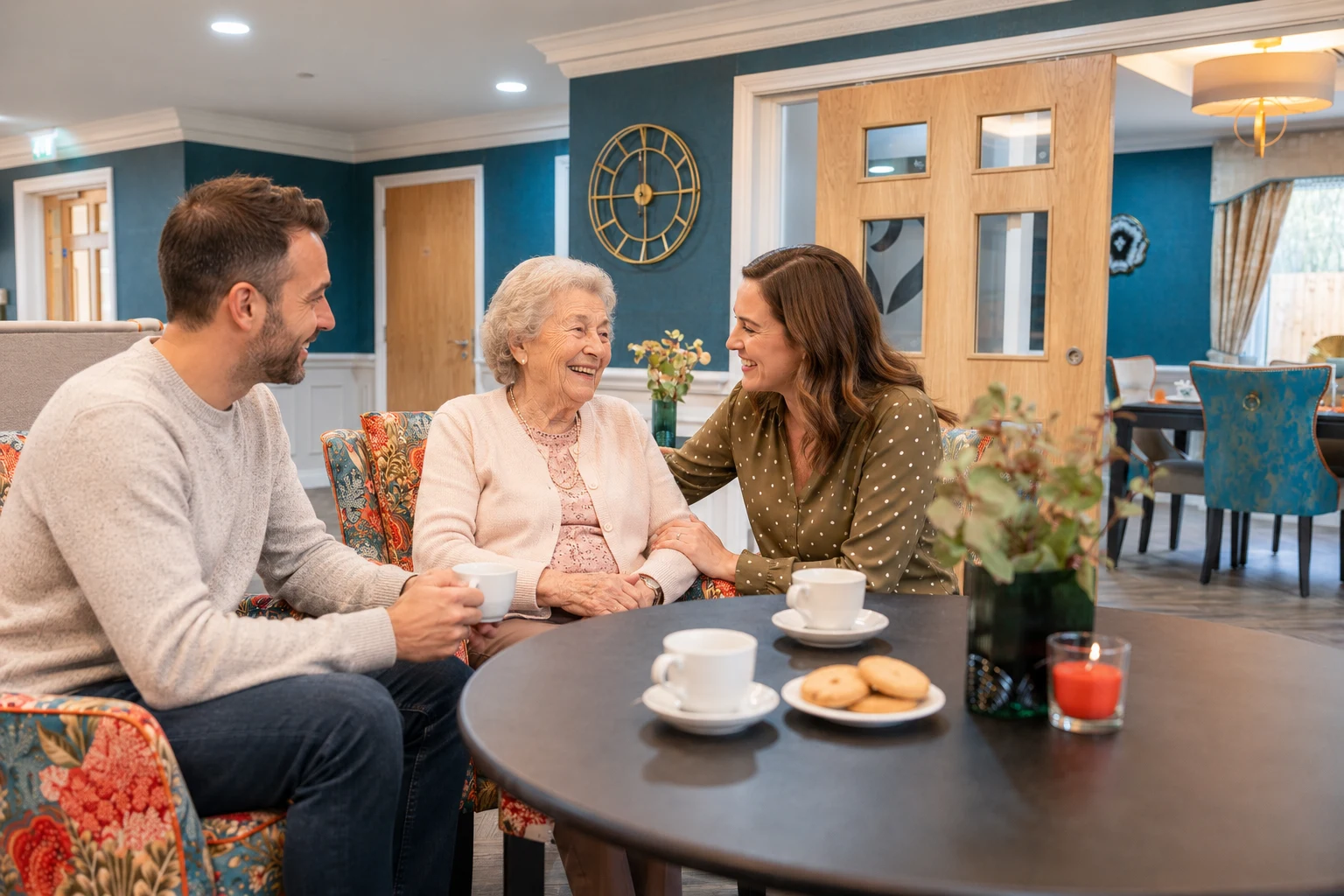
Care Homes with a Private GP: What Families Should Ask
Could access to a doctor make a difference when your family is choosing later-life care? A care home with private GP support can be an important question, alongside your relative’s day-to-day care needs. Esmere Gardens Nursing Home, part of Taylor & Taylor Care, is in Moreton-in-Marsh, Gloucestershire, close to the surrounding Cotswolds. Its location may suit families looking in the area, though the right choice depends on the person, not just the postcode. You can ask about medical support, care needs and the time your family can spend visiting. Clear answers help you compare options with greater confidence, without feeling rushed into a decision. Esmere Gardens offers several types of care for families to explore.
As you consider a doctor on site, it helps to look at the full picture: what support your relative needs now, what may change, and how care is planned around them. Ask direct questions about the service and what it means for your family.
Key Takeaways
- Esmere Gardens provides residential, nursing, dementia and respite care.
- Private GP support does not replace NHS registration or emergency care.
- Ask how GP access, follow-up and information sharing work.
- Check exactly what the agreed care fee includes.
- A visit and assessment can help you judge whether the setting fits.
What Types of Care Can Esmere Gardens Provide?
Esmere Gardens provides residential, nursing, dementia and respite care. The right kind depends on the person’s needs and the support they require each day.
Discuss your relative’s needs with the care home before deciding which option may suit them. The type of care describes its focus, but each person’s plan should reflect their own circumstances.
Discuss your relative’s needs before deciding which option may suit them.
Residential and respite care
Residential care supports people who need help with daily life in a care home setting. It can suit someone who needs help with personal care or everyday tasks, but not nursing care as their main form of support. Families can talk through what help their relative needs and how those needs affect their usual day.
Respite care is a short-term care option. It may give a person support for a limited period, while their usual carer takes a break or other arrangements are made. Ask about the length of stay, the care plan and what needs the home can meet during that time.
Nursing care and 24-hour nursing support
Nursing care is for people who need care from nursing staff as part of their support. Esmere Gardens provides 24-hour nursing support. Families can ask how nursing input would relate to their relative’s care plan, including any ongoing health needs.
A conversation about nursing care can help you explain changes in health, mobility or daily support. The care home can then discuss whether it may be able to meet those needs. An assessment helps build a clearer picture than a care label alone.
Dementia care
Dementia care focuses on support for people living with dementia. Their needs, routines and ways of communicating can differ, so families should share what helps their relative feel understood and comfortable.
You may want to ask how the home plans care around the person and keeps families informed. This guide to viewing a dementia care home offers practical questions about what to notice and discuss. Once you have considered the care needed, GP support may offer another source of reassurance.
What Should Families Expect from a Care Home with Private GP / Doctor on Site?
Private GP support gives families access to medical input within the care setting, but the exact arrangements should be checked. Consultation notes are a written record of the consultation, including relevant medical history, findings, advice and agreed next steps.
Esmere Gardens offers dedicated private GP support, but this does not mean a doctor is available at all times. Ask what access looks like for residents, what the service covers and whether each appointment has a separate consultation fee.
Accessing the private GP
Esmere Gardens describes itself as a care home with a private GP / doctor on site. The private GP service can provide medical input in the care setting, but access arrangements and scope should be confirmed with the home.
Ask how families or staff request an appointment, how soon residents may be seen and what happens when the private GP is unavailable. A doctor home visit may be part of an arrangement, but families should not assume one is guaranteed. The details matter when a health concern arises within hours or outside usual appointment times.
What a consultation can involve
A consultation can include a review of the resident’s medical history, a physical examination and a discussion of next steps. The doctor may consider the concern, relevant health details and what the resident wants. Families can ask how they can share helpful information before an appointment.
The doctor and resident can agree follow-up based on the consultation. This might include further review or advice, depending on clinical need and the service provided. A physical examination or treatment is not automatic; the doctor will decide what is appropriate.
Records, prescriptions and follow-up
Prescriptions or referrals may be arranged depending on clinical need and the service provided. Families can ask who will contact the pharmacy, how a new prescription is handled and who explains any follow-up plan.
Using a private GP does not end a resident’s NHS registration. With the patient’s consent, the consultation notes can be shared with their NHS GP. This care-home choosing guide suggests asking how medical concerns are handled and how families receive updates.
Before a visit, ask who can book an appointment, usual availability, what the GP can address, how follow-up works and how information reaches the NHS GP. Those answers help you understand how private support fits alongside NHS care and emergency help.
What Should You Ask About GP Access and Emergencies?
Private GP support, NHS care and emergency care serve different needs. Call 999 for a medical emergency. For other concerns, the route depends on the resident’s needs and the service available.
An NHS practice assesses requests for home visits according to clinical need and its own arrangements. It may offer an appointment, telephone consultation or another suitable route instead. Ask how the care home helps residents contact their practice and how urgent concerns are managed.
| Route | When it may be appropriate | What to do |
|---|---|---|
| Private GP | Medical input through the care-home service | Confirm access and scope with Esmere Gardens |
| NHS practice | Health concerns handled by the resident’s practice | Contact the practice; it assesses home visits by need and arrangements |
| Emergency | Urgent, serious danger | Call 999 |
Use these questions to understand how doctors and staff handle appointments, information and follow-up:
- How do residents or families book the private GP?
- When is the private GP usually available?
- What concerns can the GP address through this service?
- Who arranges and explains follow-up care?
- How can consultation notes be shared with the NHS GP?
Knowing the right route can make it easier to act calmly when a concern comes up. The next practical point is what the agreed fee covers.
What Do All-Inclusive Care Fees Cover?
“All-inclusive” should make clear what you will pay for and what may cost extra. Esmere Gardens describes its care fees as all-inclusive, but the detail matters for your relative’s care plan.
Ask for a clear explanation of the fee before agreeing to care. A written breakdown can help your family understand the cost and compare it with the support your relative needs.
What to clarify about the fee
Ask which care and services are covered by the agreed fee, and whether the amount could change if your relative’s needs change. Request the information in writing, so you can review it with family members and return with questions.
Transparent pricing means you can see what the price covers, rather than relying on a broad label. Check how the quoted fee relates to the person’s planned care, accommodation and any services discussed with the home.
What may sit outside the fee
Ask whether private GP consultations are included or charged separately. Do the same for prescriptions, medicines and any other additional services. Do not assume that any one of these is included or excluded without checking the agreed terms.
Check the written fee information before you agree to care. Ask who can explain an unclear charge and how you will learn about a change to the cost. A detailed answer helps your family plan, rather than guess at what a service may cost.
The fee is one part of the choice. The care setting itself also matters, especially when you weigh visits and support across the day.
Is Care at Home or a Care Home the Better Fit?
Neither setting is automatically the right choice or the cheaper one for every family. Your relative’s needs, family circumstances, support required and agreed costs all affect the decision.
Compare the hours and type of help needed with what each setting can provide. Scheduled home visits may meet some needs, while a live-in arrangement offers a different pattern of support.
| Factor | Care at home | Care home |
|---|---|---|
| Where care happens | Person’s own home | Care home setting |
| How support is arranged | Scheduled visits or a live-in arrangement | Care and accommodation provided in the care home |
| What to compare | Hours and type of support | The fee and what it covers |
A home visit from a care worker or doctor is not the same as ongoing support throughout the day. Consider whether the planned hours match the person’s needs, and whether relatives can manage the gaps between visits. A guide to deciding about a care home may help you think through changes in support needs.
Home-based primary care is ongoing medical care delivered at home by a team. This review of home-based primary care describes its role in improving access for older adults who cannot easily leave home. It does not mean this arrangement suits every person.
The American Association for Long-Term Care Insurance discusses home-care services and questions for choosing a provider in its home health care guide. Look at the person’s needs and family circumstances, then compare the actual support and costs. Ask questions and visit the care setting before deciding.
How Can You Arrange a Private Visit or Admission?
Contact Esmere Gardens to discuss your relative’s needs and possible visit arrangements. A first conversation can help you understand the next steps without committing to a decision.
An assessment is needed to consider whether the care home can meet the person’s needs. Short-notice admissions depend on assessment and availability, so an immediate place cannot be assumed.
An assessment helps establish whether the care home can meet the person’s needs. Short-notice admission depends on assessment and availability.
You can call or email to arrange a private visit. Esmere Gardens Nursing Home is at Stow Road, Moreton-in-Marsh, Gloucestershire, GL56 0DS. Its telephone number is 01608 692222, and its email address is hello@esmeregardens.co.uk.
The website is esmeregardens.care. Before you call, it may help to note the main points you want to discuss. You do not need every detail to hand; a brief outline can make the first conversation clearer.
Consider taking this checklist into your enquiry:
- The person’s care needs
- Relevant medical history
- Preferred timing
- Questions about GP support or fees
During a visit, you can ask about care, observe the setting and discuss how the home would assess your relative. Families considering dementia support may also find these questions for a dementia care-home visit useful.
You can ask questions before deciding, and take time to talk them through as a family. A visit can help you judge whether the setting feels right. Contact Esmere Gardens when you are ready to discuss the next step.
Conclusion
A well-informed choice starts with clear conversations about care, GP access and fees. One question at a time can help your family understand what support may fit your relative, without rushing a major decision.
Ask about the care your relative needs, how the doctor service works and what the agreed cost covers. Then consider how the setting feels when you visit. The right choice should reflect the person’s needs and your family’s circumstances.
Call Esmere Gardens to discuss your needs or arrange a private visit. A conversation is a practical next step.
FAQ
How much do private doctors cost in the UK?
What qualifies you for 24 hour care?
Is 24 hour care at home cheaper than a care home?
Do you lose your pension if you go into a nursing home?
Do people with dementia have to pay for their own care home?
What is the average life expectancy for someone with dementia at age 75?
Will care home fees wipe out your children's inheritance?
My neighbour has dementia and lives alone. What should I do?
Related articles
- What Should I Look For and Ask When Choosing a Care Home?
- What Should I Ask When Viewing a Dementia Care Home?
- Should I Put My Parent in a Care Home? The Question Families Don’t Say Out Loud
Sources
- Home health care and long term care insurance for home care - Describes home-care services and questions to ask when choosing a provider.
- Home-Based Primary Care for Homebound Older Adults: Literature Review - Describes home-based primary care as ongoing, comprehensive care for older adults at home.

Care Homes in the North Cotswolds: A Family Guide
Families looking for later-life care around Moreton-in-Marsh can start by matching support to their relative’s needs. Choosing a care home in the North Cotswolds means weighing what helps now against what might change later.
Esmere Gardens Nursing Home in Moreton-in-Marsh is a local option for residential, nursing, dementia or respite care. Respite care is short-term care that supports a person while giving their usual carer a break.
Families arranging later-life care may find comparisons less useful if they consider only today’s needs. This guide offers clear points to consider, including care options, fees and questions to raise with a home near Stow-on-the-Wold and Chipping Norton.
Key Takeaways
- Match care to your relative’s current and changing needs.
- Ask how an assessment will guide the level of support.
- Request a written breakdown of fees and exclusions.
- Use a visit to discuss care and family involvement.
- Compare the types of care available before deciding.
How to Choose a Care Home North Cotswolds / Care Home Near Stow-on-the-Wold and Chipping Norton?
The right care option depends on your relative’s day-to-day support needs and whether they need nursing care. A needs assessment helps identify the right level of support, while allowing for needs to change over time.
A needs assessment helps identify the right level of support, while allowing for needs to change over time.
Support for everyday living and short stays
Residential care supports day-to-day living when a person needs help with daily routines. It does not automatically include nursing care, so ask what support the person needs and what the home can provide.
Respite care is short-term, and may offer a change of setting while a usual carer takes a break. These options are not always separate: a person may need more than one type of support.
| Care type | Support focus | Could suit |
|---|---|---|
| Residential care | Help with daily living | Someone needing regular everyday support |
| Nursing care | Support from nursing staff | Someone with nursing needs |
| Dementia care | Support shaped around individual needs | Someone living with dementia |
| Respite care | Short-term care and support | Someone needing a temporary stay |
Ask how staff learn about routines, preferences and changes in health. A useful assessment should consider what your relative can do, where they need help and whether nursing support is needed.
Nursing and dementia support
Esmere Gardens Nursing Home, part of Taylor & Taylor Care, offers residential, nursing, dementia and respite care. 24-hour nursing support is available for people who need nursing care.
Dementia care should reflect the person’s own needs, routines and preferences. Ask how support may change as those needs develop, and how the home helps the person feel settled. You can read more about dementia care in Moreton-in-Marsh.
When you have a clearer view of the support required, ask what the fees cover. The agreed package matters as much as the care label.
What Do All-Inclusive Care Fees Cover?
The exact scope of an all-inclusive fee should be confirmed with Esmere Gardens Nursing Home for your relative’s needs. All-inclusive fees are intended to give families greater peace of mind, but the name does not mean every personal or external cost is covered.
Understanding the all-inclusive approach
The fee should be discussed alongside your relative’s assessed needs and the exact care package offered. Ask for a written breakdown that states what the fee covers and lists any exclusions.
This helps you understand what the agreed amount means in practice, rather than relying on the label alone. Ask how the fee relates to the care package if your relative’s needs change.
Residents have access to dedicated private GP support, and a private dentist is planned. Ask what each service involves, when it will be available and whether any related costs sit outside the fee.
Care fees in Gloucestershire can depend on the person’s needs and the package agreed. The guide to care home costs in Moreton-in-Marsh and Gloucestershire offers more detail on fees and funding.
Funding, assessments and questions to ask
In England, local authority funding can depend on a financial assessment and whether the person meets the relevant rules. The assessment looks at their financial circumstances, so eligibility varies between people.
NHS Continuing Healthcare may fund care for someone who meets its eligibility criteria. This funding depends on an assessment of health needs, not simply on the care home or the person’s diagnosis.
If nursing support is needed, ask how the fee and funding arrangements relate to the person’s care. Discuss 24-hour nursing support and which costs, if any, sit outside the agreed package.
Write down any points that remain unclear, including how changes in care needs affect the agreement. Bring those fee questions to a conversation or visit.
What Should You Ask During a Visit?
A family visiting a care home in Moreton-in-Marsh can see how the team speaks with residents and whether the setting feels right. A visit gives you a chance to meet the team and discuss your relative’s needs in person.
Short-notice admissions depend on assessment and availability, so do not assume a place can be offered by a particular date. Discuss the timing directly with the home.
Short-notice admissions depend on assessment and availability. Discuss timing directly rather than assuming a place will be ready.
Take these practical questions with you. They can help you understand how care works day to day and how your family can stay involved.
- How will you assess my relative’s needs?
- How do you personalise care around routines and preferences?
- What does the fee cover, and what does it exclude?
- How can our family stay involved and receive updates?
Ask how the home plans care with your relative and reviews it when needs change. You can also ask how the team keeps family members informed and welcomes their input.
For more ideas, see this guide to choosing a Cotswolds care home. Use the contact details below to discuss your circumstances or arrange a private visit.
Conclusion
A conversation can help you understand whether Esmere Gardens Nursing Home may suit your relative. The team is part of Taylor & Taylor Care and can discuss the support your family is looking for.
You can take things at your own pace and raise questions about your relative’s needs before making a decision. Esmere Gardens is at Stow Road, Moreton-in-Marsh, Gloucestershire, GL56 0DS.
Visit esmeregardens.care, call 01608 692222 or email hello@esmeregardens.co.uk. Contact the home to discuss your needs, ask a question or book a private visit.
FAQ
Is care for the elderly free in England?
How much is a care home in Gloucestershire?
Who are the top care home providers in the UK?
Can you visit care homes?
Will care home fees wipe out your children's inheritance?
Do people with dementia have to pay for their own care home?
Do you lose your pension if you go into a nursing home?
Can I buy my parents' house to avoid care home fees?
Related articles
- Dementia Care Home in Moreton-in-Marsh: Choosing Calm, Specialist Support
- Care Home Costs in Moreton-in-Marsh & Gloucestershire 2026 – Complete Guide
- Choosing a trusted Cotswolds care home: a guide to nursing, dementia support, respite and private doctor continuity

Residential or Nursing Dementia Care: Which Is Right?
Deciding whether someone in your family should move into care can feel difficult, especially when their needs are changing. You can take the decision one step at a time, with their wishes and day-to-day needs at its centre.
A diagnosis alone does not show whether nursing care is needed. A needs assessment is an assessment of someone’s care and support needs, usually arranged through the local authority. It can help your family understand what support may be suitable.
The right level of care depends on the help and health support the person needs, not simply their diagnosis. Esmere Gardens Nursing Home in Moreton-in-Marsh offers a local option for families considering a move.
Key Takeaways
- Base the decision on the person’s needs and preferences.
- A dementia diagnosis does not automatically mean nursing care is needed.
- Ask for an assessment when care needs are unclear.
- Compare the support available, not just care labels.
- Discuss fees and practical arrangements before agreeing to a move.
Choosing the right time matters, but there is no single answer for every family. The following comparison explains the care levels and then considers the dementia support that can make daily life feel more settled.
Nursing Dementia Care / Residential Dementia Care: Which Is Right for Your Family?
Nursing care adds 24-hour support from qualified nurses to personal care. That added clinical support may suit someone with more complex health needs.
Residential care can suit a person who needs help with everyday tasks but not round-the-clock nursing. A dementia diagnosis alone does not mean someone needs nursing care.
Choose the level of care around the person’s needs, not their diagnosis alone.
Residential care includes personal care, such as help with washing, dressing, taking medicines and using the toilet. Nursing care includes this help, alongside care from qualified nurses at all times.
Some care homes provide both levels, which can help if someone’s needs change. Staff should have training in dementia care, whatever the care setting’s main label.
| Type of care | Personal care | Qualified nurses available 24 hours | Possible fit |
|---|---|---|---|
| Residential care | Yes | No | Daily help without 24-hour nursing |
| Nursing care | Yes | Yes | More complex health needs |
| A home offering both | Yes | Yes, for nursing care | Different levels of support |
When comparing nursing dementia care and residential dementia care, look at the support each person needs now. Ask how the care home would respond if their health or daily needs changed.
Esmere Gardens Nursing Home offers residential care, nursing care, dementia care and respite care. It also provides 24-hour nursing support, so families can discuss more than one level of care with the home.
For a fuller look at care types and what to compare, consider how each option fits the person’s current needs. Dementia-related needs also call for an individual approach to daily support.
What Dementia Support Can a Care Home Provide?
A person’s ordinary day may feel safer with familiar routines, calm surroundings and help with tasks that have become hard. Small, steady forms of support can protect comfort and connection.
Good dementia care responds to the person, not just their symptoms. A care home can offer round-the-clock support from care staff, a safe setting and social activities.
Personal care, routine and reassurance
Personal care can help someone wash, dress and manage other daily tasks with dignity. Staff can learn how the person likes to start the day and what brings them comfort.
Familiar routines may help a person feel more at ease and find their way through the day. Dementia-aware communication also matters: staff can use a calm tone, simple words and enough time for a reply.
Social activities can support contact with other residents and a sense of belonging. The right activity depends on the person’s interests, energy and abilities, rather than a set programme for everyone.
Families comparing homes can read about personalised dementia and respite support when considering what daily life might look like.
When may a person’s needs change?
A person living with dementia may need more care and support as symptoms progress. Changes differ from person to person, and the pace can vary over time.
There is no single stage called advanced dementia that sets the right level of care. Focus on practical needs, such as help with personal care, safety, communication and health.
A sudden or marked change should be discussed with a health professional, rather than assumed to be dementia progression. The study of dementia special care units examined care quality in US nursing homes, but its findings do not prove every home will offer the same results.
Ask how a home reviews a person’s changing needs and adapts support. An individual assessment matters more than a diagnosis or stage label alone.
How Do Assessments Help You Choose the Right Level of Care?
Ask social services for an assessment of the person’s current needs. This first step can help your family understand what support may be needed.
A needs assessment should guide the care options, while the person’s wishes remain part of the decision. Social services can carry out a new assessment when you are considering a care home.
Start with the person’s current needs
If the assessment recommends a care home, a financial assessment may follow. You can take these steps in order:
- Request a needs assessment from social services.
- Discuss the findings with the person and family.
- Ask whether a care home can meet the identified needs.
- Seek a financial assessment if a care home is recommended.
A GP or social care professional may help explain health concerns or the available options. The NHS guide to dementia and care homes explains how needs and financial assessments can shape a care decision.
Include the person in decisions
Talk with the person about their preferences, even if they lack capacity to make the decision. Their views, routines and relationships can help the family understand what matters most.
An attorney can decide for someone only if they hold the relevant legal authority. Any decision must also be in the person’s best interests.
If you need help navigating the process, Alzheimer’s Society Dementia Connect can be reached on 0333 150 3456. Age UK’s advice line is 0800 678 1602, and Independent Age’s helpline is 0800 319 6789.
These services can help you think through care needs and next steps. Once you know what support may be required, it is easier to ask what fees and funding arrangements mean.
What Do Esmere Gardens’ All-Inclusive Fees Cover?
Esmere Gardens uses an all-inclusive care fee approach. Ask for the exact terms in writing, including what the fee includes and excludes.
Do not assume that “all-inclusive” means the same thing at every care home. A written breakdown can help your family understand the likely cost before agreeing to a placement.
Confirm what the fee includes
Ask the home to set out its charges and any items that may cost extra. Check that the written terms match the care arrangements discussed with you.
Also ask how the fee may be reviewed if the person’s needs change. Clear answers can help you plan and compare homes fairly.
| Funding route | Who it may apply to | What it may contribute |
|---|---|---|
| Council funding | People who qualify after assessment | A personal budget towards care costs |
| Self-funding | People not eligible for council funding | The full care cost paid by the person |
| NHS continuing healthcare | Eligible people with complex health and care needs | Free care for those who qualify |
| NHS-funded nursing care | Eligible people assessed as needing nursing care | An NHS contribution towards nursing care |
Check whether funding may be available
If someone qualifies for council funding, the council sets a personal budget. It shows the overall cost, the council’s contribution and what the person must pay.
The council must identify at least one suitable care home within that budget. Choosing a more expensive home may mean paying top-up fees.
People who do not qualify for council funding usually pay the full cost themselves. NHS continuing healthcare is free for eligible people with complex health and care needs, but dementia alone does not qualify someone.
A person assessed as needing nursing care may qualify for an NHS-funded nursing care contribution. Ask how the funding route affects the written fee terms, then use that clarity during a visit.
What Should You Check Before Choosing a Care Home?
A visit can help you see how care feels in everyday practice. Notice the small interactions, as well as the rooms and facilities.
Check the care home’s latest Care Quality Commission report before making your choice. The regulator’s inspection reports are available through its care-home directory.
Look at how residents are treated during ordinary moments, not only what the home tells you.
What to notice during a visit
Speak with the manager, staff and residents if possible. These practical checks can help you compare homes:
- Read the latest Care Quality Commission report.
- Ask how staff train in dementia care.
- Notice whether residents seem respected and engaged.
- Ask about bedrooms and safe outdoor space.
- Discuss food, culture, activities and visiting arrangements.
Ask whether staff can support the person’s food preferences and cultural needs. Find out how residents keep in touch with visitors and take part in social activities.
The guide to medical-led care in Moreton-in-Marsh also discusses staff skills, care planning and daily life. The US National Institute on Aging offers general advice on choosing a care home, including observing staff and asking about activities.
How often should you visit?
There is no fixed schedule for visiting a relative in a nursing home. Agree a pattern that suits the person’s wishes, wellbeing, your family’s circumstances and the home’s arrangements.
Some people value regular visits, while others may prefer shorter or less frequent visits. Ask the person how they feel, and review the plan if their needs or response changes.
Talk through any questions with the care home before making a decision. A clear conversation can help your family judge whether the home feels right for the person.
Conclusion
You and your family do not need to make this decision alone. The right care home depends on the person’s needs, preferences and health, and you can ask for clear details about fees and support.
Esmere Gardens Nursing Home serves Moreton-in-Marsh and the surrounding Cotswolds, at Stow Road, Moreton-in-Marsh, Gloucestershire, GL56 0DS. It offers dedicated private GP support, and access to a private dentist is planned soon.
Visit esmeregardens.care, email hello@esmeregardens.co.uk or call 01608 692222 to discuss care needs or arrange a private visit. Short-notice admissions depend on assessment and availability.
FAQ
How do I talk to someone with vascular dementia?
Do people with dementia sleep a lot?
What to do when dementia begins?
Can a person with dementia decline rapidly?
When should someone with dementia go into a care home?
Do dementia patients decline faster in nursing homes?
Do dementia sufferers have to pay care home fees?
Related articles
- Private GP joins Cotswolds care home in Moreton-in-Marsh
- Selecting the Best Care Home in the UK: A Detailed Guide
- Choosing a Care Home in Moreton-in-Marsh | Residential, Nursing, Dementia & Respite Care
Sources
- Dementia and care homes — Explains care-home types, needs and financial assessments, funding routes, and inspection reports.
- How To Choose a Nursing Home or Other Long-Term Care Facility — Advises matching services to needs, visiting homes and observing staff and conditions.
- The Impact of Dementia Special Care Units on Quality of Care: An Instrumental Variables Analysis — Examines care quality outcomes in US nursing homes with and without dementia special care units.